
By: Helmut Mahongo
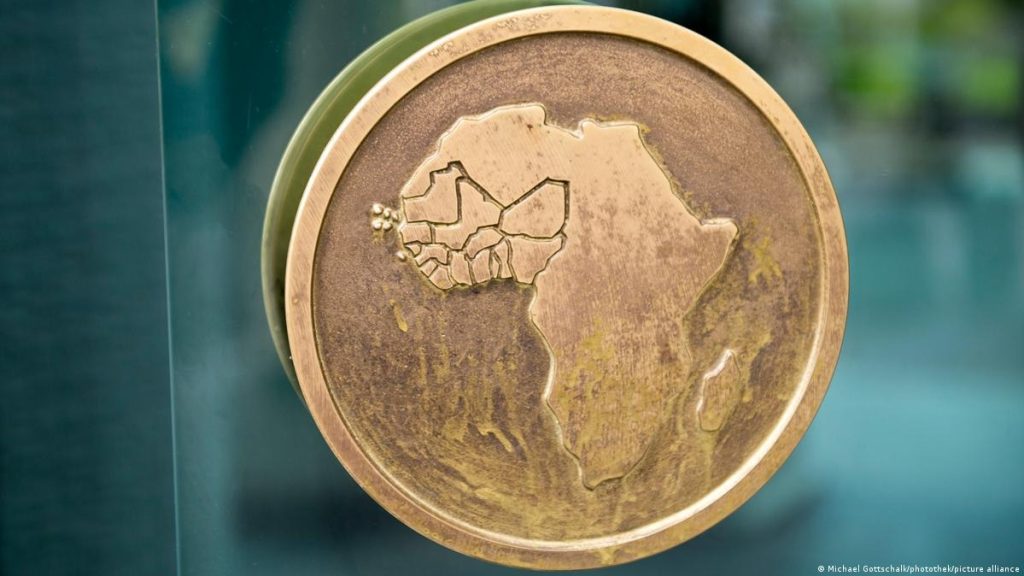
The Economic Community of West African States (ECOWAS) has reaffirmed plans to launch a single currency dubbed the ECO by next year.
The union announced this after its 69th ECOWAS summit of Heads of State and Government held in Freetown, Sierra Leone, on Sunday.
ECOWAS is a regional political and economic union in West Africa made up of 12 countries, namely Benin, Cabo Verde, Ivory Coast, The Gambia, Guinea-Conakry, Guinea-Bissau, Liberia, Senegal, Sierra Leone and Togo.
The bloc said the rollout will be done in phases, with countries that first meet the set criteria, such as inflation, debt, and monetary stability, joining first.
The single currency is said to be a way of deepening regional integration and supporting sustainable and inclusive growth.
The bloc also said several issues still need to be agreed on, especially those around the future central bank and decision-making rules.
The legal registration of the ECO trademark is in progress, but the bloc still faces key challenges, which include how to include countries like Ivory Coast, Senegal and Togo, among others that still use the CFA franc, a financial agreement the countries still have with France.
ECOWAS is not the first bloc of its kind on the continent to consider establishing a single currency for regional integration.
In 2001, the Southern African Development Community (SADC) formulated its Strategic Development Plan (RISDP), which was adopted and approved at the SADC in 2003.
Some of the objectives of the RISDP are to deepen SADC’s regional integration, with the final step being the implementation of a single currency.
This, as of now, however, has not materialised due to the implementation challenges.
These include “the lack of clarity surrounding the issue of countries with membership of more than one customs union,” the Bloc noted.
The deadline was set for 2018, but it has not been reached, according to the SADC Secretariat.
Other regional blocs on the continent like the East African Community (EAC) and Common Market for Eastern and Southern Africa (COMESA) all have similar plans that have not taken off the ground for multiple reasons.
According to The Kenyan Wall Street, the East African Community’s plans to launch a single currency is facing hurdles from a widening gap between institutional preparations and economic reality.
This was revealed during the EAC’s FY2026/27 Budget Speech that was recently delivered by Council of Ministers Chairperson Rebecca Kadaga to the East African Legislative Assembly (EALA).
Rebecca Kadaga revealed that only four of the bloc’s eight partner states have achieved the protocol’s 8% headline inflation ceiling.
The budget speech also pointed out that only two member states have met the requirement to hold foreign exchange reserves equivalent to at least 4.5 months of imports.
This and many other economic challenges have led to the bloc pushing the regional single currency implementation to 2031 instead of the earlier set and already passed August 2024.
The African Union has had the idea of a single continental currency from its creation in 1963.
The AU’s Constitutive Act, which is the founding document of the AU, Article 19 states three specific financial organs to be created, which are: The African Central Bank (ACB), The African Investment Bank (AIB), and The African Monetary Fund (AMF).
According to the AU, “the African Central Bank’s (ACB’s) purpose is to build a common monetary policy and single African currency as a way to accelerate economic integration.
This is being driven by many factors, including the cost of trading and borrowing in foreign currency denominations, which is putting financial strain on countries across the continent.
A 2025 Factsheet on Local Currency Lending by the United Nations Office of the Special Advisor on Africa found that local currency lending is good for debt sustainability in Africa.
They found that in 2024, 25 African countries were either in debt distress or at high risk, with external debt service reaching a historic $89.4 billion, about N$1.5 trillion.
The factsheet also revealed that currency depreciation has been the primary driver of Africa’s debt increase, accounting for over 70% of debt accumulation in 2023, as most external debt is denominated in US dollars.
The launch of the ECO will similarly have to navigate the challenges of the continent and the region on the continent it finds itself in.
West Africa’s changing political landscape, like Burkina Faso, Mali, and Niger’s exit from the bloc but remain within the West African Economic and Monetary Union WAEMU or Union économique et monétaire ouest africaine (UEMOA).
Consultations are continuing, and a key Task Force meeting is expected before the December 2026 summit.