


By: Peneyambeko Jonas
Despite limited information on the extent of the Foot-and-Mouth Disease outbreak in the south, the nationwide suspension of movement and marketing of cloven-hoofed animals has set in motion panic across the economy.
Livestock producers, cattle transporters, abattoirs, retailers, livestock sector employees, meat consumers and international buyers are currently in panic mode, waiting for more details on the extent of the outbreak.
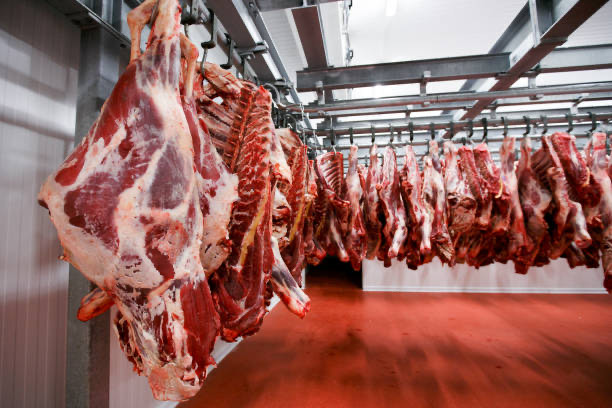
When livestock cannot move, farmers cannot send animals to auctions, feedlots or abattoirs, resulting in no slaughtering and no meat.
Yet they continue paying for water, feed, labour, transport and veterinary services and are expected to keep employees.
The effects are already moving beyond farms and livestock auctions into butcheries, takeaway kitchens, retailers and household shopping baskets.
According to Acting Agriculture Minister Charles Mubita, the outbreak has serious implications for the national economy and the livelihoods of Namibians because livestock and livestock-product marketing has been suspended locally and internationally.
PANIC
Eagle Media House, during the lunch hour on Thursday, visited various retailers in Windhoek that distribute consumables and spoke to the managers in the store floor.
One store manager said the effects were already being felt inside the store.
According to the manager, the store normally receives about 300 kilograms of fresh meat every day, but on Thursday the supply was sold out before lunchtime.
His concern, however, goes beyond the meat displayed in the butchery.
He said the store’s kitchen, which uses meat for takeaway meals, is an important source of income for the business.
“If the remaining meat runs out,” he said, “the kitchen could face serious difficulties.”
The manager said consumers could increasingly turn to chicken and fish as alternatives to beef and other meat products.
But that shift could create another economic problem.
The manager warned that increased demand for chicken and fish could put pressure on their prices.
He also raised concerns about reports of some shops charging unusually high prices for poultry, which he described as price gouging.
The manager has also noted that customers were buying large quantities of meat, leaving the store with limited stock.
Another Klein Windhoek store manager said their butchery contributes a significant portion of the store’s overall sales.
Noting that prolonged difficulties in securing meat would therefore affect the shop’s revenue.
He further warned that prices of poultry and fish could fluctuate if suppliers begin facing higher demand.
The situation also shows how a disruption in one part of the food economy can quickly spread to other markets.
“When beef becomes difficult to obtain, consumers do not simply stop buying protein. They look for alternatives,” he narrated.
The switch substitutes can increase demand for chicken and fish, while retailers and restaurants have to reconsider what they can afford to stock and sell.
For farmers, however, the immediate problem is different.
The immediate economic question is therefore not only how many cattle may be affected, but how long Namibia can keep its meat supply chain functioning while animals cannot move normally between farms, auctions, abattoirs and markets.
THE NORTH OF REDLINE CASE
The emerging throughput/cattle supply shock has raised a national economic question: could northern farmers eventually play a bigger role in supplying Namibia’s domestic meat market?
The answer is potentially, but not under the current restrictions.
The government has suspended the movement and marketing of cloven-hoofed animals and their raw products nationwide as part of the response to the outbreak.
Northern farmers therefore cannot simply move cattle south to fill the supply gap while the restrictions remain in place.
This nationwide ban has also led redline removal advocate and MP Shipululo Amupanda to question the nationwide ban if the outbreak was only detected in the south for now.
In March, agriculture official George Haufiku said more livestock auctions were being held in the northern communal areas because farmers wanted access to markets.
At an Oushake auction, 34 animals were sold, with the highest price reaching N$24,000.
Haufiku later called for Meatco to participate more actively in northern communal auctions, saying limited buyer participation was affecting competition and prices.
An auction at Otjetjekua in Kunene also generated N$583,200 for farmers, with 75 of 91 cattle sold.
The issue, therefore, is not simply whether northern farmers have livestock, but rather whether Namibia has enough infrastructure and market connections to turn that livestock into sustainable income, said Haufiku.
That includes functioning auctions, reliable buyers, feedlots, veterinary services, animal identification and traceability, transport, slaughtering facilities, cold storage and meat-processing capacity.
For years, communal farmers in the north have been seeking better access to profitable livestock markets.
The government has been working on measures to address the price differences and market-access problems faced by northern producers, including the Northern Communal Areas Livestock Price Equalisation Fund.
The government allocated N$50 million to the fund in the 2026/27 budget, with the broader initiative aimed at addressing disparities between livestock producers north and south of the Veterinary Cordon Fence.
The Agriculture Ministry has previously identified challenges in the northern livestock sector, including non-operational abattoirs, weak value chains, poor logistics and limited processing infrastructure.
The FMD outbreak has therefore exposed more than a disease problem.
It has exposed how closely the farmer, auctioneer, transporter, abattoir, retailer, restaurant and consumer are connected.
When animal movement stops, the economic effects travel with it.
The farmer loses a market.
The transporter loses a load.
The abattoir loses animals.
The retailer loses supply.
The restaurant struggles to maintain its menu.
The consumer looks for alternatives.
The International Monetary Fund has also identified the spread of FMD as a downside risk to Namibia’s 2026 economic outlook.
The government is yet to give an update on the extent of the spread. As a result, the livestock markets will remain a contingency measure.
This is because veterinary authorities first need to establish the extent of the outbreak and determine when movement can safely resume.
The country is expected to face another task: rebuilding a meat supply chain that connects producers from all regions to consumers.
penny@eaglefm.com.na