


By: Nghiinomenwa-vali Hangala
Ambition has a price.
Implementing the third Nationally Determined Contribution (NDC) will require an estimated N$229 billion in investment from now to 2035.
The NDC is the country’s climate change plan but also a development, resilience, and investment roadmap.
The Minister of Environment, Forestry and Tourism, Indileni Daniel, revealed this last week during the High-Level Launch of Namibia’s Third Nationally Determined Contribution.
The cost is spread between mitigation and adaptation measures.
As for adaptation measures, N$124.89 billion is required, and N$104.43 billion is needed for mitigation measures.
The plan cost is more than the value of goods and services that Namibia produces annually (based on 2025 Real GDP) and more than two past annual budgets combined.
Approximately 12% of the N$229 billion is unconditional, while 88% is conditional upon international climate finance, technology transfer and capacity-building support.
The Third Plan has placed adaptation at the center, representing the larger share of total investment (54%), led by Water Resources (N$62.6 billion) and Agriculture & Food Security (N$29.35 billion).
Within mitigation, energy remains the largest single sector (N$60.66 billion).
According to Daniel, conditional does not mean optional investment.
It means Namibia has identified what more can be achieved when international support matches our national ambition.
“Our task now is therefore to move beyond talking about climate finance to mobilising climate finance,” she said.
The Minister has noted that climate change does not wait for meetings, budgets, strategies or government processes.
“The drought does not wait for our submissions to be approved, and the flood certainly does not wait for procurement to be completed,” she reminded.
Adding that implementation must sometimes move faster than paperwork.
According to the Environment Ministry, the NDC 3.0 connects climate action directly to the issues that matter to the Namibian people: water and food security, energy, public health, resilient infrastructure, biodiversity, jobs and the long-term competitiveness of our economy.
The environment Minister has also highlighted that climate action cannot belong to one Ministry alone.
Saying that NDC 3.0 must be nationally owned.
“It must be a whole-of-government and whole-of-society responsibility,” said Daniel.
RAISED AMBITIONS
Namibia has raised its ambitions.
From now to 2035, NDC 3.0 identifies 26 mitigation measures and 106 actions across energy, agriculture, forestry and other land use, industrial processes, and waste.
Namibia is one of the driest countries in the world, with drought being experienced in many parts of the country, as well as water scarcity, floods, extreme heat, and land degradation.
Adaptation is not simply an environmental issue, it is a development imperative, the Environment Ministry noted.
NDC 3.0 identifies nine adaptation priority areas, comprising 46 measures and 110 actions, covering agriculture and food security, water resources, biodiversity, fisheries, health, infrastructure, coastal zones, urban settlements and broader resilience.
The Ministry has, however, noted that “these numbers will mean very little if they remain on paper.”
Saying that the country’s efforts/plan must translate into water security, productive farms and rangelands, stronger early-warning systems, resilient infrastructure, cleaner energy, healthier ecosystems, and communities better prepared for climate shocks.
Given the magnitude of the required investment/capital for the plan to be realized, Daniel has called on all government institutions that have a mandate in the plan to transform their priorities into credible programmes and bankable projects.
Saying that such institutions will be required to ensure the needed capital flows.
“We must strengthen our national institutions, attract domestic and international investment and ensure that financing reaches the communities and sectors where climate impacts are actually being felt,” she stated.
Namibia is also entering an important phase of natural-resource and energy development.
The MEFT Minister echoed the President’s sentiments that Namibia will not place development and climate action on opposing sides.
“Our responsibility is to ensure that our natural resources support national prosperity while Namibia progressively builds a diversified, resilient and lower-carbon economy,” she stated.
MEFT has reminded all responsible ministries and institutions to integrate their NDC commitments into their plans, budgets, programmes and investment pipelines.
Saying climate action cannot remain the responsibility of the Ministry of Environment, Forestry and Tourism alone.
“Finance, energy, agriculture, fisheries, water, health, transport, urban development, gender and social protection, together with our regional and local authorities, all have responsibilities under this NDC,” stated Daniel.
The Minister has therefore called upon development partners and international financing institutions to work with the government institutions to mobilise the financing, technology and capacity required.
As for the private sector, Daniel highlighted that the NDC 3.0 shouldn’t be a compliance issue, but an investment and innovation agenda.
“I call upon our communities, traditional authorities, academia and civil society to remain active partners in implementation,” she made the call.
Speaking at the launch, UNDP resident representative to Namibia, Amanda Serumaga, said the launch of the NDC 3.0 comes at a particularly important time.
This is because the El Niño is now firmly established and is expected to strengthen further into the coming months, increasing the risk of extreme heat, drought, floods and disrupted rainfall patterns.
“For Namibia, this is a reminder that climate change is not an abstract or distant issue. It is about whether farmers have water and grazing, whether families can afford food, whether businesses can plan and invest with confidence, and whether public resources are being used today to reduce much larger losses tomorrow,” she said.
Serumaga called for demystifying (plainly explaining) the country’s climate action.
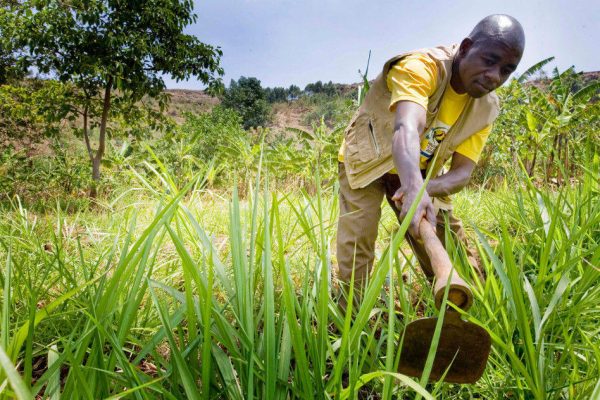
She said climate action to a farmer should mean water security, productive land and greater resilience to drought.
For the private sector, it should mean investable opportunities, reduced risk, efficient energy and new markets.
As for communities, it should mean stronger livelihoods, food security and protection from climate shocks.
WHY IS THE NDC IMPORTANT?
According to MEFT, Namibia is one of the world’s most arid, climate-vulnerable and lowest-emitting countries.
Rainfall ranges from under 25 mm to over 600 mm a year, and water scarcity is a binding constraint on development.
Despite the low rainfall patterns, agriculture supports more than 70% of livelihoods, and bush encroachment affects roughly 60% of the country.
Highlighting how the country’s socioeconomic development is highly natural resource-based, and climate actions are directly linked to the national priorities.
Despite this exposure, Namibia’s economy and its role as a net carbon sink mean its climate response is defined as much by resilience-building as by emissions reduction.
The MEFT explained that the NDC is not just a climate plan but also a development, resilience, and investment roadmap.
The NDC provides Strategies to safeguard communities, agriculture, water, and health systems, etc.
Secondly, it will enable Namibia to access climate funding (climate funding windows, bilateral donors, and private investors), the Ministry explained.
Adding that by implementing the NDC, Namibia contributes to the global effort to keep warming below 1.5°C, strengthening its international standing and partnerships.
The NDC is also expected to open doors for technical support, technology transfer and private sector collaboration.
erastus@thevillager.com.na