


By: Stephanus Pombili
In the heart of Namibia’s Kavango West Region, a phenomenal story of transformation, resilience, and academic excellence continues to unfold one that exemplifies how visionary leadership, community aspirations, and unwavering dedication can turn the improbable into a beacon of progress. This is the inspiring account of the International University of Management (IUM) Nkure-Nkuru Campus, a once-humble academic initiative that evolved from a modest makeshift facility behind a local bar into a prestigious, state-of-the-art institution of higher learning.
Founded in 1994 by Honourable Professor David Richard Namwandi with only one student and a profound dream, IUM has always embodied the spirit of bold ambition anchored in service to society. That same ethos found new ground in 2015 when, following a comprehensive needs assessment and consultations with local stakeholders, including traditional leaders, IUM answered the call to establish a university campus in Nkure-Nkuru a town often overlooked in national development priorities. What followed was nothing short of revolutionary.
In 2015, the IUM Nkure-Nkuru Campus was launched under what many might deem improbable conditions. The institution began its operations behind Israel Bar with only 53 students and a skeletal team of five (5) committed academic and administrative staff. Despite its humble setting, the mission was resolute: to offer accessible, affordable, and quality education to the youth of Nkure-Nkuru and surrounding regions such as Zambezi, Kavango East, Ohangwena, Oshikoto and even across the borders of Angola and Zambia.
Initial academic offerings included essential programmes such as Human Resources Management, Finance, and several short courses under the Centre for Improved Institutional Performance (CIIP). These programmes, though limited in number, were transformative in impact. They addressed critical gaps in tertiary education in the region and catalysed both academic and economic activity in the town.
Fast forward to 2025, and the metamorphosis is breathtaking. From a modest enrolment of 53 students in 2015, the IUM Nkure-Nkuru Campus now proudly accommodates over 2,790 students an exponential increase that testifies to both the demand for, and quality of education provided. Academic staff has grown tenfold, from just five (5) to over fifty (50) lecturers, administrators, and support personnel. The campus now boasts over thirty (30) accredited academic programmes, ranging from diplomas to master’s degrees, including pioneering qualifications such as the Master of Education in Mathematics and Science Education, Bachelor of Agriculture Honours, and Bachelor of Occupational Health and Safety Honours.
The scope of the academic disciplines offered mirrors Namibia’s developmental priorities, strategically addressing skills shortages in key sectors while simultaneously empowering youth with employable, globally relevant qualifications.
Perhaps the most visible sign of IUM’s success in Nkure-Nkuru is the architectural and infrastructural marvel that now graces the town. No longer relegated to the informal confines of a local tavern, the new campus is a striking example of modern educational architecture. With spacious lecture halls, state-of-the-art laboratories, computer centres, libraries, and administrative facilities, the campus is a physical embodiment of Professor Namwandi’s original dream, an institution built not merely to educate but to inspire.
This transformation signals more than just physical growth; it is emblematic of a deeper, more profound institutional culture that values excellence, innovation, and societal engagement. The IUM Nkure-Nkuru Campus is now considered one of the region’s most prestigious academic institutions, a centre of learning, dialogue, and development.
Beyond academics, the presence of IUM in Nkure-Nkuru has had far-reaching effects on the socioeconomic landscape of the town. The student population has spurred the growth of auxiliary businesses such as student accommodation facilities, food vendors, retail shops, and transportation services. Local landlords have found steady income from renting properties to students, and informal markets now thrive, catering to the needs of a growing campus community.
Additionally, the increase in population density brought about primarily by students and staff, has transformed Nkure-Nkuru into a vibrant hub of commerce and social exchange. Roads are busier, new businesses are emerging, and property values have appreciated, all of which have collectively contributed to the town’s gradual economic revival.
IUM Nkure-Nkuru role extends far beyond the classroom. Through community engagement programmes, the campus remains actively involved in addressing local challenges, promoting sustainable development, and fostering civic participation. Workshops on youth empowerment, agriculture, entrepreneurship, culture and health awareness have become regular features of the campus calendar.
Moreover, the institution serves as a research incubator for solutions tailored to rural and semi-urban Namibia. Collaborative initiatives with traditional authorities, local NGOs, and government departments have further deepened IUM’s impact, making it not merely an academic institution but a cornerstone of regional development.
Nkure-Nkuru itself is not without historical significance. Nestled along the southwestern banks of the Kavango River and located approximately 140 kilometres west of Rundu, the town is the administrative capital of the Kavango West Region. Historically, it was a mission station established by the Finnish Missionary Society and continues to serve as a spiritual and cultural centre for the local community.
The location of the campus, therefore, is not coincidental. It reflects IUM’s ongoing commitment to decentralize education, bringing it closer to communities historically marginalized from Namibia’s educational mainstream. By placing a major academic institution in Nkure-Nkuru, IUM has elevated the town’s status, contributing to its historical continuum of serving as a place of enlightenment and transformation.
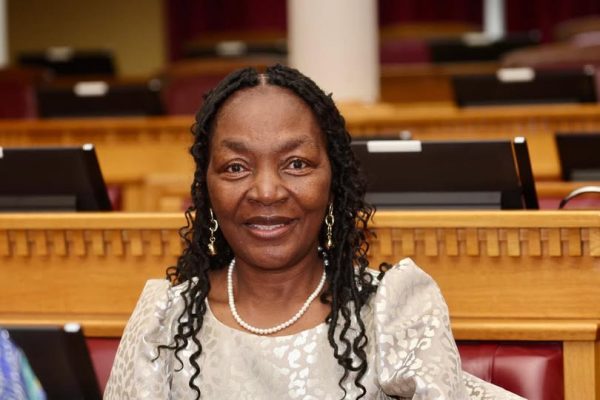
No tribute to IUM’s transformation would be complete without acknowledging the pivotal role of its founder, Honourable Professor David Richard Namwandi. A distinguished scholar and seasoned professor of Management, Professor Namwandi’s visionary leadership has redefined what is possible in Namibian higher education. From founding IUM with a single student to overseeing its expansion into multiple campuses including the miracle of Nkure-Nkuru his journey is a testament to the power of determination, intellect, and service-driven leadership.
Under his stewardship, IUM has become a symbol of indigenous intellectual sovereignty. It is not just Namibia’s first Black-owned private university it is also an emblem of African educational resilience and innovation. The growth of the Nkure-Nkuru Campus reflects Professor Namwandi’s personal philosophy: that education must not be confined to urban elites but must permeate the rural heartlands where it can ignite untapped potential.
The story of the IUM Nkure-Nkuru Campus is still being written, and the future promises even greater achievements. Plans are underway to introduce doctoral programmes, expand student housing facilities, enhance digital learning platforms, and forge international academic partnerships. These initiatives are designed not only to elevate the campus’s academic standing but also to ensure that it remains responsive to the evolving needs of the community and the nation at large.
In an era defined by uncertainty and rapid change, IUM’s continued investment in Nkure-Nkuru offers a model of purposeful, community-rooted development. It shows how higher education can be harnessed as a tool not merely for individual advancement but for collective transformation.
What began behind a bar has now become one of Namibia’s most remarkable education success stories. The IUM Nkure-Nkuru Campus stands today as a monument to what is achievable when vision meets perseverance, when community needs meet institutional responsiveness, and when education is treated not as a privilege but a fundamental right.
Through this metamorphosis, Professor David Richard Namwandi and the broader IUM community have etched an indelible legacy in the sands of Nkure-Nkuru, a legacy that will inspire future generations of Namibian students to believe in the boundless power of dreams, and the institutions that bring those dreams to life.
Indeed, the journey from behind a bar to a state-of-the-art campus is more than a tale of infrastructure and numbers; it is a compelling narrative of national transformation, social inclusion, and academic rebirth. Nkure-Nkuru has not only gained a university; it has gained a future.
Stephanus Pombili is an independent consultant, and researcher. The view expressed here are his own and do not reflect the official position of IUM