



By: Hiskia Asino
Namibia’s pursuit of economic diversification and industrialization under the leadership of President Dr. Netumbo Nandi-Ndaitwah presents a timely opportunity to unlock the full potential of the country’s natural resources. While recent discoveries in the mining, oil and gas sectors have attracted significant international investment, it is equally important that Namibia prioritizes industries capable of delivering long-term, sustainable economic and social benefits.
Aquaculture is one such industry.
Unlike extractive industries, whose resources are finite and subject to depletion, aquaculture offers a renewable pathway to economic growth, food security, employment creation and rural development. As global demand for aquatic food continues to rise, Namibia is uniquely positioned to become a regional leader in sustainable aquaculture, provided the necessary investments, policies and partnerships are strengthened.
Although Namibia possesses abundant freshwater and marine resources suitable for aquaculture development, the sector has historically faced significant challenges. Limited access to commercial fish seed, the high cost of imported aquaculture feeds, inadequate value chain development and constrained investment have slowed the industry’s growth. Furthermore, Namibia continues to rely heavily on foreign technology and financial capital to develop many of its natural resource sectors, reducing the country’s bargaining power and limiting opportunities for local value addition.
Despite these challenges, encouraging progress is being made.
International investors have already recognized Namibia’s immense aquaculture potential. Norwegian investors, for example, are preparing to invest close to N$1 billion into the development of a salmon farming industry. This level of confidence demonstrates that Namibia possesses the natural conditions necessary to compete within the global aquaculture market.
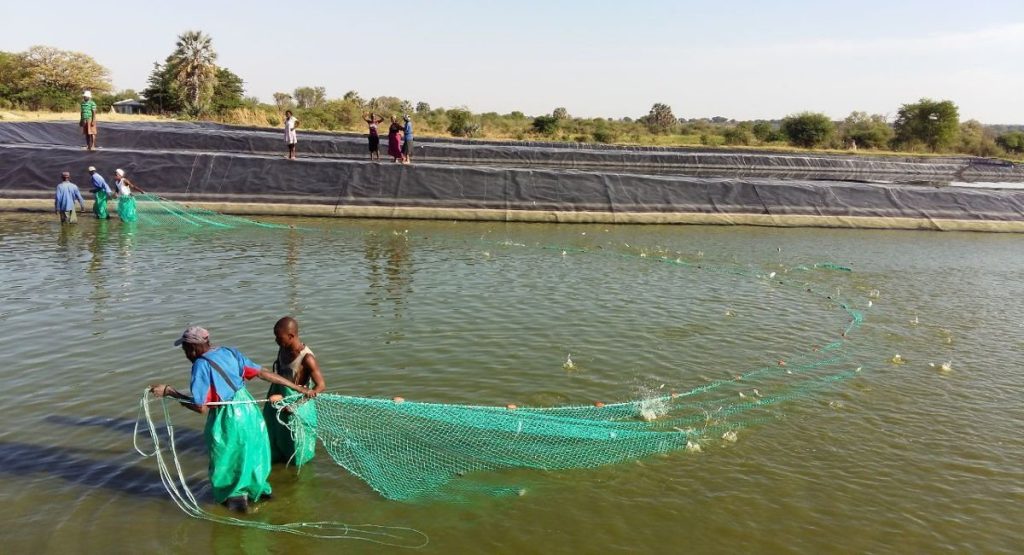
Equally commendable has been the Namibian Government’s long-standing commitment to developing the sector. Since 2003, Government has invested substantial resources into aquaculture infrastructure, research and farmer support programmes aimed at stimulating both commercial production and small-scale aquaculture enterprises. These investments have laid an important foundation upon which future growth can be accelerated.
One of the most significant breakthroughs has been achieved through local innovation. Namibian company Tru Africa Investment has successfully developed aquaculture feeds using locally sourced ingredients, replacing a substantial proportion of expensive imported raw materials. This innovation has significantly reduced production costs while improving accessibility for emerging fish farmers.
Complementing these developments, research undertaken by the University of Namibia (UNAM), the Ministry of Agriculture, Fisheries, Water and Land Reform (MAFWLR) and private sector partners has demonstrated promising results regarding fish growth performance using alternative locally available feed ingredients. These findings not only validate Namibia’s research capacity but also provide practical solutions that strengthen the competitiveness and sustainability of the local aquaculture industry.
These achievements have largely been realized through the dedication of a relatively small group of researchers, government institutions and private stakeholders operating with limited financial and technical resources. Their success demonstrates what is possible when innovation, collaboration and commitment converge around a common national objective.
However, realizing the sector’s full potential will require broader national participation.
The commercial fishing industry, mining sector, financial institutions, development agencies and private investors all have an important role to play in building a robust aquaculture value chain. Strategic partnerships can accelerate investment in hatcheries, feed production, processing facilities, cold-chain logistics, research, training and market development, creating an integrated industry capable of competing regionally and internationally.
Globally, aquaculture is recognized as the fastest-growing food production sector. Today, aquaculture contributes more aquatic food for human consumption than capture fisheries, generating billions of dollars annually and supporting millions of livelihoods worldwide. Beyond economic returns, the industry contributes directly to food security, nutrition, job creation, environmental sustainability and the restoration of natural fish stocks through responsible stock enhancement programmes.
For Namibia, these global trends present a strategic opportunity.
As the country advances its industrialization agenda, investment decisions should prioritize industries capable of generating sustainable wealth long after mineral deposits have been exhausted. While mining, oil and gas remain important drivers of economic development, they are inherently finite resources. Aquaculture, by contrast, is renewable, scalable and capable of delivering continuous economic returns when responsibly managed.
Moreover, aquaculture requires comparatively lower capital investment to establish than many heavy industries, making it accessible to youth entrepreneurs, women, cooperatives and rural communities. This positions the sector as a practical solution for addressing unemployment, stimulating local enterprise development and strengthening household food security.
The time has come for Namibia to elevate aquaculture from a developing sector to a national economic priority. By strengthening public-private partnerships, investing in research and innovation, supporting local manufacturing, and developing competitive value chains, Namibia can transform aquaculture into a cornerstone of sustainable industrialization.
Aquaculture is no longer an industry of the future—it is an industry of the present. With the right leadership, investment and commitment, it can become one of Namibia’s most powerful drivers of inclusive economic growth, wealth creation and national food security for generations to come.
Hiskia Asino
Master of Science in Aquaculture and Nutrition, Ocean University of China
PhD Candidate, Sam Nujoma Campus, University of Namibia
Chairperson, Universal Aquaculture Association
National Aquaculture Consultant, Food and Agriculture Organization (FAO)