



By: Mathias Hangala
The global economy has shown notable resilience despite ongoing trade disruptions, according to a recent report by the International Monetary Fund (IMF).
The report, however, cautions that this resilience masks underlying vulnerabilities, particularly those linked to the heavy concentration of investment in the technology sector.
According to the IMF’s latest projections, global economic growth is expected to remain steady at 3.3 percent this year. This represents an upward revision of 0.2 percentage points from the Fund’s October estimates, with most of the improvement driven by stronger performance in the United States and China.
The report noted that a key driver of this growth has been the surge in information technology investment, especially in artificial intelligence (AI) which continues to boost overall business investment and economic activity.
The IMF, however, warns of rising risks in regards to investment and market optimism, which are increasingly concentrated in the technology sector, raising concerns over leverage, elevated asset valuations, and potential fallout should returns fall short or financial conditions tighten. Additionally, the negative effects of trade disruptions on growth are expected to accumulate over time.
Speaking on the sidelines of the recently concluded World Economic Forum (WEF) summit in Davos, Switzerland, IMF Managing Director Kristalina Georgieva emphasised the growing importance of geopolitics in shaping global economic performance.
“The Davos week is over. What was here on display? The significance of geopolitics for economic performance and the optimism of the private sector for 2026, driven in particular by faith in AI,” Georgieva said.
She added that while the global economy has proven resilient, sustaining this momentum will depend on sound macroeconomic policies.
“This resilience can last, provided we maintain strong fiscal, monetary, and financial policies, provided AI delivers on its promise to increase productivity, and provided regulation is applied where necessary without hindering business performance,” she noted.
Panelists at the summit also agreed that governments ought to significantly increase investment in skills development. They noted that for every one data scientist in Africa, there are 14 in Europe, underscoring the scale of the skills gap.
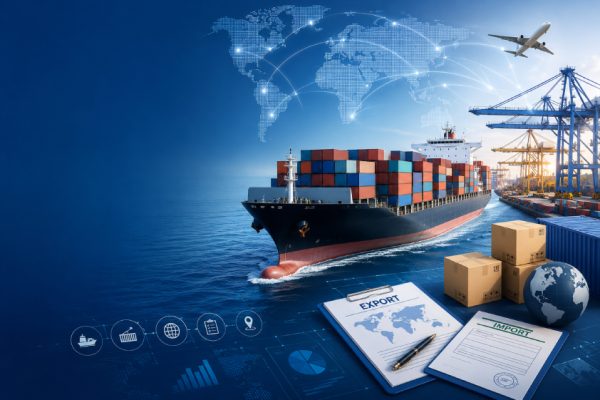
Closer to home, Namibia’s trade performance also reflects broader global economic dynamics. According to the Namibia Statistics Agency’s (NSA) Quarterly Trade Bulletin for October 2025, the country’s export revenue stood at N$13.2 billion, marking an increase of 78.7 percent compared to September 2025. Import expenditure rose to N$16.1 billion, up 48.5 percent from N$10.8 billion in the previous month.
These figures resulted in a trade deficit of N$2.9 billion, as imports continued to outpace exports.
The NSA report indicated that Namibia’s top exports included uranium (33.2 percent), non-monetary gold (15.6 percent), diamonds (9.0 percent), fish (8.6 percent), and copper ores and concentrates (6.8 percent). These exports reached approximately 106 markets worldwide, four (4) more than in September 2025.
On the import front, Namibia sourced goods from 160 markets globally, an increase of 14 markets compared to the previous month.
The Agency noted that these developments align with Namibia’s export and import market diversification strategy, and the country’s efforts to strengthen intra-African trade under the African Continental Free Trade Area (AfCFTA).