

By: Nghiinomenwa-vali Hangala
The country treasurer, Ericah Shafudah, has been given the green light by Parliament and the President to start releasing the National Budget funds to various Offices, Ministries, and Agencies (OMAs) for the procurement and fulfilment of various commitments.
This is after the long debate on the FY2026/27 Appropriation Bill, which was tabled almost two months ago in the National Assembly for debate on 26 February 2026.
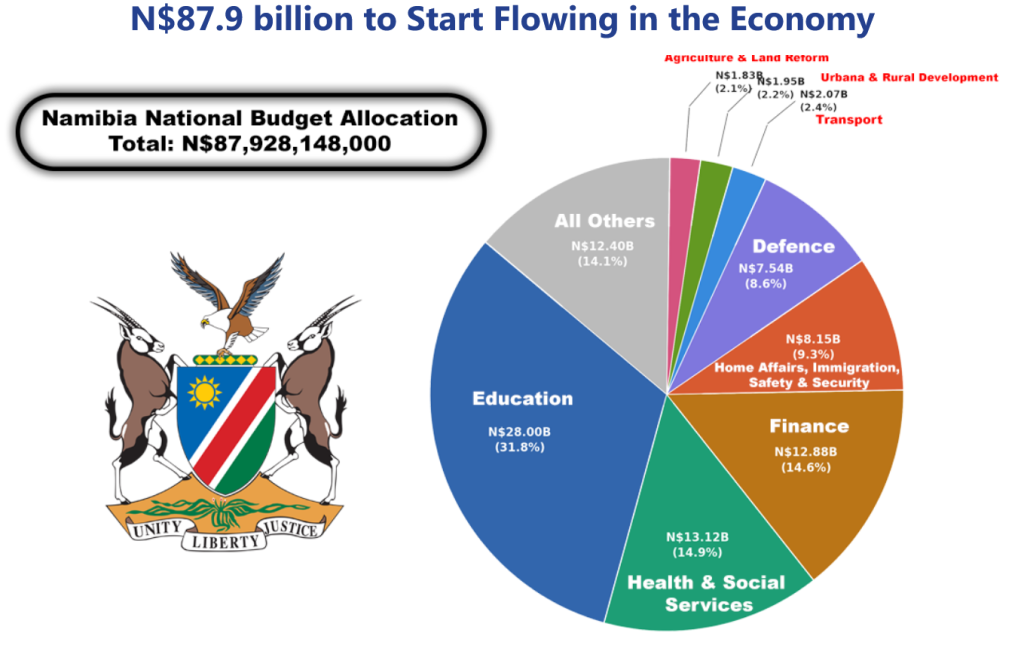
The FY2026/27 Appropriation Bill (operational and development budget) stood at N$87.9 billion without statutory payment (interest on borrowing).
The Minister of Finance/Treasurer needs the Bill to be approved by Parliament and signed into law by the President before it can start releasing the money to all those tasked to execute government mandates.
However, to ensure that government operations do not come to a halt, the Minister of Finance is given the power by the State Finance Act to spend 30% of the budget before it is approved.
On Wednesday, the Ministry of Finance updated that the President, on 21 May 2026, signed the Bill into law as passed by the Parliament.
For the appropriation of N$87.9 billion to meet the financial requirements of the
State during the financial year ending 31 March 2027.
The national budget is one of the biggest stimulus packages for the domestic economy as it involves procurement of various products and services from the private sector through the OMAs.
If the OMAs adhere to the local sourcing principle, most of the National Budget will be retained by local taxes from local companies.
Most of the national budget will be spent through the Education Ministry/sector, which will receive N$28 billion of the budget, followed by the Ministry of Health, which will get N$13.1 billion.
The two Ministries are the biggest consumers in the economy in terms of goods that include food items, cleaning materials, pharmaceuticals, and other daily consumables produced locally.
However, most of the pharmaceutical products are imported and become the main source of the country’s income losses.
Another big beneficiary of the National Budget, which has potential for local sourcing, is the Ministry of Defence, which will receive N$7.5 billion.
This will be for food items, clothing, and other items that the defence sector consumes monthly and can be sourced locally.
Another Ministry that usually retains local revenue through local companies via procurement is the Ministry of Works and Transport, which will get N$2.6 billion for the two votes.
The Ministry procures construction and civil works and issues some of the biggest contract bids. However, it has now faced scrutiny and criticism together with the water sector for awarding big bids/tenders to foreign originating companies.
This is an act that has been linked to the collapse of the construction sector, local companies, and a number of jobs.
The signing off of the National budget is expected to stimulate economic activities as most OMAs start their procurement process in line with their procurement plans.