
By: Nghiinomenwa-vali Erastus
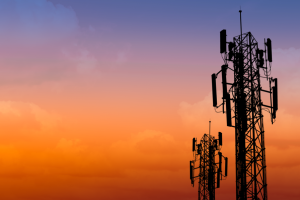
The Ministry of Mines and Energy has revealed that electrifying a single rural household in some rural areas can cost between N$80,000 and N$300,000, depending on distance, terrain, and settlement patterns.
This serves as a reflection of the costs of extending infrastructure to various small and remote communities in the country.
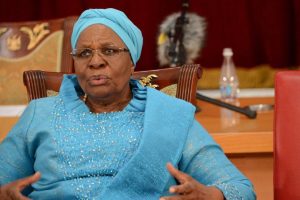
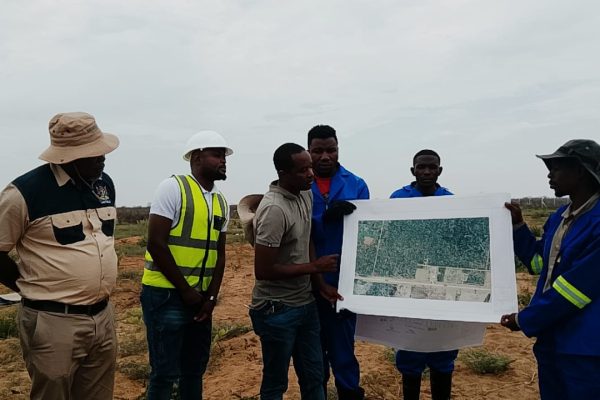
As a result, during the groundbreaking ceremony and site handover of peri-urban electrification projects in the Hardap Region, the Energy Minister, Modestus Amutse, advised households to go off-grid with solar options. He indicated that rural electrification is considerably challenging and expensive.
By comparison, peri-urban electrification typically costs between N$30,000 and N$50,000 per household.
Amutse noted that electricity infrastructure is expensive to build and even more expensive to maintain over long distances.
“If we attempt to solve every challenge through grid extension alone, we will slow ourselves down. That brings me to the issue of solar energy,” he stated.
The Ministry already operates a solar revolving fund, which assists households in financing solar systems below market rates. Amutse has consented that the country has to accelerate peri-urban electrification while being honest about the tools available in achieving universal access.
Under the Energy Ministry’s Service Level Agreement with the Southern Regional Electricity Distributor (SORED), the government has allocated N$12 million to electrify 969 peri-urban households across the Hardap and ǁKharas Regions.
These projects will benefit communities in Rehoboth, Mariental, Aranos, Hoachanas, and Gibeon, as well as Aroab, Bethanie, Berseba, Aus, Grünau, and Warmbad.
In addition, the government has announced that it is working with a range of partners under initiatives such as Mission 300, which aims to expand access to electricity by combining grid expansion with safe, properly regulated solar solutions.
With that, Amutse explained that “Where the grid is the right solution, we will extend it. Where solar is faster and more practical, we will support it. And where both are needed, we will use both.”
He also updated that the Ministry intends to increase electrification allocation to at least N$20 million, beyond the current allocation (N$12 million) through partnerships with other stakeholders and funding partners.
Amutse said the only foreseeable challenge going forward will not be funding, but the ability to coordinate, execute on time, and manage projects transparently.
According to the National Planning Commission, less than 60% of the Namibian populace has access to electricity. Namibia’s issues lie not only in grid connection, but also in generation, as the country struggles to meet its local demand, relying on neighbours’ help meet said demand.
Currently, Namibia imports at least 60% of its electricity supply from South Africa, Zambia, and through the Southern African Power Pool – especially in winter.
With rising demands for energy in Namibia’s neighbouring countries, concomitant with the recurrent droughts as a result of the effects of climate change, Namibia faces heightened energy insecurity risks, according to the Planning Commission.
Efforts are being made to optimise the use of solar and wind in the nation’s energy mix, with the generation market liberalised to a certain extent.
At the same time, the country is also considering nuclear energy generation as a viable alternative for energy generation.
erastus@thevillager.com.na