

By: Hee-Dee Walenga
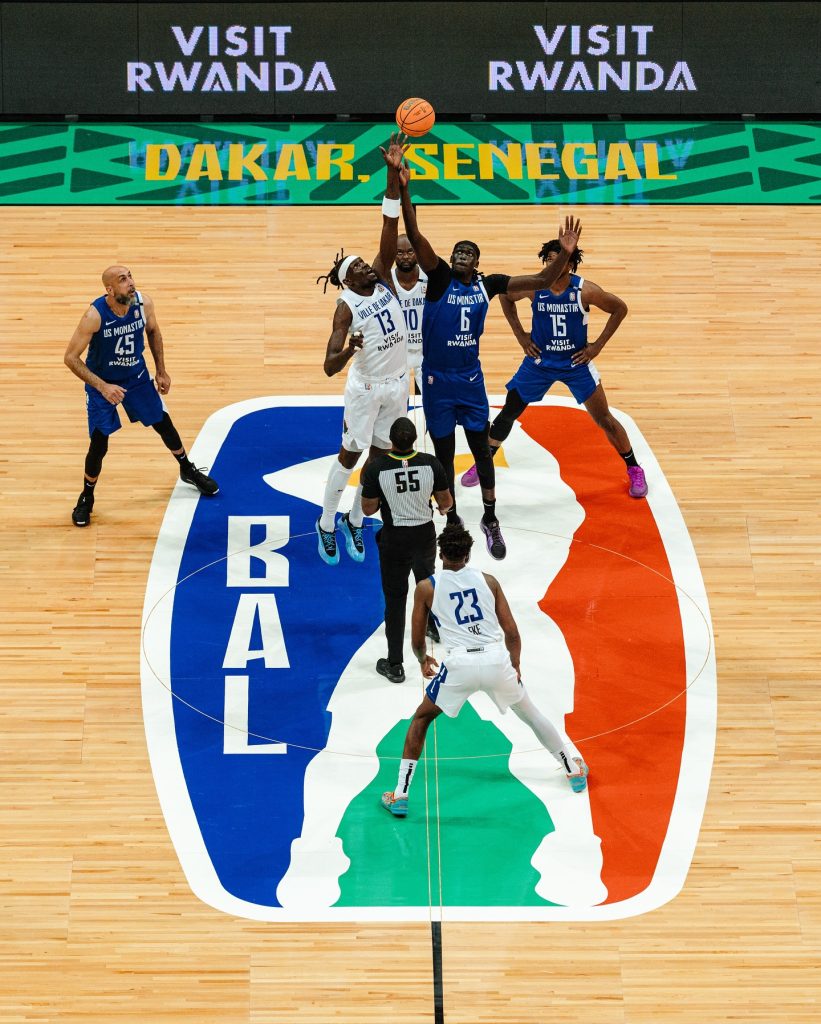
The sixth season of the Basketball Africa League (BAL) is approaching its climax, with the playoffs of Africa’s premier basketball competition currently underway in Kigali, Rwanda, at the BK Arena.
The BAL is the brainchild of a collaboration between the National Basketball Association (NBA) and the International Basketball Federation (FIBA).
The teams left in the competition are Al Ahly (Egypt), FUS Rabat (Morocco), Ville de Dakar (Senegal), RSSB Tigers (Rwanda), Petro de Luanda (Angola), Dar City (Tanzania), Al-Ahly (Libya), and Club Africain (Tunisia). The two East African sides appear in the competition for the first time.
At the time of writing, the two-legged quarterfinals have concluded, with Al Ahly, Petro de Luanda, BAL debutants RSSB Tigers, and Al Ahly advancing to the semi-finals.
Season 6 of the BAL featured 16 total teams from South Africa, Angola, Tunisia, Egypt, Nigeria, Senegal, Côte d’Ivoire, Rwanda, Libya, Morocco, Kenya, and Tanzania evenly split into the Kalahari and Sahara conferences, which saw over 75,000 fans attend the matches in both Morocco and South Africa. The league also generated a 1,000% year-over-year growth via the BAL.NBA app.
The young competition has been the picture of parity, with five different champions being crowned in the competition’s opening five years. Al Ahly of Egypt and Petro de Luanda of Angola have the opportunity to become the first two-time champions.
BAL’s official commercial partners listed on their website are Budweiser, Hyundai, Puma, Afreximbank, Castle Lite, Amazon Web Services, SA Tourism, Visit Rwanda, Wilson, Wave, ServiceNow, RwandAir, Qatar Foundation, Greenride Africa, and Air Senegal SA.
According to NBA Africa CEO, Clare Akamanzi, the sport of basketball has generated US$250 million in the past decade for African economies and created over 35,000 new jobs.
According to BAL President Amadou Gallo Fall, the league generated 720 million social media views last season and 15.8 billion digital impressions globally. The league also has 2 million followers across all social media platforms.
“Over the last six seasons, we’ve seen incredible growth of the BAL. We’ve seen record attendance, and viewership, merchandise sales, and social media engagement,” said NBA Deputy Commissioner Mark Tatum.
To build on the league’s growth, the BAL has opted to shift from being a league that teams can qualify for, to being a franchise-orientated league with fixed teams attached to Africa’s biggest cities.
“It is going to unlock new opportunities for infrastructure development, fan development, and commercial partnerships,” Tatum expressed.
“We are building much more than a competition. We are developing an entire basketball ecosystem across the continent,” said FIBA Africa President, Anibal Manave.
Commercialisation is at the heart of the shift in strategy. Akamanzi explained that the uncertainty that comes with waiting for teams to qualify each year makes it harder for the league’s commercial arm to attract corporate sponsors.
“We’re thinking of going to a semi-closed league where we’ll have some teams that are permanent. We’re thinking about ten permanent teams and then two ‘open road to BAL’ type of competition,” the CEO stated.
“Another benefit of the franchise model is that there will be more games in more countries, which will expand the number of people that have access to the games. Our media partners have already told us that it’s a very compelling proposition,” added Tatum.
NBA Commissioner, Adam Silver, stated in 2021 that NBA Africa is worth “nearly US$1 billion.”