

By: David Shoombe
In the first half of 2026, the National Energy Fund within the Ministry of Industries, Mines and Energy played a central role in shielding energy consumers from bearing the full impact of rising energy costs.
However, despite the government’s subsidisation of electricity and fuel, consumers continue to feel the effects of increasing prices for both electricity and fuel.
The recent increase in fuel prices has raised concerns about the government’s long-term strategy for addressing energy poverty.
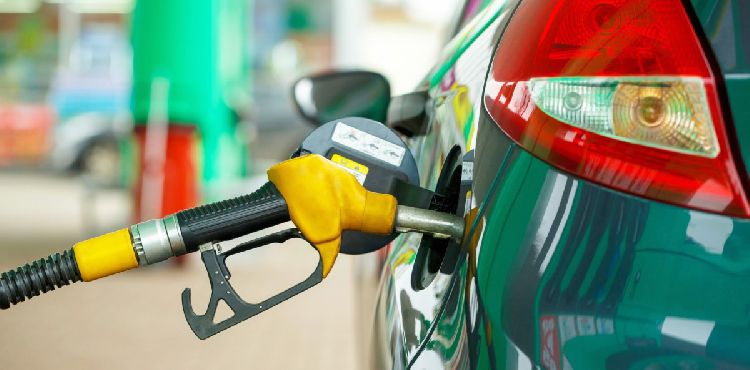
The Ministry has announced that Petrol 95 will be costing N$ 24.48 per litre, Diesel 50 ppm will be at N$ 26.26 per litre, and diesel 10 ppm will be at N$ 26.36 per litre. The price increment will be effective from 5 August 2026.
The recent announcement of the increment in the price of fuel by the Ministry of Industries, Mines and Energy has shed light on the burden on the National Energy Fund (NEF) in cushioning civilians.
According to the Minister of Industries, Mines and Energy, Modestus Amutse, both oil products will increase by 200 cents due to the re-enstatement of the 50% levy on fuel products.
The government temporarily paused the 50% levy for the past four months in order to shield the local economies from absorbing huge prices on fuel products.
The re-enstatement of the 50% Energy levy signals the government’s intention to sustain revenue collections and keep the NEF operational to deal with energy price fluctuations.
The oil price continues to dig into the government coffers, as the USA continues its attacks.
During April and May, the NEF absorbed N$ 1.3 billion, which excluded the import premium, averaging approximately N$300 million per month.
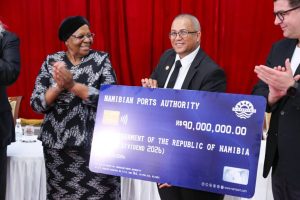
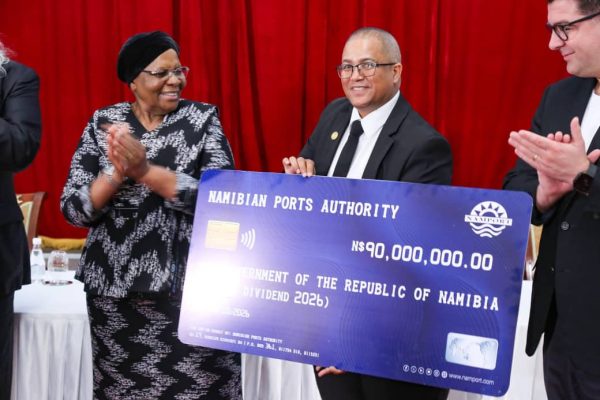
The fuel price adjustments come one week after the NEF further absorbed funds by contributing N$90 million to the electricity price when the Electricity Control Board (ECB) approved an average NamPower bulk electricity tariff increase of 3.7%, effective 1 August 2026.
According to the ECB, “The Ministry of Industries, Mines and Energy allocated N$90 million from the Long-Run Marginal Cost Fund and the National Energy Fund to help reduce the impact of the increase on end users.”
It is reported that NamPower had initially applied for an 8.4% bulk tariff increase.
SADC Energy Monitor data shows that Namibia continues to have the highest electricity prices in Southern Africa due to the high dependence on imports.
This makes Namibia’s process of industrialisation extensive and broadens the huge gap in income inequality in Namibia.
Statistics from the International Business Review (IBR) indicate that Namibia has the highest electricity prices in Southern Africa and remains heavily dependent on imported electricity.
The report estimates that approximately N$ 8.8 billion was spent on imported power between January 2024 and December 2025.