

By: Dwight Links
The world is currently entering a water bankruptcy phase, found the United Nations University Institute for Water, Environment and Health (UNU-INWEH).
The Institute’s chief author of the Global Water Bankruptcy report, Kaveh Madani, stated that this phase is a reality the world currently faces on fresh water sources.
“This report declares that the world has already entered the era of Global Water Bankruptcy. This is not a distant threat but a present reality: many human-water systems are now in a post-crisis failure state where past baselines can no longer be restored,” outlined Madani.
According to the UNU-INWEH, the term ‘Global Water Bankruptcy’ is defined as a persistent post-crisis state of failure.
“In this state, long-term water use and pollution have exceeded renewable inflows and safe depletion limits, and key parts of the water system can no longer realistically be brought back to previous levels of supply and ecosystem function,” noted Mandani.
‘Water stress’ and ‘water crisis’ are said to be insufficient terms of describing the world’s new water realities.
The report indicates that many rivers, lakes, aquifers, wetlands and glaciers have been pushed beyond tipping points and cannot recover to their past baselines, “meaning that the language of temporary crisis is no longer accurate in many regions. The global water cycle has moved beyond its safe planetary boundary. Together with climate, biodiversity, and land systems, freshwater has been pushed outside its safe operating space, reinforcing the diagnosis that the world is living beyond its hydrological means.”
Madani explained that the report was released at the same time an analyses showed that several countries had citizens living with precarious livelihoods as a result of an unsecured future on water supply.
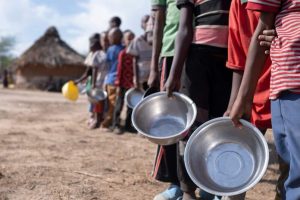
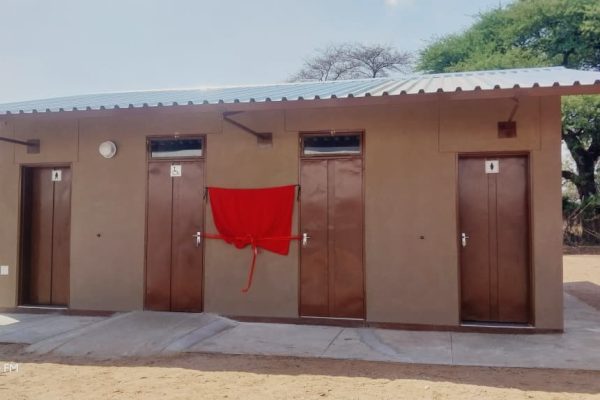
“Billions of people are living with chronic water insecurity. Around 2.2 billion people still lack safely managed drinking water, 3.5 billion lack safely managed sanitation, and nearly 4 billion face severe water scarcity for at least one month each year,” he highlighted.
He added that almost three-quarters of the world’s population live in countries classified as water-insecure or critically water insecure.
Water Sources Under Strain
The report outlines how the pressure on water resources has intensified, as nature and human societies continue to compete for the same water sources.
“Surface waters and wetlands are shrinking on a massive scale. More than half of the world’s large lakes have lost water since the early 1990s, affecting about a quarter of the global population that relies on them directly,” shares the report.
More worrisome, the report adds that over the last five decades, humanity has lost roughly 410 million hectares of natural wetlands – almost the land area of the European Union – including about 177 million hectares of inland marshes and swamps, roughly the size of Libya, or seven times the area of the United Kingdom.
“The loss of ecosystem services from these wetlands is valued at over US$5.1 trillion, similar to the combined GDP of around 135 of the world’s poorest countries,” indicates the UNU-INWEH.
Another concerning trend highlighted by the researchers has been that greater environmental threats have arisen as a result of groundwater not being able to be replaced.
“Groundwater depletion and land subsidence show that hidden reserves are being exhausted,” said the researchers.
Around 70% of the world’s major aquifers show long-term declines, while land subsidence linked to groundwater over-pumping now affects more than 6 million square kilometres (almost 5% of the global land area) and nearly 2 billion people.
As a result, according to the report, storage is reduced and flood risk is increased in many cities, deltas and coastal zones.
The Institute also notes that water quality degradation further reduces usable water and accelerates the global bankruptcy.
“Growing loads of untreated wastewater, agricultural runoff, industrial pollution, and salinisation are degrading rivers, lakes and aquifers, shrinking the fraction of water that is available,” highlighted the authors.