

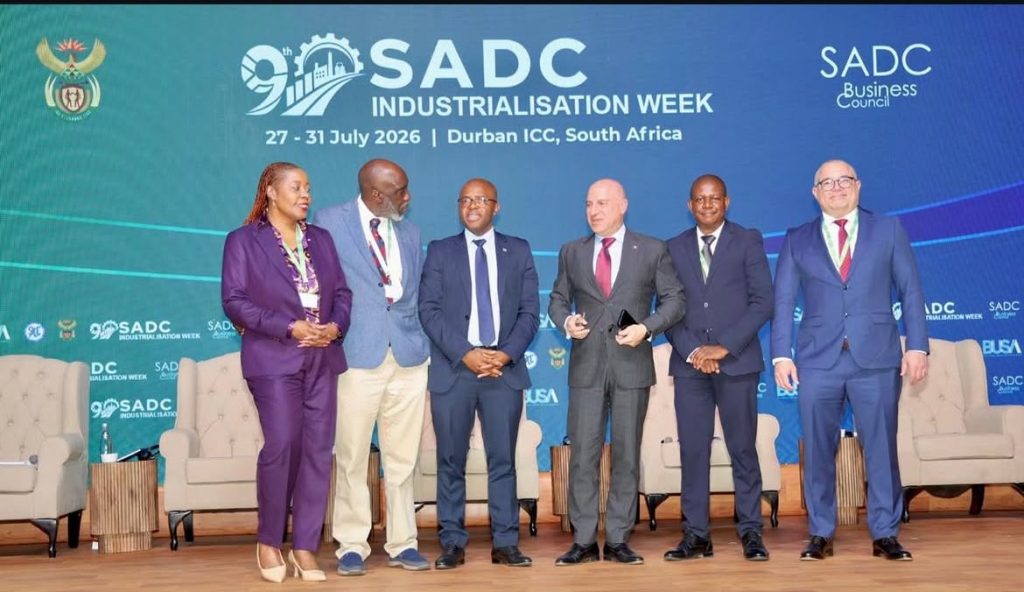
By: Helmut Mahongo
The Southern African Development Community (SADC) recently held its 9th Industrialisation Week in Durban, South Africa, from the 27th to the 31st of July.
The event was convened under the theme: “Resilient, Sustainable and Inclusive Industrialisation through Infrastructure Development, Agriculture and Critical Minerals Transformation in Pursuit of a Just World.”
The event brought together policymakers, business leaders, industry experts and developmental partners among other interested stakeholders, serving as a strategic platform for dialogue, collaboration and partnership-building aimed at accelerating industrial development across the region.
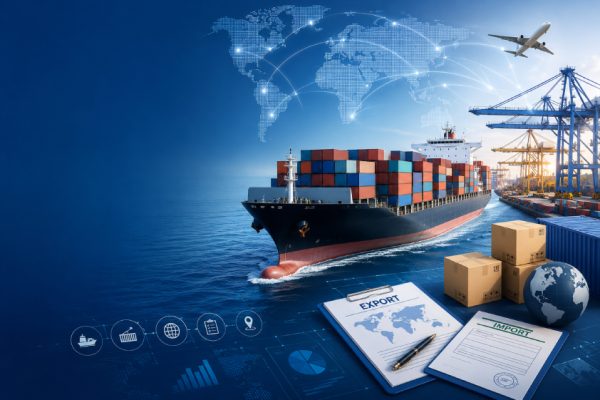
Some of the objectives on the agenda were: the development of regional value chain in agro-processing, pharmaceuticals, consumer goods and critical mineral beneficiation, investment mobilisation, innovation entrepreneurship, and the promotion of infrastructure development in energy and digital transformation.
While addressing the participants, the Secretary-General of the African Continental Free Trade Area (AfCFTA), Wamkele Mene, said ambition alone will be inadequate to drive intra continental and regional trade.
“When regional ambition is matched by political commitment and the desire for implementation, transformative outcomes become indeed possible,” stated Mene.
In his opening statement, South Africa’s Trade, Industry and Competition Minister, Parks Tau, emphasised the need for industrialisation and regional integration, due to a rapidly changing global environment under constant threats from climate change, geopolitical uncertainty, technological disruption and shifting trade dynamics.
Tau also pointed to the rising protectionist trade policies and increasing global competition, which are further presenting significant challenges to African economies.
He highlighted that such behavior presents more reason for the region to adopt and build more diversified, resilient and inclusive economies.
SADC’s Deputy Executive Secretary for Regional Integration Angele N’Tumba led the discussion in the direction of science, technology and innovation, highlighting the need for industrialisation to align with innovations.
N’Tumba noted that innovation enables industries to become more productive, efficient and competitive while industrialisation creates demand for new technologies, production processes and business models that respond to changing market needs.
She also directed the attention of the participants to SADC’s Regional Indicative Strategic Development Plan (RISDP) 2020-2030 and its recognition of the SADC Industrialisation Strategy Roadmap as fundamental enablers of industrial transformation.
According to SADC’s Protocol on Science, Technology and Innovation, which was signed in 2008, “part of SADC’s vision is to develop a region where science and technology drive sustainable social and economic development.”
Participants emphasised agricultural transformation and agro-processing as the key drivers of industrial development and food security, and the promotion of value addition and beneficiation of critical minerals to support manufacturing and expand participation in global green value chains.
SADC records indicate that most Member States are still reliant on primary commodities as a source of export earnings, which makes them vulnerable to shocks mostly associated with commodities like oil, mineral resources and primary agricultural products.
According to SADC, its Industrial Strategy and Roadmap 2015-2063 aims to promote industrialisation, enhance competitiveness and deepen regional integration through structural transformation, leading to increased manufactured goods and exports.
Using the manufacturing sector’s performance as an indicator of the state of industrialisation in the region, the bloc found that from 2008-2018, the sector’s performance was weak for the entire recorded period.
It was found that the share of the manufacturing sector in the region with overall GDP was in decline from 13.1% in 2009 and hit its lowest point of 10.9% in 2013 before showing signs of a steady rise again to 11.9% in 2018.
SADC also acknowledges the importance, after learning from international experience, that the extent to which structural transformation takes place in a country can be a significant determining factor in the failure or success of the country’s industrial development.