


By: Hileni Inane
As I sat in the audience watching my first ever acrobatic performance show at the Shanghai Circus World, one of the most talented performances I have seen by the way, I realised that the true value of tangible results had a lot to do with trusting that the person on the other side would be there to catch you midair.
Likewise, a nation voting for a president, hoping that they would get into office and prioritise the needs of the majority.
The Chinese culture and museum visits are both memorable, as they are experiences so wholesome and preserved for visitors from around the world to witness.
The visit had little to do with the impressive skyscraping buildings, or, Shanghai having the longest subway network in the world that features hundreds of stations in it.
It is a city built on culture. With a people first approach that includes meticulous planning that is executed as if the very lives of the planners and inhabitants depended on it.
POV
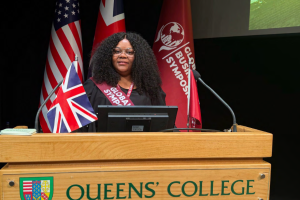
As part of the People-to-People Exchange programme, in collaboration with the Shanghai Municipal Council, I learnt that the most meaningful relationships between nations are forged through conversations, lived experiences and the ability to learn from one another.
My personal Shanghai experience is far from the assumptions. It taught me so much about the future, the importance of planning and the possible direction of AI technology.
China is often described as a futuristic country, buildings competing with the clouds for space up in the sky, roads that run parallel to one another and cities so green you would visualize the garden of Eden.
However, this is the result of endless planning, innovation and people working together beyond the political scope to make the city function on “a people first” approach in administration.
The experience teaches perseverance, sticking to a plan and executing in accordance to the blueprint.
The Shanghai council planning committee was the highlight of my experiences, to witness planning that is so meticulous.
Planning the town of Shanghai has been ongoing for ages and continues to be executed according to the original blueprint, something that is nonexistent in African leadership.
New Horizons
Plans are made according to not just the current plans, they also speak to the future of innovation. Another key take away was the embrace of AI technology in China, something African countries still have miles to catch up to.
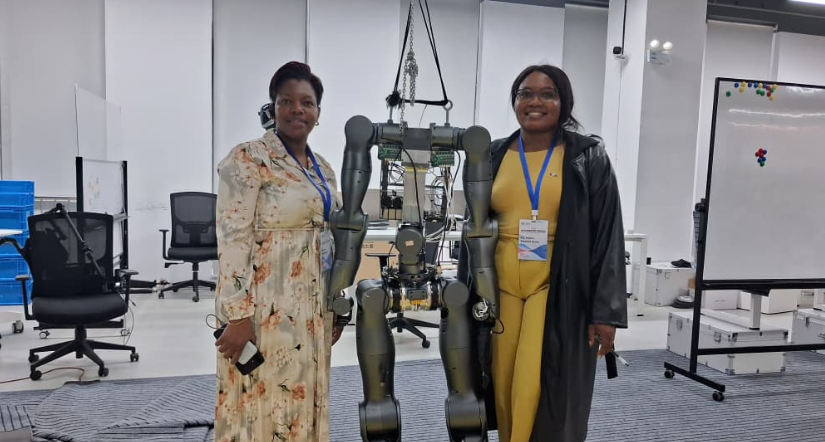
Before this visit I heard about robots, evensioned that they would be gigantic pieces of metal with messy joints and slow movements, which was contrary to the AI facilities we explored.
The AI facilities are beyond advance, equipped to manufacture humanoids, service delivery robots and some that could even help you babysit.
An industry full of possibilities.
From far, you would assume that China’s comprehensive system for social media regulation is excluding outside access to the rest of the world, yet when you look closer, you realise this is how they are able to control and execute the world class development plans it has in place.
It is like household rules – if you grew up in a Oshiwambo Tate’s house, you will eventually find out why the house rules said ‘don’t fetch wood at night’ because one day you will tie the firewood with a snake.
This concept to me is the same as raising your children, it gives you the ability to control what comes and goes, instilling discipline and hard work to an extent of your liking.
Society
Through interaction with the volunteer students these morals showed, they were hospitable, kind and very disciplined.
The students spoke highly of being raised to work hard, where everyone had to be an over achiever academically in order to bring change to China.
This, to my observation, grooms a nation that is future focused, determined and that works towards achieving the same overall goals.
The experience and interaction opened my eyes to how African leaders can bring about better change to African countries. China is highly focused on providing solutions that speak to Chinese problems.
African leaders should learn from the Chinese implementation style instead of applying the Chinese blueprint to an African blueprint, hoping to solve African problems with Chinese solutions.
A closer look at adopting and reworking those models to speak to African needs and realities.
I would like to believe each adoption should be aimed at solving an actual problem and not for the mere purpose of adopting what China is implementing, without assessing if it will materialise when applied to an African context.
The one thing I mostly wish Namibia would take away from China is the long term planning and its execution style, that no matter the number of presidential terms, the futuristic plan for the country stays the same.
As a nation, we could come up with achievable milestones that the government is tasked to complete before moving on to the next implementation.
A model like the CPPCC that holds government officials responsible, which is accountable and ensures that the mandates and promises of the government are met for every citizen to benefit from.
From putting policies in places that protect the recently introduced industries and investing into more value addition systems.
Namibia is nowhere close to achieving the economic abilities of China, however a step towards a different approach could exactly be what it requires in order to give Namibians dignified housing and access to opportunities.
A country with a smaller population like Namibia should be easier to govern despite still being in its infancy stages of development. The Namibian government should adopt a leadership style that completes one set of goals before moving on to other phases, that way results are traceable and there is evident progression in development.
I could say the most beautiful souvenirs were the amount of gifts I returned with, however the biggest gift for me was my ability to learn, to experience and to learn first hand about Chinese history.
Understanding where they come from, where they are going, understanding why they took the approaches they are taking and being able to bring those lessons back home.
One day, when I do go back and observe different parts of China, I do wish to keep learning, to keep discovering, and to enjoy pieces of their culture and amazing cuisine.
Because, I now realise that bilateral cooperation and relationships should not just be about economical benefits, but that it should include an understanding of the place from where others are operating, their struggles, hopes and the aspirations they have for their countries.