



By: Nghiinomenwa-vali Hangala
The proposed National Strategy on Tree Planting 2026–2035 draft sets a target of planting and maintaining one million trees by 2030 and two million by 2035.
This was revealed by the Minister of Environment, Forestry and Tourism, Indileni Daniel, during Arbor Day (09 October 2026), the day was celebrated in Rehoboth.
The Minister noted that the strategy remains a draft awaiting final review and approval by the Cabinet. It creates the framework needed to bring regional efforts into a single national program across all 14 regions.
Daniel also called on developers and local councils to minimise unnecessary tree removal.
“Plan for appropriate replacements, and maintain local green spaces,” se said.
She also said that families, farmers, businesses, churches, and community groups all have a role to play, whether by planting, supporting a nursery, or protecting existing trees.
Daniel has also reminded the public that “In a dry country like ours, we understand the value of a tree. Shade gives relief on a hot day. Roots hold the soil together.”
Adding that if the public protects the woodlands and restores damaged land, it will help communities cope with drought and a changing climate.
This year’s Arbor event comes shortly after Namibia updated its climate commitments from 2026 to 2035 under the Paris Agreement, through Namibia’s Third Nationally Determined Contribution (NDC 3.0).
“Those national commitments must now show results in our regions, towns, villages, and schools,” said Daniel.
Forestry and land use are at the center of the country’s NDC.
Namibia’s forests, woodlands, and soils store carbon, meaning the country absorbs more greenhouse gases than it releases.
Under NDC 3.0, MEFT is determined to maintain this role through better land management, restoration, and tree planting.
The Draft National Strategy on Tree Planting 2026–2035 sets a target of at least a 70% survival rate for monitored trees three years after planting.
Daniel has directed the Directorate of Forestry to advance all preparatory work and stakeholder coordination while this strategy moves through the official Cabinet approval process.
“I expect a clear delivery plan with assigned responsibilities, strict timelines, and regular progress updates. The Strategy must result in functioning nurseries, quality seedlings reaching communities, and active aftercare wherever trees go into the ground,” she said.
Minister has also called on her team to work closely with regional councils, local authorities, and traditional authorities to identify proper sites, organize local teams, and secure water and protection.
As for Schools and youth groups, they must have practical opportunities to participate, backed by training and advice from our forestry officers.
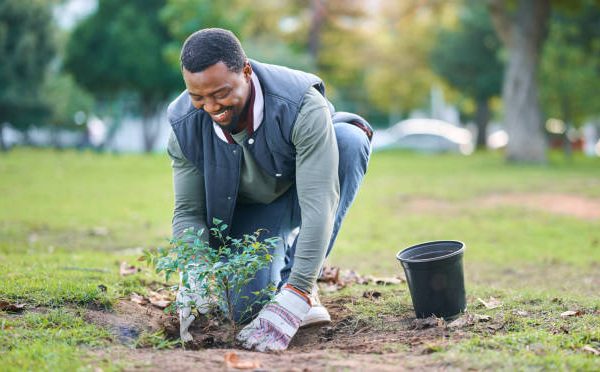
MEFT also handed over 500 tree seedlings: 100 for Kalkrand, 100 for the Governor’s Office, and 300 for Rehoboth.
Speaking at the same event, executive vice-president for Swakop, Irvinne Simataa, said that the mine plants are not simply part of the landscape; they are part of Namibia’s natural heritage, and their protection is a responsibility the mine takes seriously.
He explained that Swakop Uranium operates in a resource-intensive industry, and they recognise that their mining activities have an impact on natural resources and the environment.
“That is why environmental stewardship is not something we regard as an additional activity. It is part of how we do business,” said Simata.
Over the past decade, Swakop Uranium has invested in building environmental knowledge and capacity.
According to Simata, such investment includes identifying and employing young environmental scientists who contribute to the protection, monitoring and preservation of indigenous plant species and the broader environment in which we operate.
“Our approach is simple: understand our environment, manage our impacts responsibly and leave a positive legacy.
We continuously improve our Environmental Management Plan to minimise negative impacts while maximising the benefits of our operations,” he said.
Swakop Uranium has also supported the National Plant Genetic Resources Centre through initiatives including knowledge exchange and collaborative research, as well as in-situ and ex-situ conservation initiatives such as seed collection and germination trials.
Swakop Uranium is also supporting the expansion of the Seedbank storage facility, including additional cold-room and freezer storage capacity to accommodate seeds from national conservation initiatives.
Simataa noted that by preserving seeds and protecting rare and important plant species, the mine is helping to ensure that future generations have access to this natural heritage.
As part of the mine’s commitment to the seven schools, Swakop Uranium is providing each school with a set of gardening and tree-planting tools.
These include a wheelbarrow, watering cans, a 30-metre hosepipe, pruning shears, steel rakes, a pickaxe with a handle and a shovel.
erastus@thevillager.com.na