




By: Hertha Ekandjo
Economist Klaus Schade says there is still uncertainty and volatility in the market regarding the reduction in fuel prices, stating that they are not sure what the future will look like.
“Oil prices have been below a hundred dollars per barrel in the past so even if there was a ‘deal versus Iran’ and Iran could sell its output on the global market it might get a back slash of from other Organisations of the Petroleum Exporting Countries (OPEC) members by cutting their output,” he said.
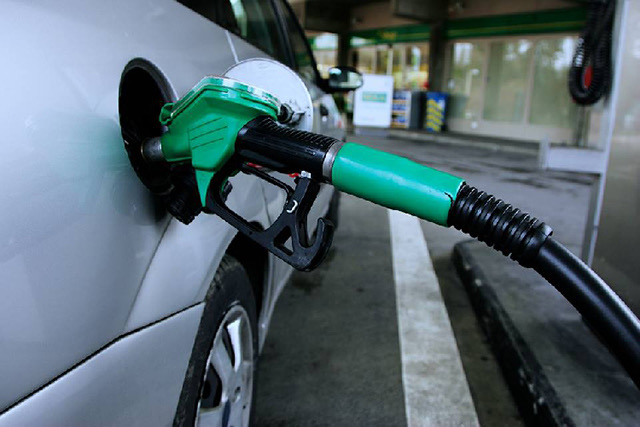
On Monday the mines and energy ministry (MME) announced that petrol prices will decrease by N$1.20, and diesel by N$0.65.
The ‘deal versus Iran’ is the Iran nuclear agreement, formally known as the Joint Comprehensive Plan of Action (JCPOA), and is a landmark accord reached between Iran and several world powers, including the United States, in July 2015.
Under its terms, Iran agreed to dismantle much of its nuclear program and open its facilities to more extensive international inspections in exchange for billions of dollars worth of sanctions relief.
According to the economist, the fuel price reduction was triggered by three components, first, the Namibian Dollar (N$) appreciated slightly against the US Dollar (US$), and that reduced the price of imports that are invoiced in US$.
“Secondly, we have witnessed a decrease in oil prices and refined oil products prices globally over the past couple of weeks, and that also had an impact on the pump prices,” he noted.
He mentioned that the mines ministry used a new formula to calculate transportation costs to Walvis Bay, which also had a positive impact on oil price reduction.
Schade stated that he believed that oil prices were still bulletised on the global market.
He added that the ministry cited the positive indications of the deal versus Iran where they were still in limbo which meant that there was no deal signed yet.
“It’s so far good news for Namibian motorists that it will be less to fill the car. We need to change our behaviour and be more efficient in the use of our cars,” he expressed.
According to CNBC, the return of the Iran nuclear deal could be imminent — and with it, the return of a lot of oil to international crude markets.
The media outlet quoted Tamas Varga, an analyst at PVM Oil Associates in London, who said “OPEC could easily produce 30.5 million bpd (barrels per day) if Iran comes back and those barrels are not accommodated. Under this scenario, my model shows Brent dipping to $65″ per barrel in the second half of 2023.”
Meanwhile, economic analyst at Simonis Storm, Theo Klein, says this reduction was largely expected,
based on arguments made in our Inflation report released in August 2022. MME had resolved to keep reductions on the road user charge, MVA levy, and NAMCOR levy in place until further notice.
“These levy reductions were introduced in April 2022, initially for a 3-month period only. At the same time, MME had increased the fuel wholesalers’ margin by N$0.20 per litre, from N$1.08 to N$1.28 per litre,” he noted.
Klein noted that year to date (YTD), the ministry had incurred a net under-recovery of N$2.67 on petrol and N$5.94 on diesel.
He added that this implied that if the National Energy Fund (NEF) did not subsidise under-recoveries during 2022, Namibia would currently have petrol and diesel prices of N$23.75 and N$28.06 respectively.
The ministry noted that the possible return of sanctioned Iranian oil exports to global markets coupled with the worries that the rising US interest rates would continue to weaken fuel demand.
“Should negotiating parties reach consensus on an Iran nuclear deal, this will entail that more oil will start flowing into the market and possibly cause prices to fall over the near term,” said MME.
MME stated that the situation could prove problematic on the other side of the coin as falling US crude and product stockpiles have already started to add to the upward pressure on prices, as well as the possibility that OPEC and its allies would cut production to support an increase in the prices for the benefit of crude oil suppliers.


