

By: Peneyambeko Jonas
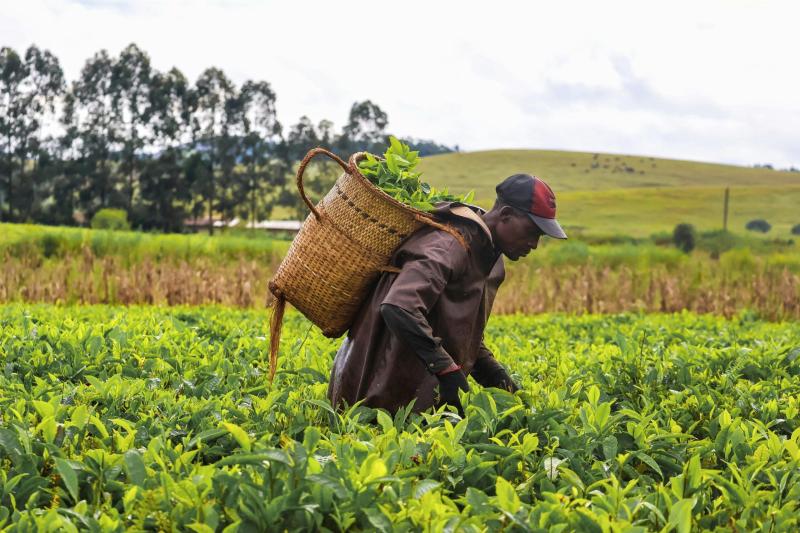
Farmers have called on unemployed young people, including graduates, to consider agriculture as a source of income, saying farming offers business opportunities for those willing to start small and grow over time.
Frans Hamutenya, a farmer from the Omusati Region, told The Villager Newspaper that many young people overlook farming despite having access to land, water and affordable seeds.
“When it comes to farming, all you need is to start. Start from where you are and with what you have. Start small and aim big,” said Hamutenya.
He said his interest in farming was inspired by an elderly man in his village who successfully grew tomatoes.
Seeing the results encouraged him to establish a small vegetable garden at his home before expanding his operations.
Hamutenya said starting a garden does not require a large investment, noting that vegetable seeds are affordable and available at local retail stores.
“A pack of seeds is not that costly at Shoprite. Just start at home, and you will know what to do next,” he said.
After spending several years unemployed, Hamutenya said he decided to search for land that could support farming on a larger scale. He initially planted butternuts, tomatoes and cabbages, but the project was affected by flooding.
Instead of giving up, he assessed the land and realised it was more suitable for rice production. He then shifted to rice farming and harvested about 1.5 tonnes of rice from half a hectare of land.
Hamutenya said the experience taught him the importance of understanding local farming conditions and adapting production to the environment rather than forcing unsuitable crops.
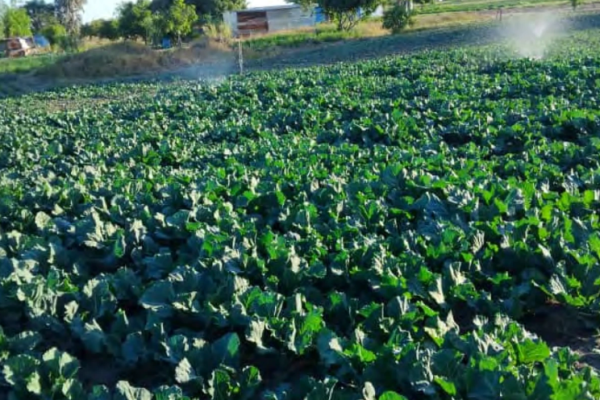
In the Ohangwena Region, cabbage farmer Hafeni Nghiningwa also encouraged young people to explore agriculture, saying the sector offers opportunities for both household food production and income generation.
“There are many opportunities in agriculture. The products we see being sold by vendors, shops and markets all come from farming. If people use this opportunity, they will not only feed their families but also earn an income,” Nghiningwa said.
He added that farmers should pay closer attention to reliable markets instead of depending only on roadside sales.
According to Nghiningwa, institutions such as school hostels, hospitals and correctional facilities require a regular supply of fresh produce and could provide stable markets for local farmers.
“Farmers keep complaining that they do not get customers, but they should consider working together with school hostels, hospitals and correctional facilities to supply food,” he said.
Langa Shivute of Lenga Investment said farmers also need to focus on value addition to reduce losses caused by unsold produce.
He said processing agricultural products instead of selling them only in their raw form can increase their value and reduce waste.
“Instead of letting your tomatoes get rotten, make tomato paste,” Shivute said.
He argued that value addition allows farmers to extend the shelf life of their produce while creating new business opportunities through processed food products.
The farmers said agriculture should be viewed as an economic activity capable of creating employment and supporting livelihoods, particularly at a time when many young people are struggling to secure formal jobs.
They believe small-scale farming can provide a starting point for young entrepreneurs who have access to land and water but lack formal employment.
Their message to unemployed youth is that farming does not require large amounts of capital to begin.
Rather, they say success often starts with making use of available resources, gaining practical experience, and expanding production as opportunities arise.
By combining production with reliable markets and value addition, they believe agriculture can become a sustainable source of income for many households.