


By: Peneyambeko Jonas
The Namibian government has officially launched the Revised National Resettlement Policy (2023-2033), introducing changes aimed at transforming land reform from a land allocation programme into a driver of agricultural production, job creation and rural development.
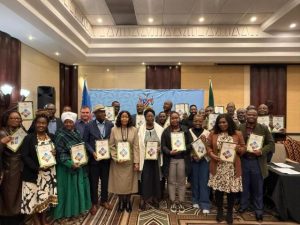
Launching the policy in Windhoek on Thursday, Minister of Agriculture, Fisheries, Water and Land Reform, Inge Zaamwani, said the revised framework responds to changing realities facing the country, including climate change, youth unemployment, increasing demand for land and the need to improve agricultural productivity.
“Land has always been at the centre of our history as Namibians. Beyond agricultural production, land also represents identity, heritage, belonging, and livelihood,” Zaamwani said.
She stressed that the success of resettlement should not be measured by the number of farms allocated but by whether beneficiaries can build sustainable livelihoods, contribute to food security, and create employment opportunities.
The revised policy replaces the approach of simply settling people on farms with a system that places greater emphasis on productivity, support services, and accountability.
Beneficiaries will receive support through training, extension services, infrastructure development, access to finance, and market opportunities.
A key feature of the policy is a pathway that allows successful beneficiaries to move from leasehold tenure to freehold ownership, creating stronger incentives for investment and responsible land management.
The government says this will improve tenure security and encourage long-term agricultural development.
Former Agriculture, Water and Land Reform Minister Carl Schlettwein, who oversaw the policy review process before Cabinet approval, previously described the revised policy as a necessary step to improve the effectiveness of land reform.
“The objective of the revised National Resettlement Policy is to eliminate poverty by ensuring that land acquired is equitably allocated and sustainably utilised for improved livelihoods,” Schlettwein said in a parliamentary statement.
According to government figures, more than 5,300 beneficiaries have been resettled on over 500 commercial farms since independence.
However, officials have acknowledged that demand for land continues to exceed available resources. Estimates suggest that hundreds of thousands of Namibians still require access to productive land.
The revised policy introduces differentiated resettlement models designed for various categories of beneficiaries, including emerging commercial farmers, communal farmers, and other eligible applicants.
Parliament’s Standing Committee on Urban and Rural Development recently noted that the policy creates high, moderate, and low economic models to better match beneficiaries with opportunities suited to their capabilities and resources.
Land reform experts have long argued that access to land alone is insufficient without support services and secure tenure.
Research by the Legal Assistance Centre found that productivity on resettlement farms improves when farmers have stronger tenure rights and access to investment opportunities.
The study noted that leasehold arrangements can encourage agricultural development, but only when accompanied by adequate support and cooperation among stakeholders.
The Namibia National Farmers Union has also consistently advocated for stronger post-settlement support to ensure that beneficiaries become productive farmers rather than simply landholders.
Agricultural organisations have emphasized that training, financing, and market access are essential for successful land reform.
Zaamwani said the revised policy aligns with Namibia’s Sixth National Development Plan by targeting poverty reduction, food security, employment creation, and sustainable management of natural resources.
“The revised policy reflects the Government’s vision of a resettlement programme that is demand-driven, evidence-based, transparent and capable of transforming our land into a vehicle of economic empowerment, social cohesion and national development,” she said.
The launch comes as the government continues efforts to acquire additional agricultural land for redistribution.
Earlier this year, the ministry announced plans to purchase more commercial farmland to support resettlement and agricultural development programmes.