


By: Peneyambeko Jonas
Agricultural and rural water projects in the Ohangwena region are putting public money into land preparation, farming inputs, livestock markets and water infrastructure, but their economic value has yet to deliver returns for the regional masses.
This is according to the Ohangwena Regional Council Report for the 2025/2026 Financial Year, submitted for consideration by the National Council.
The regional report records 3,635.5 hectares of farmland ploughed and 1,817 crop farmers supported through mechanization initiatives.
Another 6,541 farmers received improved seed and fertiliser, while 83 vegetable gardens, 152 poultry farmers and 18 cereal farmers received support.
A further 377 people benefited from the FAO-JICA programme.
However, the economic and social value has not been stated in terms of variables such as employment and wealth creation.
For small-scale farmers, such support can reduce some of the upfront costs of production.
Given the cost of production in the country and other costs, access to inputs alone does not guarantee higher incomes.
Farmers still depend on rainfall, markets, transport, storage, and reliable water.
The livestock value chain infrastructure has proven to deliver income for rural communities.
The region has reported that 14 auctions were conducted at Oushake, Omauni and Ndevahoma, where 632 cattle and 24 goats were sold, generating more than N$5.7 million for 168 farmers.
At Ndevahoma, farmer Moses Kwambi said the upgraded auction facility changed the cost and difficulty of reaching buyers.
“Before the auction kraal, it used to be difficult to sell my cattle because I had to look around the villages and reach out to individuals to find customers,” Kwambi said.
“With the kraal, I can sell my cattle easily and fairly and do not have to travel long distances to auction my cattle.”
That reduction in transaction costs matters in a rural economy. A farmer who spends less money and time searching for buyers retains more of the value generated from livestock.
Okongo constituency Councillor, Lebeus Shipindo said the Ndevahoma facility serves farmers beyond Ohangwena, including producers from Oshana, Oshikoto, Omusati, Kavango East and Kavango West.
He said the facility had shown demand from farmers willing to sell their cattle.
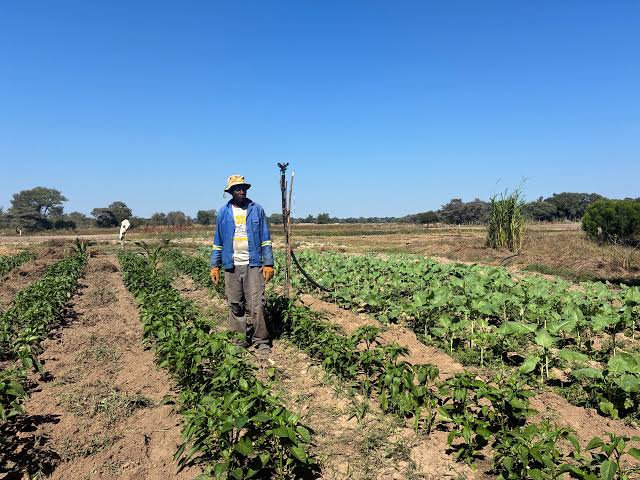
Crop production is also receiving investment through the Ekoka Brownfield Green Scheme.
The regional report records three production boreholes, approximately 130 hectares cultivated, around 200 casual workers employed, and about 7,000 bales of hay produced, alongside sorghum, pearl millet, maize and cowpeas.
Agriculture Ministry spokesperson, Romeo Muyunda, said the Ekoka project is being developed around borehole water for irrigation, with studies being undertaken to guide rehabilitation and infrastructure development.
Water infrastructure remains critical to these investments. Eight deep boreholes were drilled in Oshikunde, Okongo and Omundaungilo at a cost of about N$4.6 million.
Five additional borehole projects cost more than N$13.2 million, with three completed and two still under construction.
The economic question is therefore not simply how much government spends, but what those investments produce over time.
For Ohangwena, agriculture remains an important source of livelihoods