




By: Nghiinomenwa-vali Hangala
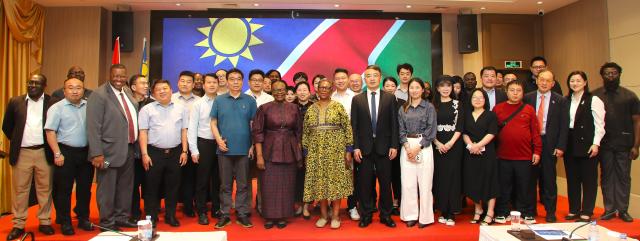
A high-level technical delegation has been deployed to China in a strategic effort to accelerate Namibia’s renewable energy ambitions and green industrialisation agenda, according to an update from the Namibia Green Hydrogen Programme.
The delegation comprises representatives from the Namibia Power Corporation, the Environmental Investment Fund of Namibia, and the Ministry of Industries, Mines and Energy.
According to the Programme, the team will undertake engagements in Beijing and Shanghai focused on advanced renewable energy technologies.
These include wind energy systems, solar solutions, battery storage, fuel cells, and the development of integrated clean industrial parks.
In a statement, the Programme explained that the visit to China comes at a pivotal moment for Namibia, as it seeks to transition from an energy importer to a self-sufficient and export-oriented green energy economy.
It added that China’s global leadership in renewable energy manufacturing, deployment, and innovation provides Namibia with practical model options for scaling its energy infrastructure while unlocking new industrial value chains.
The Programme’s manager of external affairs, Jona Musheko, said a key highlight of the Programme is its engagement with Goldwind, one of the world’s leading wind turbine manufacturers.
“This engagement holds direct relevance for Namibia, where the Namibia Power Corporation is advancing a 44-megawatt wind farm project near Lüderitz in the //Kharas Region under its Independent Power Producer framework,” he stated.
The project turbines are being sourced from Goldwind, highlighting the link between international collaboration and infrastructure development on the ground.
In addition, the delegation is engaging with leading renewable energy and technology companies, including Envision Energy, GoodWe, Haitai Solar, Hygreen Energy, and Mingyang Smart Energy.
The delegation is also set to visit innovation hubs such as the Beijing Future Science City Exhibition Centre, where integrated approaches to renewable energy, industrial development, and technological innovation are showcased.
Joseph Mukendwa, interim head at the Namibia Green Hydrogen Programme, said that the engagements are designed to equip Namibia with practical insights into how large-scale renewable energy systems can be effectively integrated with industrial ecosystems to drive economic transformation and enhance energy security.
He noted that as Namibia advances its green hydrogen and broader green industrialisation agenda, the lessons drawn from China’s experience are expected to inform national strategies on scaling renewable energy generation.
Moreover, strengthening storage capacity and developing cleaner industrial value chains.
The Namibian government has committed to increasing the share of renewable energy in the national energy mix from 54% to 70% by 2040.
The Programme noted that achieving such aspirations will require sustained international partnerships, technology transfer, and investment mobilisation – objectives that are directly supported through this collaboration.