




By: Annakleta Haikera
Several schools in the Kavango East and Kavango West regions are establishing gardens and orchards to boost food production, improve learner nutrition, and support school feeding programmes.
One such success story is at Aksel Mutuku Hamanyami Primary School in the Kavango East Region, where a thriving orchard now feeds learners, supports the community, and generates income for the school.
The orchard was established in 2015 by the Directorate of Forestry during National Arbor Day celebrations as part of efforts to promote tree planting and environmental conservation in schools. Today, the orchard produces a variety of fruits incorporated into the school feeding programme, helping to improve the nutritional intake of learners while reducing reliance on external food supplies.
School principal Efraim Tjakula said the project demonstrates how environmental initiatives can bring direct social and economic benefits to schools and surrounding communities.
“These trees are not only teaching our learners about conservation, but they are also putting food on their plates and contributing to the school’s development,” he said.
Chief Forester for the Kavango East and West regions, Jonas Mwiikinghi, commended the school for ensuring the orchard is cared for, seeing to it that the trees continue to thrive. He described the initiative as a practical contribution to Namibia’s food security drive and environmental protection efforts.
Mwiikinghi also encouraged other schools, government institutions, and communities to replicate similar projects, stressing that tree planting should not only take place during commemorative events, but become a long-term commitment. According to him, school gardens and orchards can also serve as practical learning spaces where learners gain hands-on experience in agriculture, environmental conservation, and sustainable food production.
Some teachers at the school say learners actively participate in caring for the trees, watering them, and assisting with harvesting, which helps instill a sense of responsibility and environmental awareness.
The success of the orchard has also inspired interest among community members, some of whom have begun exploring ways to start similar fruit tree projects at their homes.
Former Kavango East environmental conservation and community conservancies educator, Alex Ndango, told The Villager that Makena Senior Primary School is one of the schools in the Kavango East Region with an active environmental club managing a school garden.
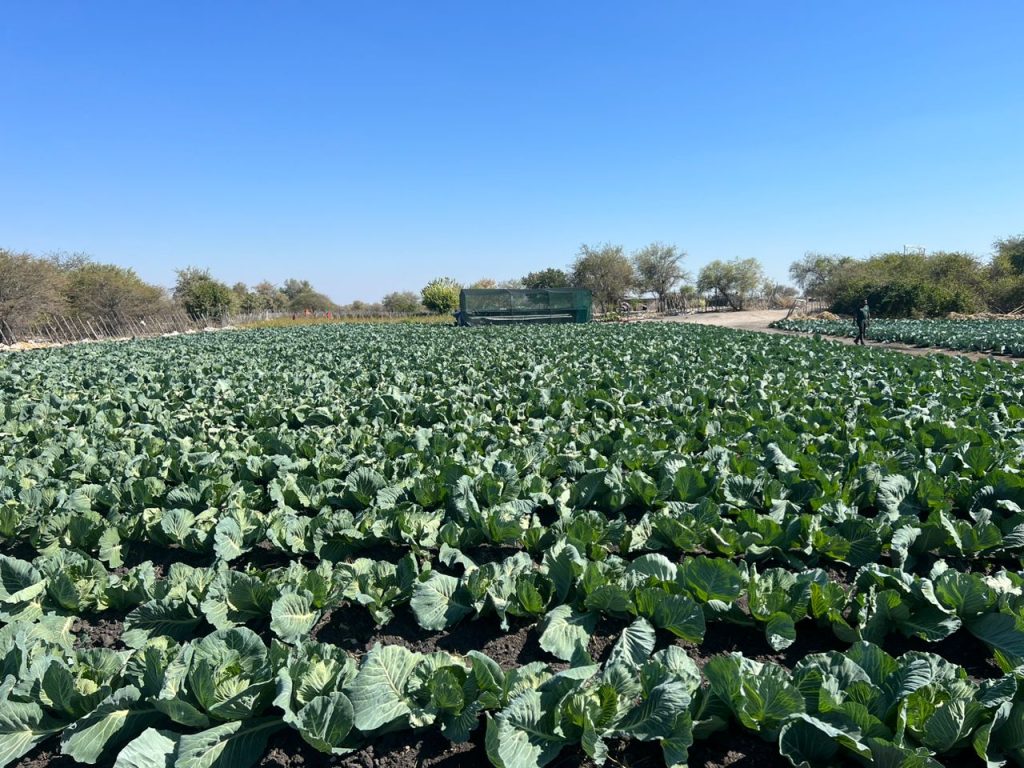
Ndango said the school has planted crops such as maize and pumpkins, while also establishing orchard trees including guava and mango. He added that learners are encouraged to work in the garden themselves, allowing them to gain practical agricultural skills that complement their classroom lessons.
According to Ndango, the project has become very successful, with learners now harvesting produce that is used to feed themselves through the school feeding programme, while surplus crops are sold to members of the community.
Similarly, he noted that such initiatives not only promote food security, but also help learners develop a strong work ethic and an interest in agriculture from a young age.
Felistas Kakonda, Makena Senior Primary School principal, says the school gardening project is helping learners understand the importance of food production and agriculture. She explained that learners are actively involved in the school garden, where they grow crops such as maize, pumpkins, and fruit trees.
According to Kakonda, some learners have also used the seedlings provided by the school to plant vegetables and fruit trees at their homes. She encouraged other schools to introduce gardening projects, sharing her belief that if more schools took part in similar initiatives, it could contribute to increased food production in the region.
Kakonda’s sentiments correlate with information obtained by The Villager indicating that several primary and secondary schools in the region have introduced garden projects where learners grow crops and fruit trees, contributing to their own feeding programmes by addressing food shortages at school and home alike.