




By: Dwight Links
The world faces greater air connectivity problems due to geopolitical tensions in the Middle East, outlined Namibia Tourism Board’s Chief Executive Officer Sebulon Chicalu.
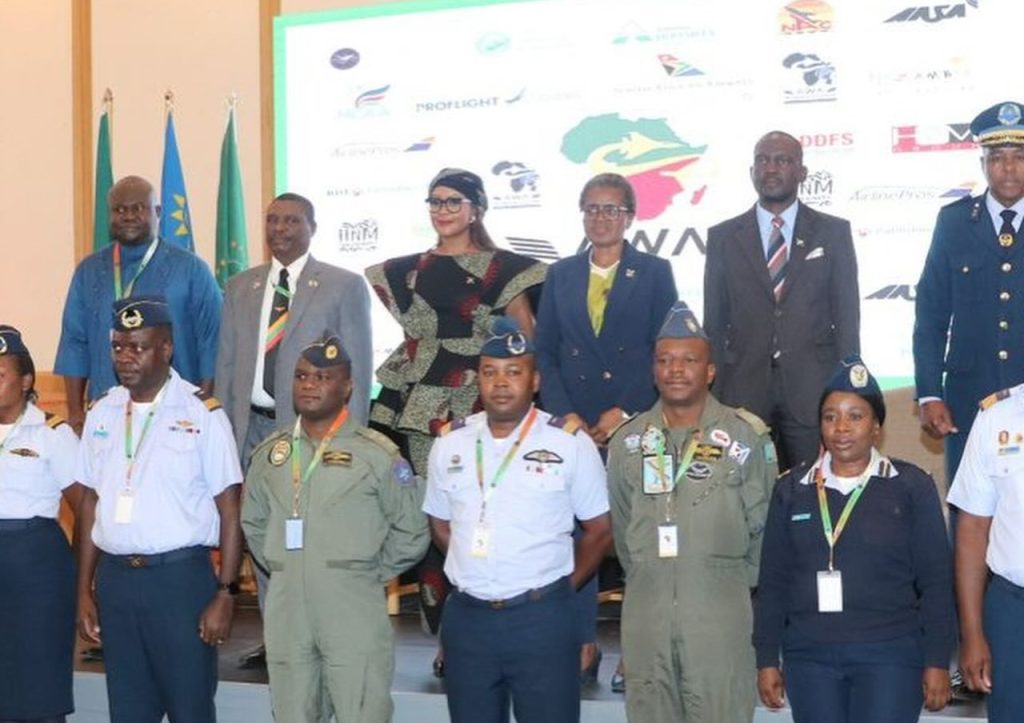
Chicalu made these remarks during an address at the recent Aviation Week Africa held in Windhoek.
He indicated that the disruptions in connectivity negatively impact accessibility to tourism markets.
“This affects the global economy as it impacts what we call discretionary travel. And this time, global travel frictions result in fewer long-haul trips, but results in more regional travel,” Chicalu added.
Discretionary travel is deemed as any travel that includes travelling for work, family, or recreational purposes.
According to Chicalu, the current state of global affairs signals a problem for sections of global tourism which are reliant on the connecting hubs of Dubai and Doha. Both cities control major connecting air routes between Europe, Asia and Africa.
“The conflict is reshaping tourism. So, travellers are shifting from conflict areas to safer destinations. And, for Namibia, this creates an environment for both risks and opportunities at the same time,” Chicalu explained.
The CEO highlighted that said environment also creates an opportunity for the tourism and travel sectors to work together.
“In terms of opportunities, of course we need to position Namibia as a safe, stable long-haul destination. On the matter of risks, there are cancellations currently happening in terms of the bookings,” he added.
Another key point to consider is that various air connections have made Namibia known as a travel destination for more tourists as new routes have been considered.
Airports
Namibia Airports Company (NAC) CEO Bisey /Uirab stated that tourism and aviation continue to rely on one another to progress.
“Aviation unlocks opportunities for development. It connects over vast distances, it creates jobs, facilitates trade and tourism on the continent and elsewhere. It also integrates economies into the global marketplace,” /Uirab highlighted.
Speaking to the importance of airports in supporting aviation service providers, government agencies and other stakeholders, he added that they are “the backbone of the aviation ecosystem and are gateways that enable Africa to connect to the world.”
According to the NAC CEO, airports have the inherent potential to connect to landlocked countries where road and rail fall short as part of the continental plan to connect all skies to each other.
Highlighting near-future improvements, /Uirab indicated that the NAC Integrated Strategic Business Plan for 2026 to 2031 aims to modernise and expand airport facilities in the country.
“These will include terminal upgrades, runway improvements and capacity enhancements. In the next short to medium term, we will develop a new terminal at our flagship Hosea Kutako Airport, while we envisage further upgrades at our other airports,” he indicated.
Current Situation
Some rough estimates have placed the total number of globally cancelled flights at 30,000 and counting, as air spaces have been affected by the Middle East conflict.
The International Civil Aviation Organisation (ICAO) Secretary General, Juan Carlos Salazar, noted at the 2026 World Overflight Risk Conference in Malta that the aviation industry and airports should not be the ones to address the risks of war to civilian air transport.
Salazar commended countries and airspace users for the measures implemented to mitigate the safety and security risks posed due to the escalated tensions in the Middle East. He noted that more than 10 nations had partially or fully closed their airspace, which also significantly impacted international air transport.
Namibia greatly relies on European airlines for annual inbound international traffic, and the risks to the European traveller will see them experience a 95% price increase for jet fuel – which is imported from the Middle East region.
“The EU currently imports around 95% of its crude oil and therefore almost all of the crude oil used for jet fuel refining within the European Union,” stated the EU advocacy group Transport & Environment on their website.
“Additionally, roughly one third of European jet fuel demand is met by directly importing refined jet fuel, with the Middle East as the main supplier. Taken together, this means that around 30% of EU jet fuel supply, including both crude oil refined within the EU and imported refined jet fuel, relies on imports via the Strait of Hormuz,” the group added.
This will also lead to a €90 increase in ticket prices for European travellers.