


By: Peneyambeko Jonas
The Namibia Agronomic Board (NAB) and the University of Namibia (UNAM) are advancing efforts to improve food security in Namibia through ongoing research into improved mahangu varieties that could soon be introduced to farmers across the country.
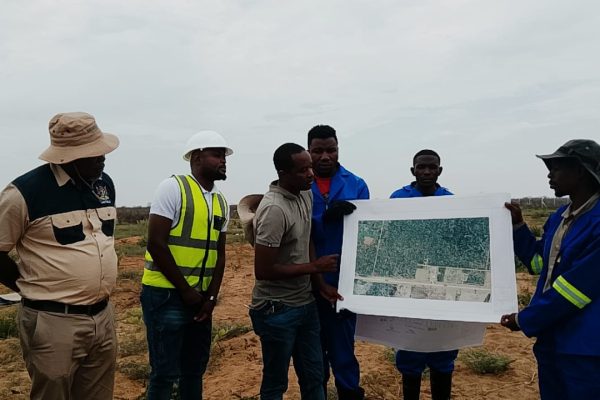
On 12 May 2026, the NAB/UNAM Seed Research Project conducted a field evaluation of improved pearl millet varieties at the UNAM Ogongo Campus in the Omusati Region.
The event brought together researchers, seed regulators and communal farmers to assess the performance of the varieties and discuss their suitability for Namibia’s varying climatic conditions.
Speaking during the field evaluation, Professor Rhoda Birech said the trials are intended to identify improved pearl millet varieties that can strengthen local agricultural production, especially in drought-prone communities.
“The project received 24 pearl millet varieties from International Crops Research Institute for the Semi-Arid Tropics (ICRISAT) in 2020 and has since selected five promising varieties for detailed testing,” said Birech.
She explained that the selected varieties are being compared with three commonly used local varieties based on important agronomic characteristics such as maturity period, plant height, stem thickness, panicle traits, productive tillers and seed colour.
“These evaluations help us understand which varieties perform best under Namibia’s environmental conditions and which could eventually be released for local farmers,” she added.
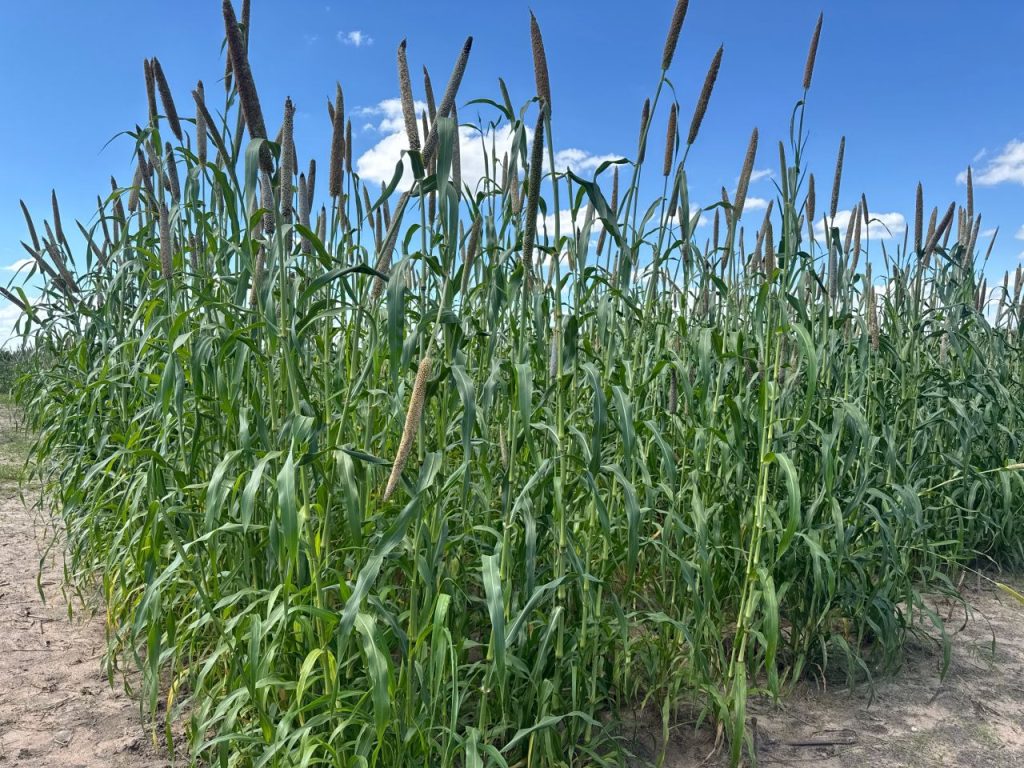
At the Ogongo demonstration field, eight mahangu varieties were showcased, including Kangara, Okashana 1, Okashana 2, SOSSAT C88, and MS 11, among others. The varieties are being monitored for adaptability, drought resistance, and yield performance.
Researchers said the improved pearl millet varieties generally mature within 50 to 90 days, depending on rainfall and soil conditions.
Some early maturing varieties, such as Okashana 1 and Kangara, can be harvested in about three months, while others take slightly longer. Their key advantages include stronger drought tolerance, improved grain yields, and resistance to certain pests and diseases.
Local farmer Mirjam Asino said she welcomed the project because it provides practical learning for communal farmers who face increasing pressure to produce food under difficult conditions.
“We are grateful to be part of this mahangu seed project because it allows us to learn about improved varieties that may help our communities,” expressed Asino.
She noted that growing migration into the Oshana Region has left many vulnerable residents settling in infertile areas, making crop production challenging.
To combat hunger, the council currently cultivates mahangu in Uuvudhiya, Okatyali, and Uukwiyu-Uushona.
The harvest is stored and later distributed to vulnerable households, including people living with disabilities.
Asino said the council currently uses only Okashana 2 and hopes the new varieties will offer better production.
During the event, farmers raised questions about when the new seeds would become available for planting. Irene Mundjela from the Ministry of Agriculture, Fisheries, Water, and Land Reform explained that the process remains at the evaluation stage.
“This is just the evaluation process. We are here to observe whether the varieties meet the required standards. There will still be final assessment trials next year before any release decision is made,” stated Mundjela.
She reassured farmers that the same lengthy registration process was followed for the local varieties they currently use.
“The process requires patience, effort, and consistency. Farmers should not be stressed; seed release must follow scientific procedures,” she advised.
Another farmer, Hafeni Nghiningwa, encouraged fellow farmers to understand the characteristics of different seed varieties before planting.
“Farmers should consider the maturity period, rainfall, storms and all agronomic conditions when choosing seeds. When these new varieties become available, people should plant different types so that if one fails due to climate change, another may survive,” he said.
Meanwhile, the NAB Manager for Research & Development, Gerson Kampungu, said the project aims to ensure that farmers in different regions gain access to varieties suited to their specific environments.
“If some varieties cannot yield well in Kavango, they may perform better in Omusati or Ohangwena. That is why research and data collection are ongoing to identify the best varieties for each region,” he indicated.
Kampungu added that similar field evaluations are also taking place at the Mannheim Crop Research Station and Mashare Irrigation Scheme as part of a nationwide effort to improve seed systems and strengthen resilience among communal farmers.