



By: Hee-Dee Walenga
Between 14 and 15 May 2026, over 2,800 business leaders, investors, and policy makers convened in “The Land of a Thousand Hills” for the 2026 Africa CEO Forum in Kigali, Rwanda.
At the centre of the discussion were various matters regarding Africa’s development under the theme ‘Scale or Fail: Why Africa Must Embrace Shared Ownership.’
Among the topics of discussion was sports.
African sport has been on the rise over the past ±10 years, both in terms of development and commercialisation.
Speaking on a panel, veteran National Basketball Association (NBA) executive and founder of the Giants of Africa foundation, Masai Ujiri, praised President Paul Kagame’s vision to use sport as a serious economic and social driver.
Ujiri described Rwanda’s model as “the template of what should be done on the continent,” pointing to the country’s growing sports ecosystem and long-term ambition.
Kagame only needed to visit Ujiri one time when he was an executive for the Toronto Raptors to understand what sports can do for a society.
Since that visit, Rwanda built the BK Arena in just 6 months in 2019 along with various other infrastructure upgrades in Kigali, which has led to Rwanda hosting major international events such as the UCI World Road Championships last year – the first African nation to do so.
The BK Arena is also the home of the Basketball Africa League (BAL), which is backed by the biggest basketball league in the world, the NBA.
“When we add hotels, restaurants and entertainment spaces around sports infrastructure, we create value,” Rwanda’s Minister of Sports, Nelly Mukazayire stated at the forum.
BAL President Amadou Gallo Fall stated that the BAL gained 20 new commercial partners in the last year, proving that African sports belong in the commercial space. The league generated 720 million social media views last season and 15.8 billion digital impressions globally, with games being broadcast in more than 200 countries through partners such as Canal+ and MultiChoice.
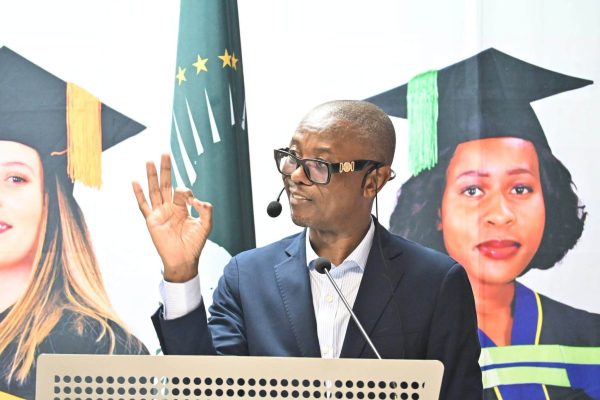
“With sports, you can change your society. You can turn your economy around,” said Makhtar Diop, current Managing Director of the International Finance Corporation (IFC) and former Senegalese national karate champion.
Diop highlighted a key element in national sports development that nations at the beginning of their sports development transformation, such as Namibia, need to take seriously: facility management.
“Management of sports and sports facilities is not the job of the government. It’s the job of the private sector. When you have facilities which are built by the private sector or the public sector, they need to be given to the private sector to manage,” Diop emphasised.
What Diop described is a standard practice around the world. Governments across the continent are sitting on assets that they are not monetising.
“In Africa, we don’t see sports as a business. We see sports as recreation,” Ujiri lamented.
“We go to every country; in every country in Africa, we have these old sports complexes that were built 50 years ago, and people, politicians, just stay on them and stand on them, and don’t want their development. Why is that?” Ujiri questioned.
“We have to revisit this. If not, those things still remain the same. We are now saying we want to end this. But we’re not doing it in a combative way. We want to work with governments,” Ujiri added.
Ujiri is the co-founder of Zaria Group, a pan-African sports and entertainment development company that has built the BK Arena, Amahoro Stadium, and Zaria Court in Kigali. The group recently announced a partnership with the IFC to develop sports and entertainment arenas in African cities, beginning with Nairobi.
The Nairobi project is expected to generate approximately 3,500 construction jobs, 1,500 permanent jobs, and 25,000 event-based jobs, while supporting tourism and urban development priorities under Kenya’s Vision 2030.
“If you see IFC putting their money in it, believe me, it’s safe to put your money in that business,” the IFC MD expressed.
“We have to win in Africa. And we can’t have excuses anymore. We make too many excuses. We talk and talk. Now we have to walk,” Ujiri concluded.