


By: Annakleta Haikera
A total of 4,492 people have been admitted for mental health-related conditions in Rundu since January, according to the Rundu Directorate of Health.
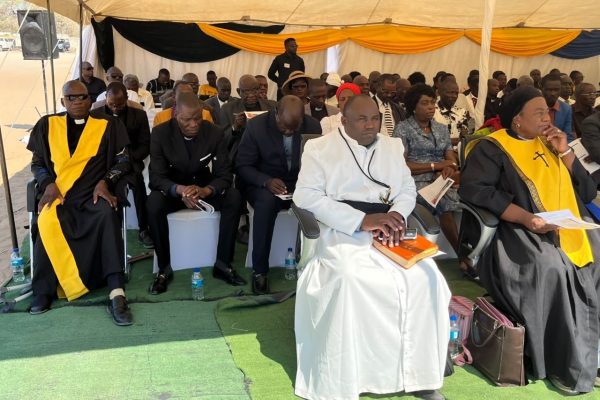
Speaking at a mental health awareness gathering on Friday, senior social worker, Agnes Rengi, revealed that the majority of cases involved men. She explained that women tend to have more support networks through activities and social groups, while several men remain silent due to stigma.
Rengi stressed that societal expectations discourage men from expressing emotions, making it difficult for them to seek help. She went on to list depression, anxiety, substance abuse, relationship problems, and financial stress as some of the leading contributors to mental health struggles in the region.
“We need to normalise seeking help and create safe spaces where both men and women can open up without fear of judgement,” Rengi urged, adding that peer support groups and culturally sensitive mentorship programs are crucial in addressing the growing crisis.
She also warned that unresolved childhood trauma often resurfaces later in life, manifesting through destructive behaviours such as gender-based violence and substance abuse.
“When people do not heal from their past, they carry that pain into adulthood and relationships,” she explained.
Rengi emphasised the need for families, churches, and traditional authorities to play a proactive role in promoting mental wellness. She further encouraged young people to make positive life choices and reminded them that “no problem is permanent,” and that help is always available.
The event, which coincided with World Suicide Prevention Day, also urged the public to utilise toll-free helplines such as Lifeline and Childline for counselling and crisis intervention.
“Let us learn to be our brother’s keeper. No one should suffer in silence,” Rengi added.
Mental health advocate, Jowdel Shikusho, echoed these sentiments, calling on society to support men in openly expressing their emotions to reduce the high suicide rates among them.
Shikusho highlighted that many men are taught from a young age not to cry or show vulnerability, which forces them to suppress their feelings.
“This pressure to always appear strong has devastating consequences,” she said.
“When men bottle up anger, pain, and sadness, these emotions build up over time and can lead to depression or even suicide,” she added.
She also urged families and communities to create safe, non-judgemental spaces for men to share their struggles, emphasising that opening up is a step towards saving lives, not a sign of weakness.
Namibia has seen a rise in concerns over mental health and suicide, especially among young men, prompting renewed calls for awareness, counselling services, and support programs.
Representing Kavango East Governor Julius Hambyuka, the chief control officer at the governor’s office, Bony Kahare, reaffirmed the government’s commitment to improving mental health support.
“Talking about your challenges is not shameful, it is part of the healing process. Together, let us build a Kavango East where every person is valued, supported, and empowered to thrive,” Kahare remarked.
He encouraged the community to foster empathy and understanding, warning that a lack of awareness continues to cost lives unnecessarily.
“May today mark a turning point in how we perceive and address mental health as a community,” Kahare noted.
A study conducted in April 2023 assessed the implementation of health education in primary health care facilities in the Kavango East Region.
The findings revealed that 76% of patients who visited health facilities did not receive health education about their conditions. Among those who did receive health education, 49.14% reported that the information was irrelevant to their condition.
These statistics highlight the need for improved health education and awareness programs to address mental health issues effectively in the region.