

By: David Shoombe
Daures Green Hydrogen project CEO, Jerome Namaseb, stated that Namibia will have a good opportunity to sell low carbon synthetic fertilisers in southern African states as only 7% of the 4.5 million tonnes consumed by the region is produced locally.
This makes the region a target market for Daures’ expansion plans.
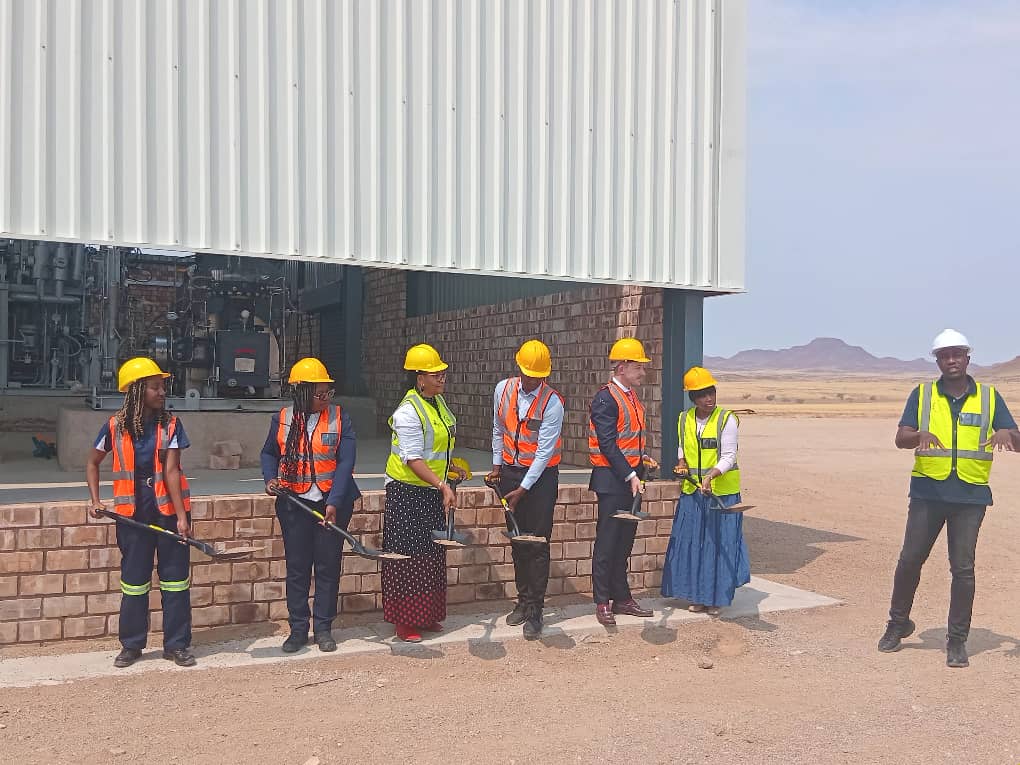
Namaseb shared this during the groundbreaking ceremony for the company’s ammonium sulphate fertiliser plant.
During his remarks, he expressed gratitude for the government’s support, and for the assistance the United Nations Industrial Development Organisation (UNIDO) and other international partners offered in establishing a fully commercial ammonium fertiliser plant.
Namaseb stated that by the end of 2026, the company aims to produce between 400 and 800 tonnes of the first low-carbon synthetic fertiliser produced in southern Africa.
He further indicated that based on the company’s established plan, by the beginning of 2027, the Daures Green Hydrogen project “will be in a position to start fundraising for the development of an 80 000-ton ammonium sulphate fertiliser plant.”
Also speaking at the groundbreaking ceremony, Erongo Region governor, Natalia /Goagoses commended the project for being in line with what the sixth National Development Plan (NDP 6) aims to achieve, as the plant would create local jobs, in turn contributing to proverty eradication.
“This project is something that every Namibian should be proud of,” said /Goagoses.
She also emphasised the need for Namibia to add value to its products and stray from depending on other nations.
“We cannot be dependent on other nations for indefinite times,” the governor indicated.
Also in line with the NDP 6, /Goagoses further advised traditional leaders and the Daures constituency office to work hand-in-hand with the Daures Green Hydrogen project in pursuit of national food security.
“I am disappointed that I cannot see traditional leaders here and a regional councillor of this constituency. This is a national project and we must address the issue of collaboration,” remarked /Goagoses.
Minister of Agriculture, Inge Zaamwani-Kamwi stated that “the ammonium sulphate plant by Daures Green Hydrogen is especially notable, not only because it reduces our dependency on imports, but also because it supports the green hydrogen-powered industrial model which reflects Namibia’s vision of a low-carbon and high-impact economic culture.”
Zaamwani-Kamwi, however, encouraged other forms of adding to the nation’s food security, warning against heavy reliance on synthetic fertilisers.
“While the use of scientific fertilisers has significantly contributed to global food security, we must also recognise that over-reliance on synthetic inputs can result in environmental harm in the forms of soil degradation, water contamination and greenhouse emissions,” the minister cautioned.
From increasing food security and the employment rate, to becoming a key ammonium fertiliser producer in the southern African region, the Daures Green Hydrogen project aims to make continued strides in exploring the potential of Namibia’s self-sustenance through green hydrogen.