



By: David Shoombe
The joint policy brief by the African Union (AU) and the African Development Bank (AfDB) has projected that the ongoing conflict in the Middle East presents a very serious risk to many African states.
The policy brief projects a loss of 0.2 percentage points in Africa’s GDP growth for 2026.
The brief also warned that the impact would vary across the continent based on levels of import dependency, exposure to the Middle East, and global market conditions.
“Thus, the longer the conflict lasts and the more severe the disruption to shipping routes and energy and fertiliser supplies, the greater the risk of a significant growth slowdown across the continent,” warned the two institutions.
Monthly trade statistics show that much like other African nations, Namibia relies on the Middle East for oil imports.
The Middle East accounts for 15.8 percent of Africa’s imports and 10.9 percent of its exports, while the Strait of Hormuz handles around 20 percent of global oil exports and nearly 90 percent of Persian Gulf oil exports.
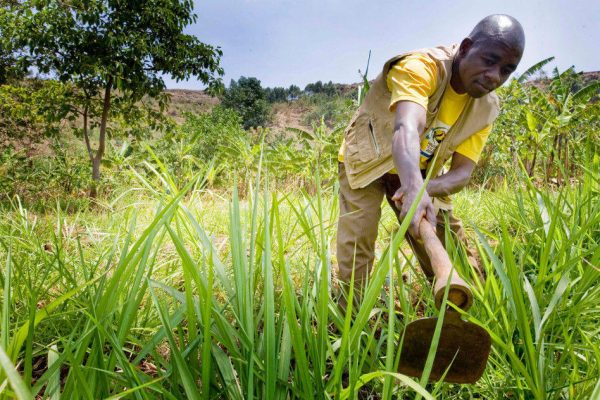
The brief has also noted that for some African countries, the fertiliser channel may be even more consequential than the oil shock.
The disruptions to Gulf liquid natural gas (LNG) supply are also expected to affect ammonia and urea production, raising fertiliser costs and constraining supply during the crucial March-to-May planting season.
“This would put further upward pressure on food prices and hit vulnerable households hardest, with significant negative impacts on food security in Africa,” the AU and AfDB warned.
While the conflict is generating broad economic risks for Africa, a few countries may see short-term gains through higher commodity prices, trade diversion, and rerouted logistics.
Nigeria stands to benefit from higher oil prices and the export expansion of the Dangote Refinery, while Mozambique could gain from renewed momentum in LNG and increased traffic through the Port of Maputo.
South Africa’s Durban port, Walvis Bay in Namibia, and Mauritius are also benefitting from shipping rerouting around the Cape of Good Hope, which is boosting port activity, bunkering, and maritime services.
In East Africa, Kenya is emerging as a logistics hub through Lamu Port and Nairobi, while Ethiopia is benefitting from its role as the emergency air bridge linking Asia, Africa, and Europe through Ethiopian Airlines.
These gains, however, are likely to be uneven and may not offset the wider inflationary, fiscal, and food-security pressures affecting the continent, cautioned the AfDB and AU.
Trade analyst Maria Nandago has indicated that “Chaos presents opportunities, and Namibia, with its fragile economy, can benefit from its seaport by accommodating ships that are avoiding dangerous trade routes.”
Nandago further noted the importance of recognising that these are short-term gains, adding that the significant investment in the expansion of the Walvis Bay seaport will be beneficial in times of need.
Senior logistician John van Wyk states that “In logistics, the geography can play to your advantage if timing resources and regulations are accommodative.”
Van Wyk adds that it is inevitable that Walvis Bay will expect many foreign ships to transit or handle cargo, which will be economically beneficial to the country.
Walvis Bay Sea Port connects Namibia to the external world, handling about 56%-57% of Namibia’s total exports.
According to the international trade balance of January 2026, sea transportation maintained the top position as the leading mode of transport for exports, handling exports valued at N$6.4 billion. In addition, the port is also used as a transshipment and transit cargo port for foreign trade ships.
The African Union shared that “The acceleration of the African Continental Free Trade Area will strengthen regional supply chains, lower border costs, and improve the movement of essential goods during crises, while creating long-term opportunities for the development of the regional trade corridor.”
The continental body also advised that in the medium term, Africa needs to strengthen energy security by investing in African refining, storage, distribution, and interconnection systems, while accelerating renewable energy deployment to reduce import dependence.