


By: David Shoombe
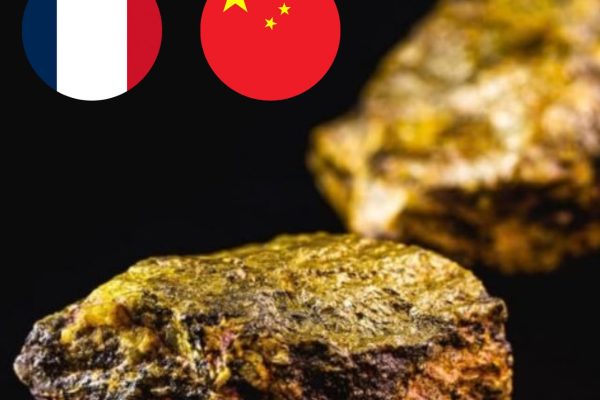
Guinea has become another of Africa’s nations to ban the export of raw materials, instead focusing on domestic processing and value addition.
This decision came with a stern warning for foreign companies operating in the country’s mining sector, several of which have influence over mineral extraction and pricing. President Mamady Doumbouya remarked that “The people of Guinea deserve to see their wealth contribute to their development.”
Like many other African states, Guinea’s economy is heavily supported by extractive industries, particularly the mining of bauxite, gold, diamonds, and iron ore.
The mining sector contributes approximately 20% of the country’s gross domestic product (GDP) and accounts for more than 90% of its export earnings.
Guinea has joined a growing number of African nations moving towards the local processing and refining of minerals produced within their borders. To that measure, Guinea is soon to commission its 250-tonne annual capacity gold refinery.
Nations such as Tanzania and Uganda have passed similar laws for their gold, with Ghana planning to follow suit by 2030.
In terms of value addition, trade statistics reports on Uganda illustrate that in 2026, gold accounted for 76.6% of its export earnings, generating over $5.8 billion.
That said, with the 2026 gold price averaging $4,600 per ounce, demand for 99.9% pure Ugandan bullion has never been higher.
Moreover, Mining Review Africa states that the continent possesses approximately 30% of the world’s mineral resources, yet about 70% of these minerals are exported in their raw form.
The 2025 African Trade Report adds that investment in Africa by countries from the Persian Gulf and Asia is increasing, driven by growing demand for the continent’s critical minerals.
Despite this demand and Africa’s possession of these critical materials, the establishment of industries for value addition remains a challenge.
A 2026 report by the Ecofin Agency indicates that Africa loses approximately $15 billion in value-added revenue each year because most of its crude oil is exported without being refined locally.
This was highlighted by Farid Ghezali, secretary-general of the African Petroleum Producers’ Organisation, during the ninth Nigerian International Energy Summit earlier this year.
Ghezali added that Africa exports about 70% of its crude oil and 45% of its natural gas in raw form due to insufficient processing infrastructure. This, he said, prevents job creation and limits economic opportunities for a rapidly growing population.
Speaking at the Mining Indaba in February, Zambian President Hakainde Hichilema said “Whether it’s the TAZARA Railway or the Lobito Corridor, we need to focus not just on transport, but on what we are transporting. We need a shared vision for beneficiation that moves beyond the port-to-pit approach. Mining is about empowerment, equity and shared prosperity. Let us use it to unlock Africa’s promise of better opportunities for the young people of our continent.”
Namibian economic researcher, Epaphras Jonas, notes that “African countries are increasingly implementing raw material export bans to shift from colonial-era extractive economies to high-value domestic processing, capturing greater profits and technical jobs at home. While these aggressive policies risk immediate revenue drops and diplomatic tension with foreign buyers, Africa’s control over critical green-transition minerals grants nations unprecedented geopolitical leverage to resist external pushback.”
He adds that for a country like Namibia, overcoming historical water and power limitations requires strategically linking mineral beneficiation directly to its emerging green hydrogen and solar energy infrastructure through mandatory public-private partnerships.
As per Namibia’s Sixth National Development Plan (NDP 6), value addition stands as a key element for job creation and strengthening the economy.
According to the Ministry of Industries, Mines and Energy, the mining sector is a cornerstone of the country’s economy, accounting for more than 50% of export earnings, contributing approximately 14% to GDP, and providing employment for around 6% of the workforce.