By: David Shoombe
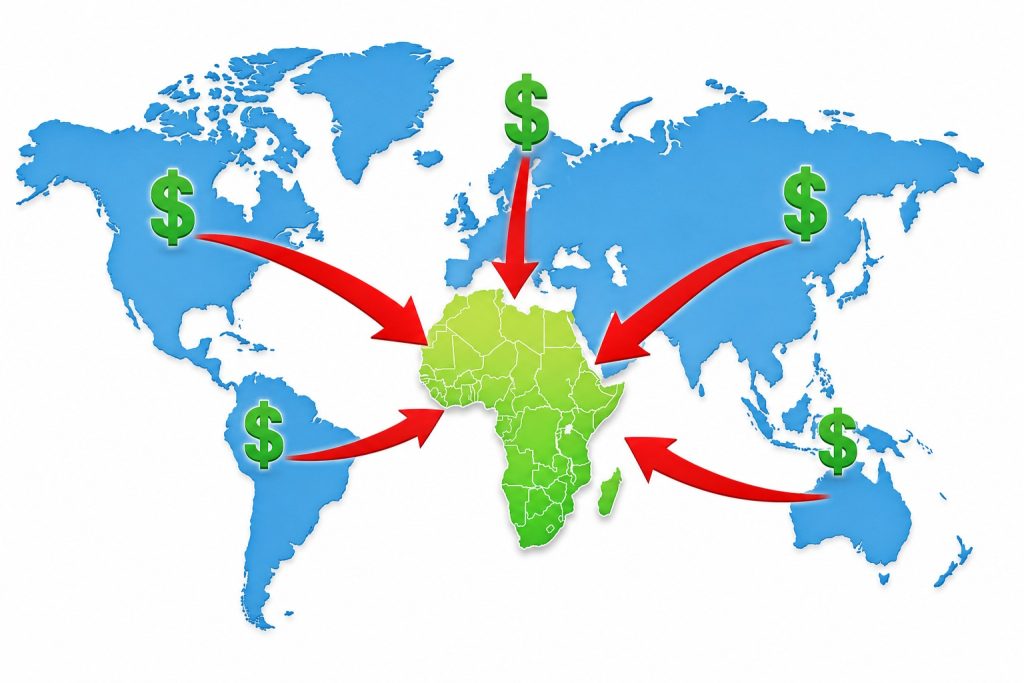
The World Investment Report 2026 indicated that there were no African countries among the world’s top 20 Foreign Direct Investment (FDI) host economies in 2025.
Namibia and its offshore oil exploration flows did not make it into the top 20. According to the assessment, the capital flow underscores the continent’s continued struggle to attract large volumes of foreign investment.
Despite the growing importance of developing economies, Africa continues to receive the smallest share of global foreign direct investment.
Compared with developing regions such as Asia, the continent remains significantly underfunded, limiting its ability to accelerate industrialisation, infrastructure development, and economic transformation.
The report indicated that developed economies continued to be the main investors and main investment destination when it comes to developmental infrastructure, including energy supply, data centers, and advanced logistics.
“Inflows in developed economies rose by 11% to US$723 billion, largely reflecting a rebound in a few large host economies and increased flows through financial centres,” the report stated.
FDI flows to developing economies increased by 2% in 2025 to just over US$901 billion.
This was 23% above their 15-year average. The United States remained the world’s largest recipient of foreign direct investment, attracting US$277 billion in 2025, which reflects the continued strength of its technology-intensive industries and large-scale investment projects.
Other major FDI recipients included Singapore, Hong Kong, and China. At the same time, the developed economies remained the largest sources of global investment capital.
The top funders of FDI: The United States, Japan, and major European economies are home to many of the world’s largest multinational enterprises (MNEs), supported by deep capital markets, extensive international business networks, and high levels of reinvested earnings.
Regardless of the 2026 IMF Report that indicates that Africa is projected to contain five of the fastest-growing economies, projected from 5.9% to 9.2%, the continent has continued to be the least funded.
The global investment report results exposed the direction of the African Union, which urged the countries to prioritise domestic investment.
The evidence of prioritisation of domestic investment is further seen on completion of the Grand Ethiopian Renaissance Dam, which was inaugurated in September 2025 at an estimated cost of US$4 billion, which was sourced locally.
Brazil is one of the best performers in terms of attracting the FDI from developing economies, supported by investments in renewable energy and natural resources. India and Mexico continued to attract strong investment in services, manufacturing, and supply chain reconfiguration, while the United Arab Emirates maintained high levels of investment inflows.
Brazil alone stands at a strategic investment attraction vantage point as it attracts both Western and BRICS investment.
According to the BRICS Bank, “The Bank approved 29 projects, with US$7 billion in financing across vital sectors such as transport, clean energy, water and sanitation, health, and education infrastructure.”
In the context of Namibia in 2025, the country achieved a milestone by ranking first in Africa and second globally in the Greenfield Foreign Direct Investment (FDI) Performance Index.
This strong performance was largely driven by major oil discoveries, which attracted significant investor interest and boosted the country’s standing as one of the world’s fastest-rising investment destinations.