

By: David Shoombe
During the 18th BRICS Summit, member state leaders signalled a shift in global influence, positioning BRICS to reshape the world order.
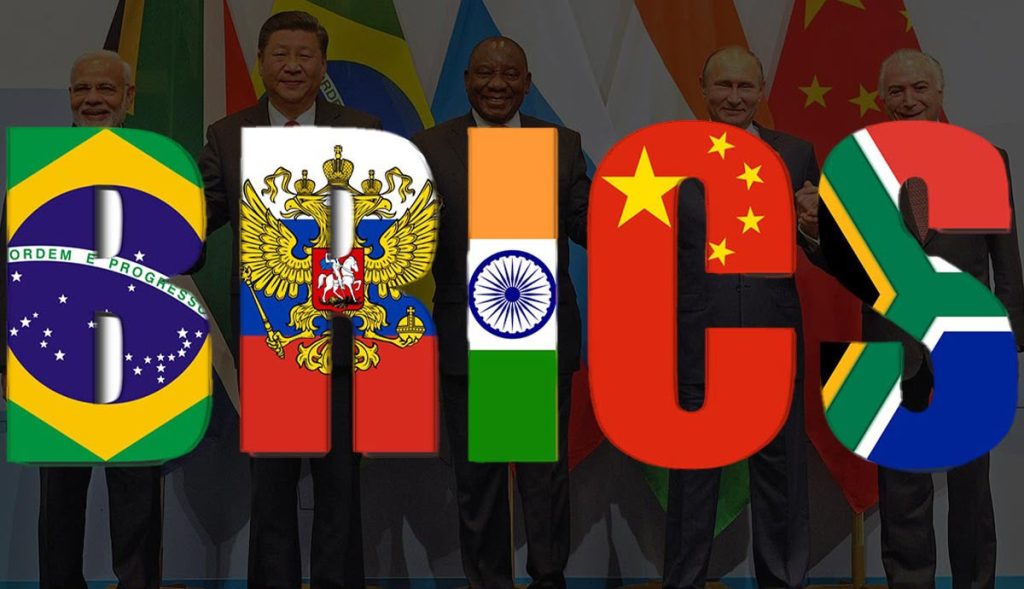
From the New Delhi Declaration to the speeches delivered by the leaders of the five founding BRICS countries Brazil, Russia, India, China, and South Africa, the 18th BRICS Summit presented the bloc as an emerging force in technology, economics, and global security.
Hosted on September 12–13, 2026, at Bharat Mandapam in New Delhi, India, the summit brought together leaders to discuss the bloc’s growing role in global affairs and its vision for a more balanced international system.
The summit positioned BRICS as an alternative voice to the G7 in shaping the future of the global financial order, reflecting the bloc’s ambition to play a greater role in setting the global economic order.
In his welcoming remarks to the heads of state and their delegations attending the BRICS Summit in India, Indian Prime Minister Narendra Modi emphasized the need for a reset of global governance and reform of global governance institutions.
Modi identified representation, responsiveness, and rule-making as the three key pillars of the proposed roadmap.
He said that reform of the United Nations Security Council could no longer be postponed.
Modi also called for negotiations to be linked to a clear timeline and specific outcomes.
Modi argued that international financial institutions need to better reflect the current global economic landscape.
He touched on voting rights, leadership positions, and policy priorities, arguing that these should take into account the countries that are driving global growth.
In terms of new technological developments, Modi highlighted artificial intelligence, cyberspace, outer space, biotechnology, and other emerging technologies.
These areas, he said, are not only creating new opportunities but are also shaping the rules that will govern the future.
Addressing a side event of the BRICS Summit, the BRICS Business Forum, President of the Russian Federation Vladimir Putin emphasized the growing interest in and strengthening of relations among BRICS countries.
He noted that closer ties among businesses constitute an important foundation for broader international relations.
Putin argued that the world is currently undergoing a major structural transformation.
According to him, the traditional economic powers that served as the leading engines of the global economy during the first half of the 20th century are increasingly being complemented, and in some areas replaced, by new engines of global growth.
Nevertheless, he acknowledged that the established economic powers continue to possess significant advantages, particularly in terms of infrastructure, technological capacity, scientific expertise, and development.
Putin stressed that these changes cannot be stopped because the global economic order is constantly evolving.
Referring to economic statistics from the past five years, which he said had already been cited, he highlighted what he described as the growing and undeniable economic weight of the BRICS grouping.
According to Putin, BRICS countries have generated more than 40% of global GDP over the past five years, compared with approximately 29% for the Group of Seven (G7).
In terms of global economic growth, he stated that BRICS countries accounted for more than 50%, while the G7 accounted for approximately 18%.
Putin also highlighted the demographic strength of BRICS, noting that the grouping represents more than half of the world’s population.
He presented this combination of economic growth, population size, technological capacity, and expanding business relations as evidence of the increasing importance of BRICS in the emerging global economic order.
The New Delhi Declaration has endorsed the reform of the United Nations and has supported the women candidate for UN Secretary-General, as indicated by the 9th point of its declaration.
“In light of the ongoing selection process of the next Secretary-General of the UN and bearing in mind the relevant provisions of the UN Charter, we note that no woman has ever been elected for the role of Secretary-General, and only one national from Latin America and Caribbean, and only two nationals from Africa and Asia each have ever occupied this position.”
Trade analyst Andrew Ishitile noted that, although the BRICS states have increasingly positioned themselves as an alternative to the existing global economic order, there are still significant challenges that the grouping needs to address, particularly when relations between major powers such as China and India are involved.
Ishitile indicated that global alliances remain important and that countries such as India are not only seeking to strengthen their domestic capabilities but are also positioning themselves as emerging global economic powers.
International trade statistics indicate that, in 2026, the BRICS countries have a combined GDP projected at approximately US$35 trillion in nominal terms and around US$90 trillion in purchasing-power-parity (PPP) terms.
The grouping consists of 11 full members: Brazil, Russia, India, China, South Africa, Egypt, Ethiopia, Iran, Saudi Arabia, the United Arab Emirates (UAE), and Indonesia.
The BRICS framework has also established a partner-country category as part of its broader organizational structure, expanding its engagement beyond full membership.