



By: Dwight Links
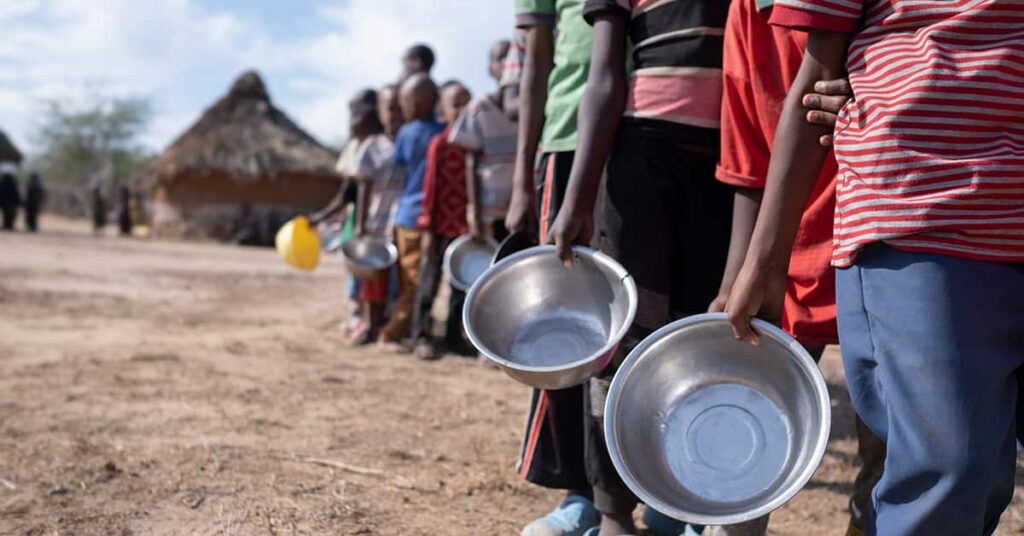
The Food and Agriculture Organisation (FAO) estimates that 645 million people faced hunger in 2025.
The agency notes that even though things have changed for many regions of the world and the countries within them, hunger and food security are still main issues.
“Despite sustained, gradual improvement in recent years, global hunger and food insecurity remain far above the targets set by the 2030 Agenda for Sustainable Development,” the agency says in the Food Security and Nutrition report of 2026.
“Today’s global challenges compel us to urgently address hunger, food insecurity and malnutrition as multiple crises increasingly disrupt global agrifood systems. Even where progress has been made, it remains extremely uneven across regions,” Qu Dongyu, FAO director-general, says.
Dongyu notes that with only a few years remaining to achieve the 2030 Agenda for the SDGs, the “cost of inaction continues to grow, compounding the hidden social, economic and health costs borne due to productivity losses.”
Namibia’s prevalence of undernourishment is measured to be at 20.1% in the interactive map indicator of global food insecurity by the Food and Agriculture Organisation, which says this is the current 2023-2025 measurement.
The previous level Namibia had was 20.3% for the 2022-24 period. The country’s highest undernourishment rate was in 2018-2020 when it was at 22.2%.
This tool leverages existing data and analytical tools, as it examines how geographical disparities, agricultural productivity deficits, and value chain inefficiencies, which includes food loss and waste, create formidable barriers to accessing a healthy diet.
THE COST
The 2026 report points to a decrease in global hunger, with 7.8% of the global population affected in 2025. This went down from 8.6% in 2022.
“Beyond ensuring access to sufficient dietary energy, populations must have economic access to safe, diverse and nutritious foods. Yet, healthy diets are unaffordable for about 2.7 billion people worldwide, with the crisis deepening particularly in Africa,” the report states.
“We evaluate this pressing challenge, exploring the structural drivers behind the persistently high cost of a healthy diet,” the report noted on the concerns of the influence on prices.
The FAO notes that high prices of nutrient-dense items – specifically animal source foods, fruits and vegetables – account for nearly 70% of the cost of a healthy diet.
The report indicates that the cost of a healthy diet varies widely across regions, which means that targeted and context-specific responses are required rather than uniform solutions.
“Reducing that cost demands integrated and coordinated actions across agrifood systems, and it requires sustained investment in building and strengthening resilience at the first mile of agrifood systems, which should be supported by policies tailored to national contexts and grounded in high-quality data, robust analysis and rigorous evidence,” the report suggests.
A picture witnessed across the world notes that such policies have to involve trade-offs and distributional effects, as they will be implemented through inclusive processes.
“This will result in the policies being supported by appropriate transition support, and shaped by collaboration across public and private actors, with particular attention to vulnerable populations, including small-scale food producers, women and youth in low- and middle-income countries,” Dongyu explained.