




By: Nghiinomenwa-vali Hangala
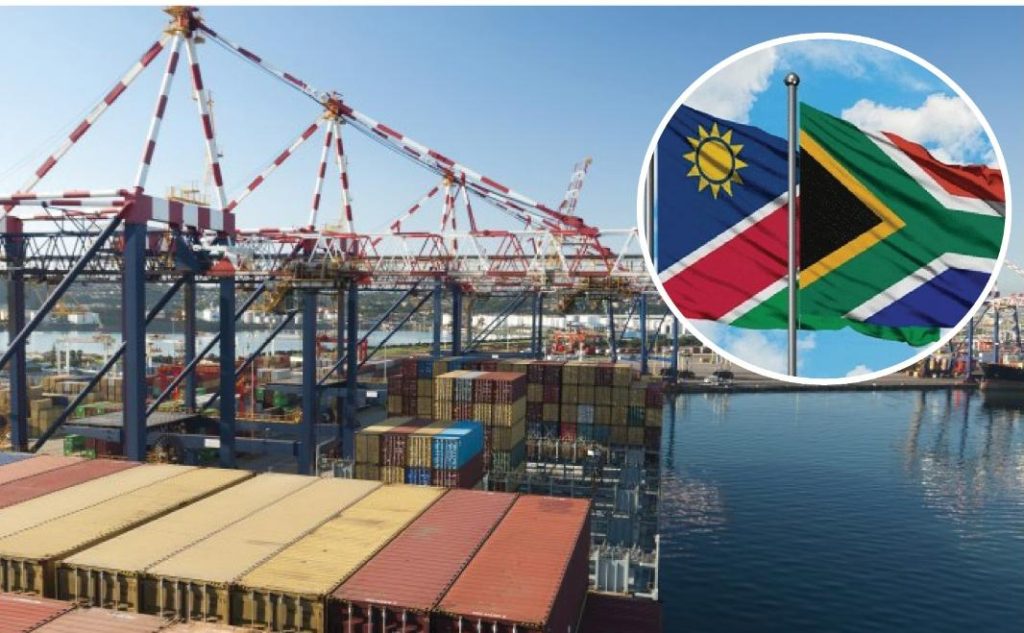
An analysis of Namibia’s top trading partners revealed that South Africa continued to be the country’s largest market for both exports and imports, while the former’s export basket continues to be composed of raw minerals.
The latest trade statistics of February 2026, as shared by the Namibia Statistics Agency (NSA) this week, show the same picture.
The Agency’s statistician-general Alex Shimuafeni has confirmed the non-changing trading picture of South Africa’s dominance as a trading partner in both imports and exports, which include mineral exports.
Namibia’s trade is continuously centred around South Africa despite various political statements and national strategies to diversify the country’s economy. These national strategies involve around 10 trade agreements meant to unlock alternative markets for Namibian products.
Moreover, the country continues to embark on trade missions around the world and in Africa, while trade missions are also received in Namibia through the Ministry of International Relations and Trade.
However, such diversification is yet to take effect, as South Africa still dominates trade statistics.
The only country somewhat coming close is China due to uranium exports, while Zambia sneaks in because of maasbanker exports. Botswana used to have 5 monthly trading partners, but the diamond price crash has altered that picture.
Looking at 3 months’ trading statistics for Namibia, in February 2026, the nation spent N$4.3 billion buying goods from South Africa, mostly consumables.
At the same time, it exported goods worth N$2.5 billion to South Africa for the month of February 2026.
In January 2026, the country exported N$2.6 billion worth of goods to South Africa, while importing N$3.5 billion worth of goods.
In December 2025, Namibia exported N$2.7 billion to South Africa, and imported N$4.3 billion worth of goods.
No country has challenged South Africa in terms of significant trade with Namibia, especially in the number of goods. All who have come close are mainly in terms of values, but they mostly trade with Namibia in only one or two goods.
As aforementioned, this includes Zambia, who imports fish from Namibia as the main product, China, who imports uranium from its Namibian mines, and Botswana who imports diamonds via De Beers arrangements.
These three nations only challenge South Africa in terms of export, especially when the value of the three commodities – fish, diamonds, and uranium – goes up.
Furthermore, Namibia has been loud on diversifying its export basket to go beyond raw minerals. However, trade statistics as compiled by the NSA consistently indicate that nothing has changed.
Thus, Namibia’s top 5 exports have remained non-monetary gold, uranium, precious stones (diamonds), petroleum oils, and ‘ores and concentrates of base metals.’
Fish is the only non-mineral product among these top five exports.
These statistics highlight that more is needed beyond political pronouncements, trade agreement signings, and trade missions to get Namibian products to other markets. Expanding the country’s value addition/industrial base to expand and diversify the export basket beyond minerals may also prove effective in that regard.
Namibia has signed, rectified, and gazetted its African Continental Free Trade Area (AfCFTA) tariffs, opening up the market for African products while enabling local product exports to other African markets.
However, only 2 products have been exported under the AfCFTA so far, while data on imports is still being prepared.