




By: Loise Shiimi
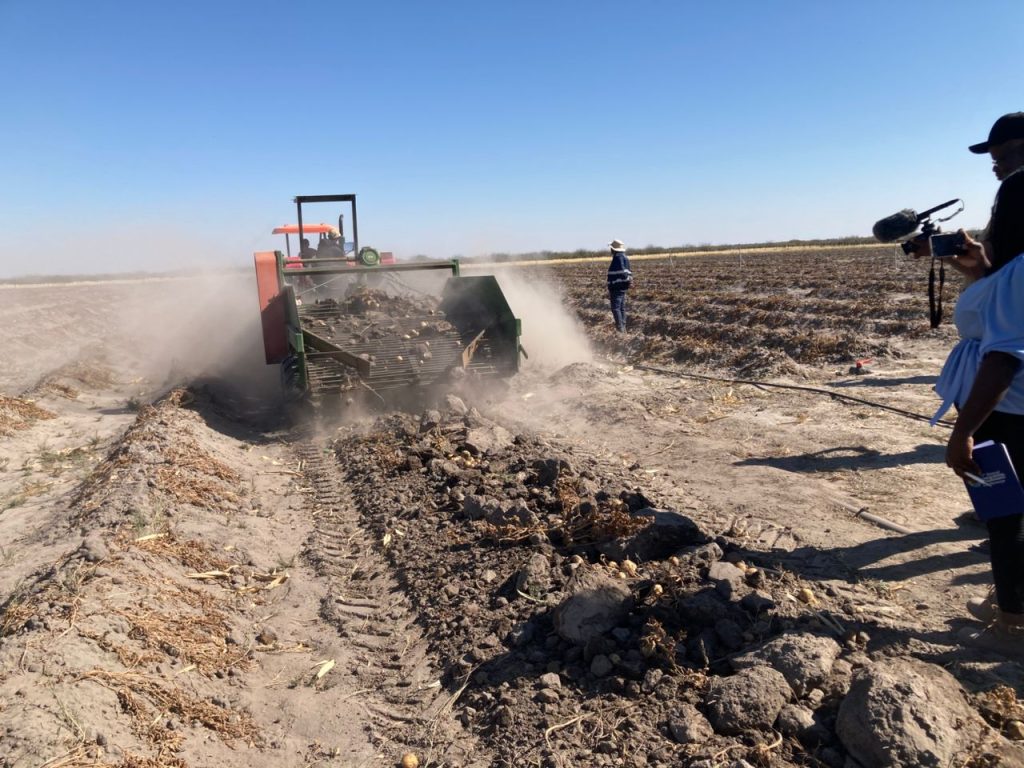
The King’s Project, located in Okashana Kuukongo waNehale in the Oshikoto region, is set to harvest roughly 200 tons of potatoes in its first season.
During the official inauguration of the potato harvest, a farmer announced that they anticipate yielding around 200 tons in this initial harvest.
“This initiative, supported by King Fillemon Shuumbwa, has transformed land of approximately 100 hectares to produce food for the nation and reduce import reliance,” he explained.
The farmer emphasised that a country unable to produce its food cannot progress, as it remains dependent on food imports.
Regarding employment, the project has hired 100 workers from the surrounding area.
“We prioritise local individuals in need of employment, offering them opportunities to empower the community and inspire them to explore farming ventures,” he stated.
He also noted that involving more youth in agriculture could help reduce crime and curb urban migration, as they would be occupied with developing their farms and communities.
When asked about the sales strategy for their first crop, the farmer indicated that all potatoes would be sold within Namibia to minimise imports.
This harvest will supplement the country’s July potato production, during which there were no restrictions on the importation of potato crops at border points.
At the inaugural ceremony for the first potato harvest at the King Project, King Fillemon Shuumbwa Nangolo of Ondonga highlighted a common misconception that potatoes and other crops cannot thrive in communal areas.
He clarified that this belief is outdated. “In 1985, research revealed that the soil in these areas is fertile enough to support a variety of crops and not just Millet( Omahangu)”, Nangolo stated.
He further reported successful cultivation of potatoes, carrots, tomatoes, and cabbage, all of which showed no signs of damage.
Emphasising the importance of small-scale cooperative projects, Nangolo stated that their goal is to ensure food accessibility for everyone in the country, thereby eliminating instances of hunger.
“I encourage the workers to dedicate themselves to producing as much as possible for all Namibians. If management issues arise, address them and continue working toward the collective good of the nation and yourself,” he urged.
He also noted that Namibia has more than enough human resources to achieve food self-sufficiency.
Addressing other farmers in the same area who have yet to commence production, Nangolo urged them to begin their projects as soon as possible.
He warned that any projects remaining with no production happening for two years would be reassigned to those willing to produce food.
“We did not allocate land for individuals to brag about owning projects in Okashana. The intention is for people to actively produce food and yield a substantial output from their efforts,” he emphasised.
He added that next year, they would visit all projects to ensure that farmers have begun their cultivation activities.
Meanwhile, the Governor of Oshikoto, Sacky Kathindi, expressed his appreciation to King Nangolo and all stakeholders involved in this initiative, describing it as a testament to how traditional leadership can facilitate modern development and uplift entire communities.
“This project represents more than just agricultural development. It is a rallying call for local farmers, entrepreneurs, and community leaders. Oshikoto has the potential to become a national food hub,” he affirmed.
In terms of agricultural potential, Kathindi noted the availability of fertile land and dedicated laborers, emphasising that the only requirement is purposeful action and mutual support in building a self-reliant, food-secure community.
“Let this harvest serve as a beacon of hope and a reminder that through collaboration among traditional leaders, communities, private investors, and the government, we can transform lives,” he urged.