




By: Nghiinomenwa-vali Hangala
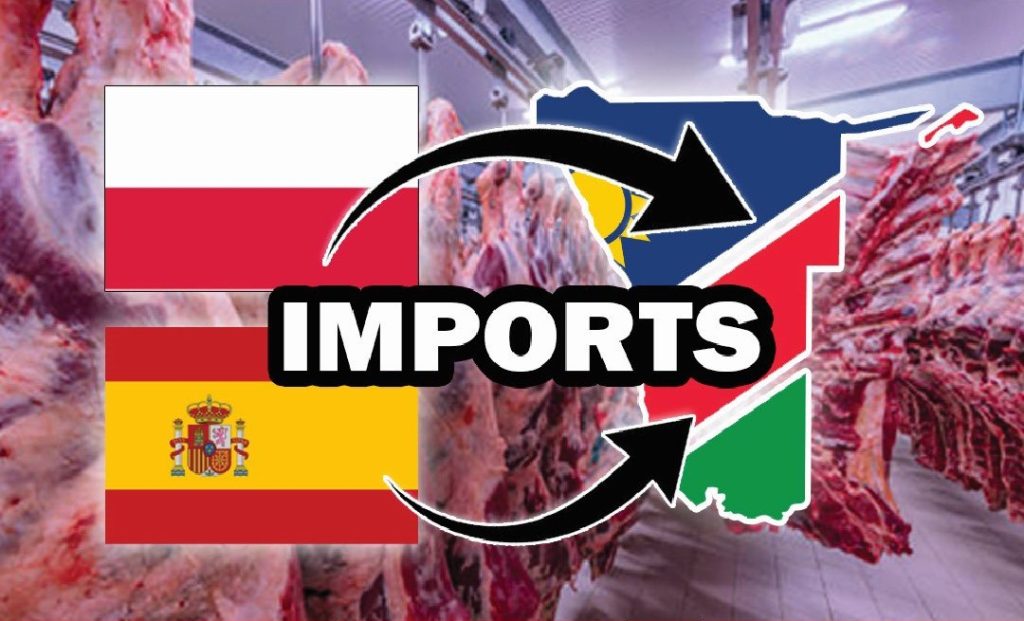
Namibia has imported 51.8% of its chicken meat from Poland and 64.3% of its pork meat from Spain in the second quarter (April-June) of 2025.
This is according to the second quarter statistics and analysis compiled by the Livestock and Livestock Products Board of Namibia (LLPBN).
The analysis shows that Namibia’s pork imports totalled 1.5 million kilograms, 34.3 percent lower than what was imported during the same period in 2024. Of these imports, 64.3% originated from Spain, followed by South Africa with 17.9 percent and Botswana with 3.8 percent.
The remaining share originated from Belgium, France, Denmark, the Netherlands, China, the UK, and Portugal.
Namibian retailers, wholesalers, and accommodation facilities import pork meat from all over the world to fill local supply gaps.
Although imports are dominant in the market, the meat board indicated that the Pork Market Share Promotion Scheme continues to assist local producers in maintaining a market share.
Marketing of pigs at LLPBN-approved abattoirs totalled 13,143 pigs relative to the 12,444 pigs marketed during the same period in 2024. Mariental abattoir accounts for the bulk of the slaughters, followed by Tsumeb abattoirs.
In terms of chicken meat, Namibia imported 4.7 million kilograms during the quarter under review.
Of these imports, 51.8% originated from Poland, 25.6% from Brazil, 15.5% from South Africa, and the remaining 7.1% jointly from Argentina, Spain, New Zealand, Ireland, Switzerland, Thailand, Ukraine, and Swaziland.
In terms of local production year-to-date, a total of just over 9 million chickens were slaughtered for domestic consumption.
Namibia’s poultry industry has slaughtered 8 million chickens, while Kadila Poultry Farming slaughtered 1.3 million chickens so far.
In terms of export, a total of 2.6 million kilograms of processed chicken products were exported to South Africa, Botswana, Zimbabwe, Zambia, and the DRC.
The sector also imported 12,500 layers for breeding purposes during the quarter under review, while importing 189,357 live chicks, mostly from South Africa.