




By: John JP Lenga
The image is difficult to shake. In Divundu, a woman is recovering from serious burns after a man kicked a pot of boiling porridge at her. In Okakarara, a 43-year-old woman was assaulted with chains. In Okongo, a man shot his girlfriend before turning the gun on himself.
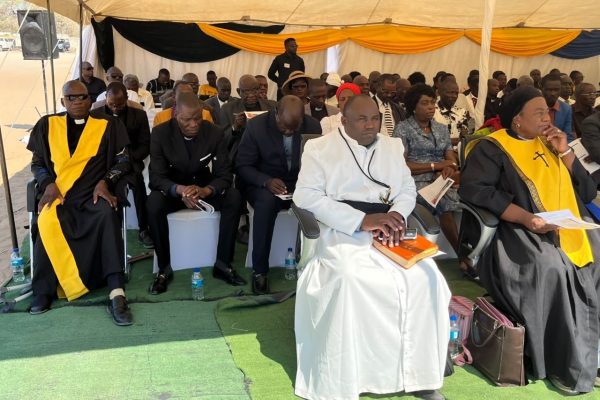
That was one weekend. Sixteen serious incidents, according to police. The same weekend, the President led a National Prayer Day calling for an end to violence.
The disconnect between the call and the carnage is not a failure of policing. It is a symptom of a deeper structural breakdown that cultural critic Nguvitjita Meeja captured with clinical precision in a recent column for The Namibian: The exhaustion of struggle capital.
The Broken Social Contract
Meeja’s argument is that for 36 years, Namibia’s ruling establishment operated on a foundational assumption: that the moral credit earned during the anti-apartheid struggle would function as a perpetual mandate to rule. Citizens granted political authority to former freedom fighters in exchange for economic dignity, employment, and structural transformation.
That contract is now broken. In a country where more than 70% of the population is under 35, the historical credit line has finally run dry.
“The solution to administrative failure is almost always the same: rotate the same ageing figures, assign a new label to the same old wine bottle, and attribute structural breakdowns to historical hangovers,” Meeja writes.
This strategy of political recycling treating executive Cabinet portfolios and state-owned enterprise boards as a closed-loop retirement system, has created what Meeja calls “a profound crisis of governance.”
The Evidence: Forensic Reports and Failed Executives
This is not an abstract critique. It is happening in real time, documented in Parliament and the pages of The Namibian.
Last week, IPC shadow minister of works and transport Nelson Kalangula stood in the National Assembly and directed a series of questions to Prime Minister Elijah Ngurare. He asked the Prime Minister to disclose the cumulative amount spent on external forensic investigations over the past 15 financial years. He asked how many of those reports identified prima facie evidence of criminal conduct and were formally referred to the Anti-Corruption Commission or the Prosecutor-General. And he asked what measures are being introduced to prevent officials implicated in those reports from being reappointed or transferred to other state entities.
Kalangula’s questions point to a recurring practice: executives and senior managers implicated in forensic investigations are allowed to resign without facing disciplinary action, before securing strategic appointments at other government entities or public boards.
The IPC has described this as the “recycling of failure.”
Kalangula has previously alleged that the Executive Director in the Ministry of Works and Transport was previously implicated in a 2014 Deloitte forensic investigation into Air Namibia, which reportedly found instances of unauthorised contracts, procurement failures and poor contract
management. That official, he claims, now forms part of the team advising the government on the establishment of Namibia Air.
He has also raised concerns about the Executive Director of the Namibia Civil Aviation Authority, alleging that a 2019 disciplinary inquiry at the Namibia Airports Company found the director guilty of tender collusion, leaking confidential information and attempting to influence procurement processes. Despite recommendations for dismissal and referral to the ACC, Kalangula says, “the director continues to advise the ministry on aviation regulation.”
The consequence, Kalangula argues, is predictable: “the recycling of officials with questionable records contributes to poor governance, wastage of public funds and weak oversight across state-owned enterprises.”
The Tenure Trap: Stability as Dependency
But the problem is not just where failed officials go. It is that they never leave in the first place.
Consider the case of Mwilima Mushokabanji, the former chief executive of Meatco. He served for 10 years at the helm of the state-owned meat corporation. During his tenure, Meatco’s business collapsed precipitously, piling up losses to the extent that more than N$700 million of taxpayers’ money was needed to bail it out. Another N$224 million is budgeted this year to support the company.
When his contract expired in January 2025, the board opted not to extend it. But the Cabinet intervened. Finance Minister Iipumbu Shiimi blocked attempts to give Mushokabanji an extra five years. Nandi-Ndaitwah and Swapo secretary general Sophia Shaningwa reportedly claimed the then finance minister was threatening Swapo support in the Zambezi region by not extending the contract.
The Namibian editorial board was blunt: “Fighting to keep someone who has cost taxpayers about N$1 billion over the past five years is not a good omen. On the contrary. It is business as usual.”
Then there is Gisbertus Mukulu, the chief executive of the National Housing Enterprise. He was first appointed in 2016, reappointed in 2021, and sought a third five-year term, which would have seen him remain at NHE for 15 years. He turned 60 in January 2026, reaching retirement age.
The NHE board recommended the extension. Urban and Rural Development Minister James Sankwasa rejected it. Herbert Jauch, chairperson of the Economic and Social Justice Trust, asked the question that should concern every Namibian: “In what way was delivery so good that they recommended an extension instead of advertising the position? That should be the key question.”
The numbers answer him. NHE has a housing backlog of about 300,000 units, with more
than 110,000 prospective homeowners on its waiting list. In the 2023/24 financial year, NHE delivered just 445 houses.
And then there is Eliphas Hawala, the chief executive of Epangelo Mining Company. He has led the state-owned mining company since its establishment in 2008, 18 years.
He turned 60 in September 2025, the mandatory retirement age. His contract expired on 31 January 2026. Yet the board granted him a 12-month extension.
Epangelo was established to give Namibia a meaningful stake in its own mineral wealth. Eighteen years later, the company remains largely on the periphery of the mining sector, a state entity that has never delivered on the scale of its mandate, while its chief executive was granted yet another extension past retirement age.
Public policy expert Ndumba Kamwanyah said: “Extending the tenure of a CEO of a state-owned enterprise beyond retirement age and after the expiry of a fixed contract is generally viewed as poor governance unless there are clear, transparent and exceptional reasons. In my opinion, this signals weak succession planning, political interference or overreliance on one individual. It risks undermining morale, investor confidence and public trust, especially in a public entity meant to model accountability.”
“Continuity without succession planning is not stability. It is dependency.”
The Boardroom Hustle
The recycling is not limited to executive appointments. An investigation by The Namibian published in May revealed that serving on boards across Namibia’s largest state-owned enterprises, banks and listed companies has become a lucrative income stream for a small, politically connected group.
Earnings for chairs and senior board members range from N$400,000 to N$1.6 million annually. IPC chief whip Rodney Cloete described the trend as the “professionalisation of board participation” a euphemism, he said, for board work that “has evolved from a part-time civic contribution into a full-time income stream for a politically connected class without any of the accountability mechanisms that attend professional employment performance reviews.”
Cloete says the same individuals alternate across boards. Appointments are driven by personal connections and favouritism, not merit.
MP Tobie Aupindi described the trend more bluntly: “vulture capitalism.”
“Look at the poor performance of SOEs, yet many board members are being compensated handsomely for messing up,” Aupindi said. “Until we commit to reforming SOEs without fear or favour, taxpayers’ money is being used and abused without accountability.”
The Theoretical Framework: From Liberation Legitimacy to Managed Patronage
Meeja’s column provides the theoretical framework for understanding this pattern. But he is not alone in diagnosing it.
A recent analysis published by Observer24 described Namibia as undergoing “a deeper and more consequential transition from liberation legitimacy to a system one may increasingly define as ‘managed patronage.'”
The analysis, authored by Paul T. Shipale with inputs from Folito Nghitongovali Diawara Gaspar argues that formal institutions persist, but real power increasingly flows through informal channels: networks of loyalty, proximity, and mutual protection.
“This is better understood as systemic patronage logic,” the authors write. “Meritocratic criteria do not disappear; they are subordinated. Competence matters, but alignment matters more.”
The result is a governing culture in which “access, rather than ability, becomes the decisive currency.”
For a younger generation with no lived memory of the struggle, the authors note, “legitimacy derived from the past carries diminishing weight. What matters instead is performance, fairness, and opportunity.”
The Justice Question
The selective application of justice reinforces the perception that the system is designed to protect insiders.
The Observer24 analysis contrasts the Fishrot and Namcor cases. Fishrot, which implicated high-level political actors and transnational networks, has been characterised by prolonged pre-trial detention and procedural rigidity. Namcor, involving governance failures within a state-owned enterprise, has unfolded with “comparatively greater procedural flexibility.”
“These differences may be legally defensible in isolation,” the authors write. “But taken together, they produce a broader perception that justice is not applied within a single, coherent standard but adjusted according to political risk.”
This is the context in which a freelance journalist with Nampa, Vita Angula, was dismissed for participating in a television panel discussion on the Fishrot scandal. It is the context in which Jemima Beukes was escorted out of State House for asking the President about her family’s alleged oil interests. It is the context in which the Whistleblower Protection Act, passed in 2017, still has not been implemented. IPPR executive director Graham Hopwood said: “We’re heading towards a decade on from that.”
The Divundu Connection
And it is the context in which a pot of boiling porridge was kicked at a woman in Divundu.
The causal chain is not complicated. Youth unemployment hovers around 44%. Educated 30- and 40-year-olds remain locked out of the formal economy. Municipal entities hike utility tariffs to cover bloated executive payrolls while basic services collapse.
When people have no income, no opportunity, and no hope, violence becomes a survival mechanism. And when the state’s response is to recycle the same failed officials to extend the same expired contracts, to pay the same board fees rather than create economic opportunity, the cycle perpetuates itself.
Meeja’s warning is stark: “Until the political class realises that governance is measured by delivery rather than historical sacrifice, the discontent on the pavement will only grow louder.”
The pot of boiling porridge is not an isolated incident. It is a symptom. And the cure is not prayer. It is governance.
The question is: who will demand it?
Tune into Unpacking The Day every weekday from 06:00 to 09:00 on Eagle FM.