
By: Dwight Links
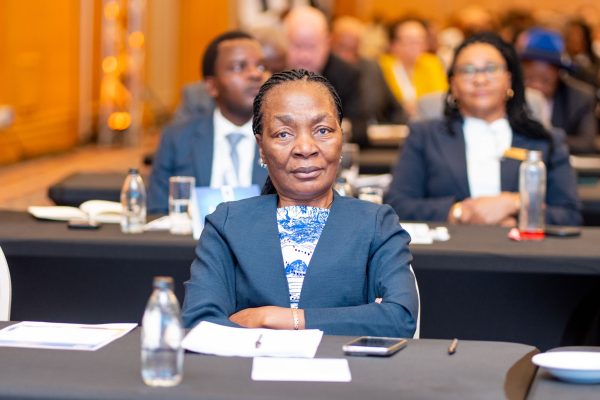
Suicide is a major public health concern, with more than 700, 000 deaths each year globally. The Namibian Police Force commemorated World Suicide Prevention Day on Friday, where it was highlighted that suicide in the world is considered a major health threat.
Along with this claim, the Khomas Suicide Prevention Taskforce (KSPT) indicated that the country is number one on the continent.
Elias Mutota, Major-General and Deputy Inspector-General of the Namibian Police, outlined that there is a worrisome sign in various dimensions of Namibian society, and even in entities such as the police force.
“One of the greatest obstacles to suicide prevention is silence. People may suffer quietly because they are afraid of being judged. Families may avoid discussing suicide because of stigma. Young people may hesitate to ask for help because they believe that nobody will understand them. We must change this,” Mutota pointed out the behaviour of not communicating about issues affecting individuals.
The Namibian Police also noted that the responsibility falls on all societal participants to identify and help possible persons who might be suffering.
He said society must encourage conversations about mental health and emotional well-being in our homes, schools, workplaces, communities and institutions.
“When somebody tells us that they are struggling, we should not immediately dismiss their feelings or tell them simply to “be strong”. Sometimes, the most important thing we can do is to listen,” he outlined.
BREAKDOWN OF REGIONS
According to the Major-General, the statistics for the next two-year financial periods have been worrisome as the trend of suicides continues.
“During the 2024/2025 Financial Year, a total of 480 suicide cases were reported countrywide, which represents 405 adult males and 63 adult females. While 7 were for juvenile males and 5 for juvenile females,” Mutota added.
The next period also noted that the 2025/2026 period even surpassed the previous one.
Moreover, during the 2025/2026 Financial Year, a total of 486 suicide cases were reported countrywide.
Of these figures, 390 represented adult males, while 83 were for adult females, and 9 cases of suicide were for juvenile males and 4 cases were for juvenile females,” the Major-General noted.
A breakdown of the regional analysis pointed out that during the 2024/2025 period, Omusati Region recorded the highest number of reported suicide cases, with 73 cases, followed by Oshikoto Region with 53 cases.
Meanwhile, Oshana and Khomas Regions recorded 50 cases each, while Kunene Region recorded the lowest number, with 7 cases.
For the 2025/2026 Financial Year, the Omusati Region also recorded the highest number, with 83 cases, followed by Ohangwena Region with 70 cases and Khomas Region with 62 cases. Moreover, //Kharas Region recorded the lowest number, with 11 cases.
PUBLIC CONCERN
According to the statistics from the task force, 370 cases were recorded in Khomas Region alone in the period of 2021-2026.
83.2% were male, which is 308 suicide deaths, while Female suicide deaths were 16.2%, which were 60. Only 2 were classified as ‘Unknown/Unclear’.
The largest number of these fatalities were recorded in Havana, Otjomuise, Goreangab, Wanaheda, Ombili and Khomasdal.
The taskforce indicated that there is almost no after-effect support for survivors of suicide attempts or the family of persons who committed suicide.
“These are the people who almost never get any support after the tragedy has happened,” Tuhafeni Talia from the taskforce indicated at the event.
The World Health Organisation, which also organises the observation of World Suicide Prevention for 10 September annually, notes that the major causes of suicide are based on specific stressful encounters.
“While the link between suicide and mental disorders, in particular, depression and alcohol use disorders – is well established in high-income countries, many suicides happen impulsively in moments of crisis with a breakdown in the ability to deal with life stresses, such as financial problems, relationship break-ups or chronic pain and illness,” the WHO explains.
In addition, experiencing conflict, disaster, violence, abuse, or loss and a sense of isolation are strongly associated with suicidal behaviour.
“Suicide rates are also high amongst vulnerable groups who experience discrimination, such as refugees and migrants, and indigenous peoples. And, by far the strongest risk factor for suicide is a previous suicide attempt,” the organisation states.