


By: Dwight Links
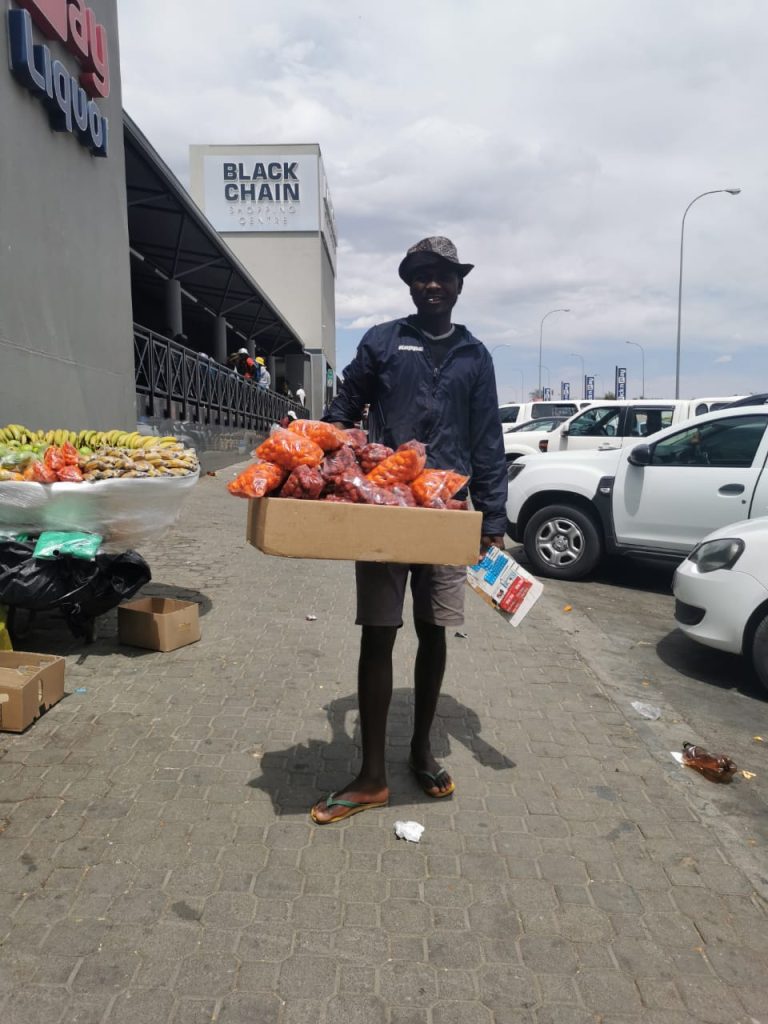
A recent report of the National Assembly Standing Committee for Economy & Industry, Public Administration and Planning identified that the ability to transition informal traders across the country poses a unique challenge.
This is due to various factors, one being that vendors distribute and sell mostly perishables, which will require expensive infrastructure if they go formal.
“It was observed that transitioning from the informal to the formal economy poses a significant challenge for many vendors, largely because their businesses rely on selling basic perishables or fresh produce such as vegetables and various fruits,” the committee stated in their findings on this exercise of transition.
They added that such capital requirements place vendors at a competitive disadvantage against long-established, high-end supermarkets.
This outcome was observed through site visits the committee had to Windhoek, Okahandja, Swakopmund and Keetmanshoop during the months of October, November, and December 2025, and January 2026.
Another challenge has been that the vendors do not appreciate the relocation to new venues.
“Efforts by local authorities to support and formalise the informal economy through building suitable and dedicated structures for vendors are occasionally met with resistance to relocate, from some vendors themselves,” the report mentions.
One example highlighted is the Havana four-way intersection in the capital.
“The city council identified a space where a market would be built so that traders could be moved from sitting next to the road where they are currently trading to formal infrastructure with stalls, electricity and ablution facilities,” the report described.
For Okahandja, the story was a little different. The committee discovered that the municipality has to acquire land from the Ministry of Works & Transport to facilitate the construction of an open market dedicated to small and medium enterprises, and informal traders.
“These traders and SMEs are situated on the site of the former demolished Onduri Hotel, which is in the main street of the town.
Some traders do not object to the planned move from there, while some formal businesses are not satisfied that the street vendors are selling goods on their doorsteps,” the committee said.
VISITS AIMS
The committee’s aims were to find a host of solutions of providing the basis for the envisaged transition.
This is as they recognised through various literature sources what the actual representation of the informal industries is.
“The informal sector is a critical pillar of the local economy in Windhoek as it accounts for one-third of all employment in the city.
It is estimated to represent approximately 26.5% of the country’s GDP, and provides for 58% of the national workforce,” the report states.
The last section of the scale of employment was cited from the 2025 inaugural National Diagnostic on Informality in Namibia report that was compiled by the Bank of Namibia.
According to the committee, the swift expansion of informal trading is attributed to the high levels of unemployment and poverty.
“Informal trading plays a crucial role in the local economy, especially in developing urban areas where formal job opportunities are limited,” the committee described in its findings.
In Swakopmund, the situation which was observed was that the municipality recognised that there is an important role that the sector plays.
“Specficially in advancing the local economic development. Informal trading remains a critical source of income for many households, and it contributes to job creation, improves quality of life, supports livelihoods, and plays a significant role in poverty eradication,” the report highlights.
Swakopmund Municipality noted that its role has so far centered on economic inclusivity, specifically for women, youth and vulnerable groups.
The Swakopmund leadership updated the committee that their interventions included: promoting market access through participation at trade fairs and exhibitions and expos, facilitating linkages with regional and international partners to expand market opportunities.
Moreover, they also connected traders with suppliers and established value chains to improve input access and competitiveness.
In Okahandja, there are plans in the pipeline to construct a One-stop informal trading hub with a coffee shop. This is apparently planned to be next to the B1 highway to target the tourism market.
Yet, as in Windhoek, resistance also reared its head in this town, as the existing traders did not wish to move from their current spaces.
They demand that the municipality build the infrastructure where they are currently based, as the traders cite that the customers will frequent the location where they have been since 1991.