



Photo: Contributed
By: Felicity Philander, Lending Manager, WesBank Commercial, FNB Namibia
There is an interesting development taking place in Namibia’s economy, and it is visible in an unlikely place: the commercial vehicle market.
Across the country, businesses are investing in trucks, machinery and specialised equipment. Some are replacing ageing assets, others are expanding their operations or preparing for opportunities they expect to materialise in the coming years.
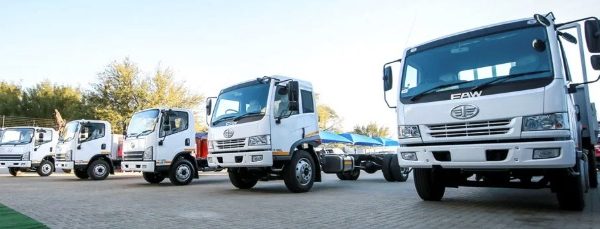
The scale of this activity is worth examining. Commercial vehicle sales increased by 12.1% year-on-year in September 2026, bringing sales for the first nine months to 6,629 units, an increase of 16%. Heavy commercial vehicle sales recorded particularly strong growth of 64.3%, reaching their highest January-to-September level since records began in 1998.
Behind these figures are thousands of individual business decisions, each involving a financial commitment and an expectation about future demand.
Commercial vehicles are closely tied to economic activity. Trucks move goods, construction equipment supports development and specialised machinery enables businesses to undertake work that would otherwise be beyond their capacity.
Their purchase can therefore provide useful insight into how businesses are responding to current conditions and preparing for what lies ahead.
For Namibia, where much of the economic conversation has centred on anticipated investment and the development of new industries, these figures offer an encouraging indication that businesses are already committing capital.
The evidence extends beyond vehicle sales.
Corporate instalment and leasing credit increased by 17.9% year-on-year in September 2026, reflecting continued demand for financing associated with productive assets.
Namibia also imported N$571.5 million worth of commercial-purpose motor vehicles in August, alongside N$408.3 million in civil engineering and contractors’ equipment.
These figures point towards investment in the practical requirements of doing business. They are consistent with developments in mining, transport, construction and other activities that depend heavily on equipment and reliable logistics.
There is good reason for businesses to be paying attention.
Namibia’s emerging economic opportunities are creating demand across connected commercial activities. Mining expansion requires transport and supporting services.
Infrastructure projects depend on contractors with the equipment and capacity to deliver. Tourism growth creates opportunities for rental operators and transport providers, while anticipated oil and gas developments are encouraging businesses to assess their readiness for future demand.
Much of the economic benefit from these developments will depend on the ability of Namibian businesses to participate in the work they generate.
That participation requires preparation. A company seeking to service a major project needs sufficient operational capacity, reliable equipment and the financial resources to sustain delivery. For smaller businesses in particular, the ability to invest ahead of confirmed demand can be difficult.
This creates a delicate commercial balance. Businesses that wait until opportunities are fully established may find themselves unable to respond quickly enough. Those that invest too early risk carrying expensive assets without the revenue required to support them.
Sound judgement about the timing and scale of investment will become increasingly valuable.
The latest investment figures also deserve to be considered against Namibia’s longer economic history.
Nominal investment in transport equipment reached a record N$10 billion in 2025, following a recovery that began in 2021. Yet in real terms, investment remains below the levels recorded in the early 2010s.
Inflation accounts for part of the difference between the value of investment and the productive capacity it represents. It also highlights a broader concern for businesses: the cost of acquiring and operating commercial assets has become an increasingly important consideration.
Fuel, maintenance, replacement parts and vehicle downtime can substantially affect profitability. An older vehicle may have been paid off years ago but become expensive to maintain.
A new vehicle may offer greater reliability and efficiency while introducing financing commitments that require careful management. Neither decision is automatically preferable.
Businesses need to understand the full economic contribution of an asset over its working life. Utilisation, maintenance requirements, expected revenue and cash flow should carry as much weight as the initial purchase price.
At WesBank Commercial, this is central to how we approach asset finance.
Understanding the purpose of an investment and the operating conditions of the business helps determine whether financing is appropriate and how it should be Structured.
The commercial value of a vehicle ultimately depends on the work it performs and the income it helps generate. That principle applies equally to a transport operator expanding its fleet and a contractor acquiring specialised equipment.
As economic activity develops, businesses that manage their assets efficiently will be better placed to protect margins and compete for new work.
The outlook for Namibia offers grounds for cautious optimism. The Bank of Namibia forecasts economic growth of 2.8% in 2027, while the projections accompanying this analysis anticipates growth of 3.4%.
These expectations are supported by developments across several productive sectors, although the pace of investment and the timing of major projects remain uncertain.
The commercial vehicle market provides a useful indication of how some businesses are responding. Investment decisions are being made, equipment is being acquired and operational capacity is being developed.
There is still a considerable distance between this activity and sustained economic growth. Greater investment must eventually translate into improved productivity,
profitable businesses and more Namibian enterprises participating in commercial opportunities. The next few years will test whether businesses have invested in the right capacity, at the right time, and whether the anticipated demand develops sufficiently to support those decisions.
For Namibia, the encouraging signal is that investment is becoming visible in everyday commercial activity. The more consequential measure will be how much lasting economic value those investments produce.