By: Dwight links
According to Nico Du Plessis, managing director of Plastic Packaging, Namibia’s current economy is too linear, as it reinforces the ‘take, make and waste’ model.
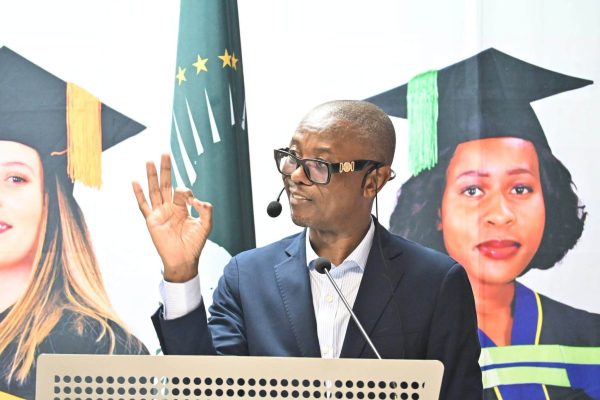
Du Plessis shared these sentiments at the Circular Economy Powered Renewable Energy Centre (CEPREC) Namibian Summit 2026, held in Windhoek this past Thursday.
The CEPREC identifies itself as ‘a pan-African research centre of excellence driving sustainable energy solutions through circular economy innovations.’
Responding to a panel question on industrial development and ideal partnerships in a circular energy sector, Du Plessis noted that this particular model will have flaws in it, preventing the system from being resilient enough.
“This current model is the exact opposite of the Circular Economy model, which has been witnessed occurring a lot in the plastic industry. It has happened a lot. And we are trying to move into this area to see how we can complete the circle itself,” Du Plessis noted.
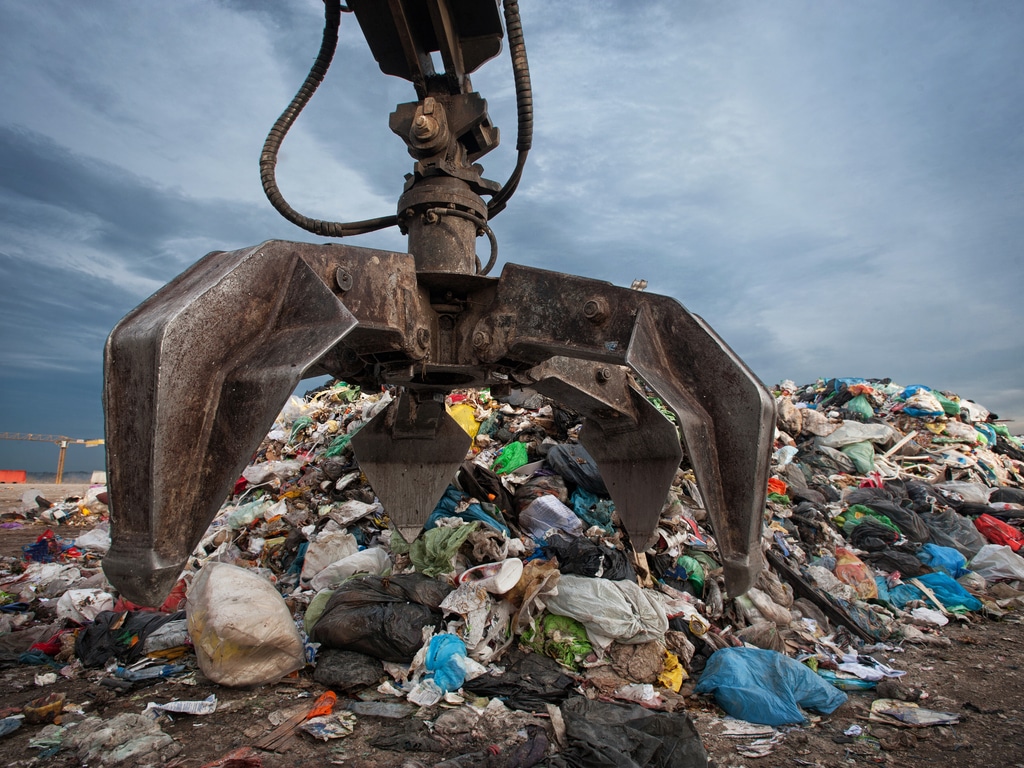
According to him, Plastic Packaging’s current approach is about manufacturing the plastic, selling it, and managing the stream or flow from consumption to being discarded, and then tracing it to the landfill or waste sites for repurchase before recycling into another product.
These products can be ordinary plastic shopping bags from the major food retailers in the country.
Du Plessis emphasised that the ideal partnerships sought by the private sector to complete the circular economy loop are based on the inclusion or introduction of an incentive.
“So, the partnerships we need to have in Namibia, which is quite far away – is incentivising the participants in the industry for implementing the Waste 3,” he shared.
The Waste 3, or the more commonly applied 3Rs, represents the age-old promotional tagline of Reduce, Reuse, and Recycle.
“In South Africa they have these particular organisations that do this (incentivise), and currently the Waste 3 is not an economic spinner – meaning currently it is not a lucrative business to be in. Once people make money with recycling, the circularity will be complete,” noted Du Plessis.
In the South African context, the national policy frameworks are unclear on an incentive-based strategy, but there are clear indicators on active support of how the private sector creates, recycles and manages waste in Southern Africa’s largest economy.
Karl Aribeb, Environment Investment Fund (EIF) Chief Operations Officer, highlighted that the industrial application of the circular economy should be inclusive in industrial developments and partnerships for women to be active participants.
“Namibia has so many strengths, and that national policy making always speaks to gender; gender equality which so far has resulted in the enabling environment that we have today,” Aribeb noted.
According to him, the country already has the strategic frameworks in place, the policies only need to be followed.
He added that from EIF’s perspective, gender-inclusive policies are “fairly easy and straightforward to always ensure that our work, when we deploy our funding projects, is aligned with gender instruments.”
Aribeb explained that the EIF has made considerable investments in environmental, societal and governance (ESG) systems. “This is to ensure that gender is considered in its broadest definition,” he indicated.
Moreover, he noted that exclusion based on gender does not occur, as the products of the EIF are compliant with the modern ESG systems that are in place.
The summit took place under the theme of ‘Advancing Circular Energy for Sustainable Development in Namibia.’
This tied into the whole week of conferencing along with the University of Namibia since Monday, 13 April.