





By: Annakleta Haikera
At 27, Naboth De Celestino is challenging the conventional path into Namibia’s legal profession by choosing entrepreneurship over waiting years to establish himself under an existing law firm.
With financial assistance of N$200 000 from the National Youth Development Fund (NYDF), De Celestino has established De Celestino Incorporated, a new legal practice in Rundu, turning what was once a professional ambition into an operating institution with offices, employees, and clients.
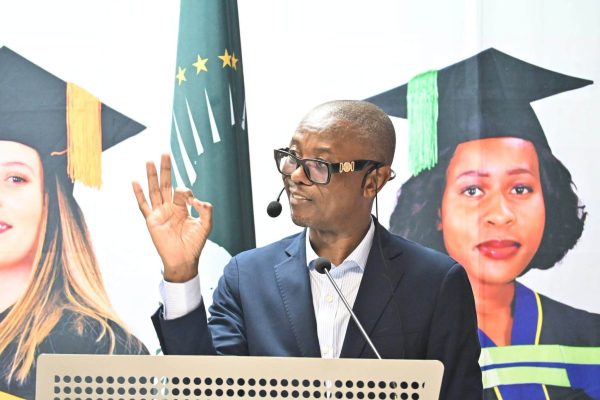
The young legal practitioner officially opened the firm on Saturday, 29 August, marking what he described as one of the most significant milestones of his career.
For De Celestino, however, the achievement is about more than putting his name on a law firm’s door.
It is about proving that young professionals can build serious institutions outside Windhoek and contribute directly to the communities from which they come.
“Standing before you today is quite difficult to put into words because there are moments in life where you realise that what you once carried only as an idea has somehow become something that you can see, touch and even walk into,” De Celestino said.
Before entering legal practice, he was employed in government on a full-time basis, enjoying the security of a regular salary, pension and medical aid.
But instead of remaining in a secure position, he chose to pursue the profession he had studied and worked towards, eventually taking the bold decision to establish his own practice.
The move also meant stepping away from the traditional route in the legal profession.
His friend, Pedro Muyo-Yeta, said De Celestino was breaking with a long-standing professional culture in which young lawyers typically practice under established firms before opening their own practices.
“The norm is that you practise under somebody for at least three years before you eventually open your own law firm,” Muyo-Yeta said.
He described De Celestino’s decision as evidence that young professionals should not be afraid to aspire beyond what has traditionally been expected of them.
The National Youth Development Fund is designed to give young Namibians access to affordable financing to start and grow businesses.
The current fund provides start-up financing of between N$60,000 and N$200,000 at 2% interest, with repayment periods of up to five years and no collateral requirement.
De Celestino explained that youth financing can be used to support and be transformed from a financial intervention into a professional enterprise capable of creating jobs and providing services to a community.
The firm is already handling legal matters involving individuals, businesses and families.
A recent High Court legal notice also lists De Celestino Incorporated, per Naboth De Celestino, as legal practitioners for an applicant in a matter before the High Court of Namibia, indicating that the young practice is already engaging in active litigation.
The firm has also publicly positioned itself around the motto “Non Ducimur, Ducimus” “We Are Not Led, We Lead”
De Celestino believes the perception that ambitious professional careers must be built in Windhoek needs to change.
“I do not accept that. I believe that we can establish serious institutions and other facilities within the Republic of Namibia,” he said.
He argued that regions such as Kavango should not continuously lose their brightest young professionals to larger cities.
“We must create environments in which they can return, establish themselves, employ others and contribute to the communities from which they come,” he said.
His firm aims to go beyond providing legal services by creating employment opportunities and giving young legal practitioners opportunities to gain experience.
De Celestino said his long-term vision is for the firm to become an institution capable of surviving beyond its founder.
Rundu Mayor Andreas Jikerwa welcomed the establishment, describing it as an example of how youth empowerment can translate into local economic development.
Jikerwa said Rundu’s growing population and expanding commercial activities require more professional services.
“Our aspiration must be to create an environment in which young professionals can confidently say: ‘I can build my career in Rundu. I can establish my business in Rundu. I can employ people in Rundu, and I can succeed in Rundu,’” he said.
He encouraged professionals, including lawyers, accountants, engineers, architects and medical practitioners to consider establishing sustainable practices in Rundu instead of concentrating their careers in Windhoek.
Chairperson of the Junior National Council, Anna Andimba, described De Celestino’s journey as an example of what young Namibians can achieve when given an opportunity.
She said his achievement demonstrates that youth should not be viewed as a limitation to leadership.
“Celestino stands before us today as the youngest managing director of a law firm in the history of our republic,” Andimba said.
She added that his decision to establish a fully-fledged legal practice at a young age speaks to his discipline, vision and willingness to pursue opportunities beyond the ordinary.