

By: Annakleta Haikera
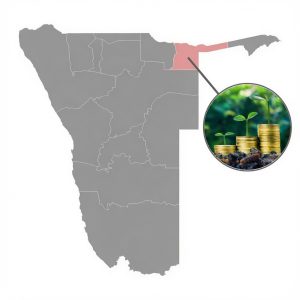
Kavango East received more than N$380 million from the central government during the 2025/26 financial year to fund health, education, water, sanitation and infrastructure projects, governor Hamunyera Hambyuka announced during his State of the Region Address on Friday.
Hambyuka said the Health Directorate received more than N$260 million, while Rundu Town Council was allocated N$75 million for infrastructure upgrades.
Education and water projects received a combined N$46 million, with most projects achieving implementation rates of between 80% and 99%, reflecting prudent financial management and improved service delivery.
Despite the investment, Hambyuka said the region continues to face serious development challenges.
He said youth unemployment remains above 60%, while critical staff shortages persist across key institutions.
The Namibian Police has 553 vacant posts, the Ministry of Industries, Mines and Energy is understaffed, and the Health Directorate is struggling with personnel shortages.
Illegal exploitation of natural resources remains a concern, with authorities confiscating 107 illegal monofilament fishing nets, 2,268 illegally harvested timber planks, and 864 kilograms of illegal fish during the reporting period.
Human-wildlife conflict also continues to claim lives, injure residents, and destroy crops and livestock.
Hambyuka said infrastructure deficiencies are hampering development.
Rundu still has no Business and Intellectual Property Authority (BIPA) office, resulting in business registration delays that can take weeks or months.
More than ten villages in Mashare have no mobile network coverage, while six Gender Equality constituency offices lack internet access.
He further noted that a contractor abandoned the conversion of the old maternity ward at Rundu Intermediate Hospital into ICU and dialysis units.
The hospital is overcrowded due to the growing population; the region has no mental hospital, and the mobile clinic at Big Karukuvisa remains underutilised because of a shortage of nurses.
Other challenges include poor rural roads, particularly the delayed Mungunda Ncumushi road project and the lack of all-weather roads to several villages, an ageing government vehicle fleet with 53 police vehicles grounded, slow progress on water towers and sewer networks, procurement delays, and budget constraints affecting several government sectors.
Hambyuka also highlighted the underutilisation of the Mashare Green Scheme and the Meatco Abattoir, low uptake of the Equipment Aid Scheme by rural communities, recurring food poisoning cases of unknown origin requiring scientific research, teenage pregnancy, gender-based violence, child marriage, and malnutrition.
The governor has also noted that porous borders, statelessness, and delays in court cases result in confiscated timber losing value and seized fish spoiling before cases are concluded.
Looking ahead, Hambyuka said the region’s priorities include operationalising the Mashare Agricultural Development Institute, completing the DR3402 road upgrade, establishing youth skills hubs in every constituency, decentralising business registration services, supporting petroleum production testing, and constructing a new intermediate hospital to improve healthcare services.