
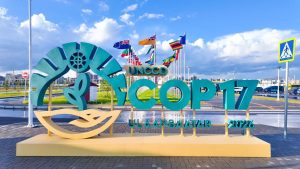
Photo: Contributed
By: Dwight Links
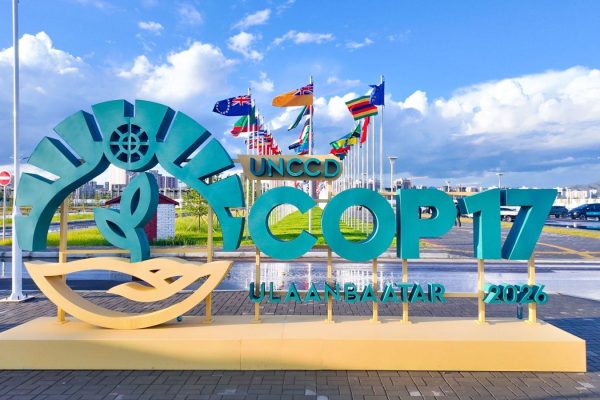
The Conference of Parties 17 on Biodiversity, which met in Yerevan, Armenia, from 19 to 30 October, has agreed on roadmap known as the Yerevan Pathway.
Participants of the Convention on Biological Diversity announced this pathway as a response to the findings in the global report on the State of Biodiversity which came out in September 2026.
The pathway is a direct response to findings that state the world is way off course on delivering on the stated targets of the Kunming-Montreal Global Biodiversity Framework(KMGBF).
The report’s findings on implementation is way behind meeting the 2030 deadline.
“Unless collective implementation accelerates rapidly, the 2030 targets and mission will not be achieved,” the report states.
While it is too early to detect change in biodiversity outcomes, the slow rate of current progress represents a long-term risk, as achieving the 2030 targets and mission are the foundation for putting the world on a pathway towards the 2050 goals and vision.
What is the Path
Yerevan’s get-together was basically to measure where the countries are collectively.
“Since the Framework was adopted in 2022, countries will, for the first time, jointly assess progress toward its 23 targets: shifting the focus from commitments to tangible results and evaluating which agreed actions have been effectively implemented,” the organisers state on the event website.
The Yerevan Pathway will aim to tackle the findings with the right responses to the priority areas
It will identify priorities for action through 2030 and areas where progress will need to be accelerated.
These include tackling nature-harmful subsidies and incentives, increasing financial, scientific and technical support for developing countries, aligning national budgets and economic decisions with the KMGBF, and strengthening implementation, monitoring, reporting and review mechanisms.”
According to the report, even though various stakeholders have indicated their intent on action and implementation, they actually fall short of being on the level of the framework and its targets.
While Parties and other actors have taken action to address all 23 targets, none of the targets present a fully positive picture.
The available evidence indicates that there are gaps in collective progress being made and barriers impeding progress,” the report outlines.
These shortfalls are stated as being stumbling blocks that impede actual delivery on the targets.
“If those gaps and barriers are not urgently addressed, it will not be possible to meet the 2030 targets and mission, thereby putting the achievement of the 2050 goals and vision in jeopardy,” the report says.
Some Positives
Executive Secretary of the Convention on Biological Diversity, Astrid Schomaker, noted that there were some wins that came from the convention besides the renewal on meeting the targets.
“The next four years must bring acceleration and alignment with what we agreed when we adopted the Kunming-Montreal Global Biodiversity Framework. We know what needs to change,” Schomaker said.
This means that countries have to realise that protection and destruction do not go well together.
“We cannot protect nature while continuing to finance its destruction. Resources must reach the countries and communities that need them. And biodiversity must become part of everyday
economic decisions. Ultimately, the test is not what governments agreed in Yerevan, but what they change when they return home,” Schomaker added.
Parties also agreed on the rules of operation for the new permanent subsidiary body on Article 8(j), which was officially named the Sevan Guidelines. This strengthens the role of indigenous peoples and local communities in shaping global biodiversity policy and action.