




By: Dwight Links
According to hospitality industry research for the month of July, Simonis Storm highlights that the national room occupancy stood at 62.63%.
The statistics show that occupancy and arrivals are still on a positive note for this year since it has surpassed the performance numbers since 2019.
May 2026 began with a high of above 50% room occupancy even though slightly lower business establishments were cited in the May assessment.
According to the investment firm, July also surpassed its 2019 counterpart.
“July 2019 had a pre-pandemic benchmark of 59.60%. July 2026 surpassed this with 3.03 percentage points to 61.07% which was recorded in July 2025,” the Hospitality Association of Namibia (HAN) confirmed the performance.
The report notes that the month of July in Namibia is usually the high period for the arrival of tourist or visitor numbers to the country.
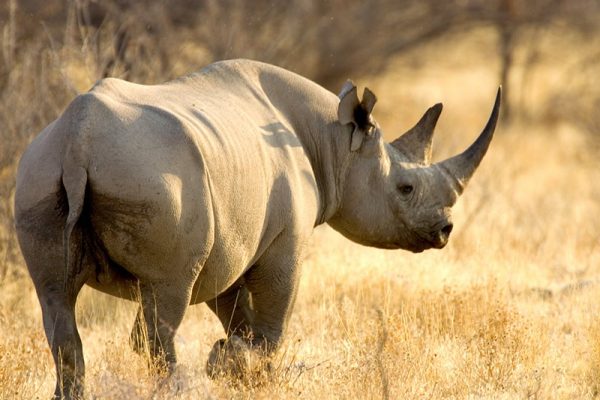
“This month is the apex month of Namibia’s dry-season safari calendar. A period when Etosha’s waterholes draw peak wildlife concentrations and the European travellers converge on the country during summer school holidays their side,” the association further explained on the traveller dynamics.
QUARTERLY VIEWS
According to the report, the second three-month period of the year – April to June – had been the best seen since pandemic recovery began.
“Q2 delivered the strongest on record for Namibia’s formal accommodation sector.
National room occupancy reached 57.18% across 140 reporting properties. A meaningful improvement on the 52.47% recorded in Q2 of 2025,” Almandro Jansen of Simonis Storm explains.
Total bed-nights sold across the second quarter stood at 252 906 units.
This is as the industry continued its momentum with 77,107 beds that were sold across 67 reporting properties and a national bed occupancy rate of 55.84%.
The biggest bracket of tourists who contributed was the Leisure travel category, which dominated all arrivals with 97.26%, which HAN says is the highest leisure tourist share of the year.
REGIONAL DYNAMICS
Namibia’s Northern, Southern and coastal regions all saw more than 60% occupancy rates, while the central region of the country was at 50.99%.
The Northern regions of the country had the best numbers with 66.43%.
According to Simonis, this was the best result of the July period, and it was 4.72 percentage points above the July 2025 rate.
“Etosha National Park and the Kunene corridor are at peak demand, driving very high occupancy across lodges and rest camps,” the investment said.
The coastal region recorded 65.32%, slightly higher than the 2025 equivalent month, with an increase of 2.37 percentage points.
“The Walvis Bay-Swakopmund corridor sustained strong leisure demand, with coastal business travel contributing 4.41% of beds sold,” the report also adds.
The country’s southern regions posted 60.25%, as Sossusvlei and the Fish River Canyon were the main attractions.
“The region’s July performance underscores the resilience of its premium wilderness offering during the dry-season peak,” the report adds.