




By: David Shoombe and Nghiinomenwa-vali Hangala
The cost of electricity in Namibia needs urgent intervention, with one of the solutions being to diversify energy generation.
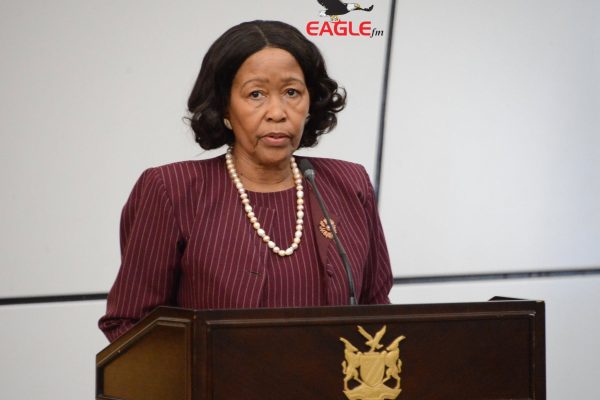
The Electricity Control Board (ECB) Chief Executive Officer, Robert Kahimise, made these remarks at the recent launch of the ECB’s Integrated Strategic Business Plan (2026-2031).
Namibia’s electricity generation fluctuates between 40% and 50% depending on the rainy season in southern Angola, which influences the production of the Ruacana Hydro Power Station.
Domestic monthly demand fluctuates between 290 000 MWh and 340,000 MWh, according to monthly domestic sales of electricity. However, the country’s generation has not surpassed 290,000 MWh since 2020.
Kahimise noted that the regulator’s key strategic areas include improving affordability and security of supply. He further indicated that high electricity costs are also a result of importing 40% to 60% of the nation’s electricity.
“If we can displace those expensive imports with local generation and also cater for the intermittency of renewable energy into the system, we will gradually bring down the costs,” stated Kahimise. He added that the ECB will introduce multi-year pricing to bring predictability to the sector.
Kahimise further indicated that the Strategic Plan falls in line with the Public Enterprise Governance Act (PEGA), with the regulator striving to reduce Namibia’s dependency on imported energy.
Also speaking at the launch, the Minister of Industries, Mines, and Energy, Modestus Amutse, acknowledged the ECB’s leadership in electricity regulations for over 20 years. He noted the importance of a consistent supply of electricity in Namibia to connect schools, hospitals, and industries for national development.
“A consistent supply of electricity contributes towards the quality of life,” Amutse stated, adding that achieving the goal of 80% national electricity connectivity by 2030 remains feasible.
In June 2025, the Namibian government, through the Ministry of Industries, Mines and Energy, allocated over N$140 million to accelerate national electricity connectivity from below 60% to 70% by 2030. This was done when the Ministry signed a Service Level Agreement (SLA) with Regional Electricity Distributors (REDs) to advance this process.
The latest SLA is with CENORED to facilitate various renewable energy projects being undertaken by individuals, households, and businesses.
International Business Review (IBR) statistics show that Namibia has the highest electricity prices in Southern Africa and relies heavily on electricity imports, as an estimated £6.8 billion has been spent on imported power between January 2024 and December 2025.
However, the IBR states that Namibia also holds a powerful geographic advantage, as Solar PV systems can generate twice the electricity of comparable systems in central Europe.
However, the IBR shows that electricity poverty will remain a challenge in Namibia and other parts of Southern Africa, where countries such as Zimbabwe and Malawi are looking to work on projects to improve electricity supply in their respective countries.
George Kalimba, an electrical engineer, states that Namibia’s energy poverty is not new, as it has been at the centre of various discussions and a posing as a delay to national development.
“There must be a clear balance between electricity accessibility and affordability, especially in a country where the majority of people live in poverty,” Kalimba stated. He added that Namibia must diversify energy distribution through solar, green hydrogen, coal, and nuclear energy.
Latest data shows that in December 2025, local generation accounted for 51.6 percent (213, 957 MWh) of the total electricity supplied to the domestic economy, while imports contributed 48.4 percent (201 024 MWh).
This distribution represents a shift from November 2025, when imports constituted the dominant share of electricity supply, mirroring the pattern observed in December 2024.
In December 2025, total local electricity generation amounted to 213,957 MWh. The Ruacana Power Station was the largest contributor, accounting for 78.3 percent (167 547 MWh), followed by Independent Power Producers (IPPs) with 19.2 percent (41 016 MWh).
The Omburu PV Solar Power Station contributed 2.3 percent (4 958 MWh) of locally generated electricity. Additionally, Anixas 2 Diesel Power Station ranked fourth, supplying 0.2 percent (436 MWh), while both Van Eck Power Station and Anixas 1 Diesel Power Station recorded no electricity generation during the review period.
In absolute terms, Namibia imported a total of 201, 024 MWh of electricity in December 2025. South Africa remained the primary source of Namibia’s electricity imports, supplying 55.2 percent of the total electricity imports.
Zimbabwe followed with a 20.9 percentage share, while Zambia contributed 18.2 percent. Eskom Orange River and the Day-Ahead Market (Southern African Power Pool) ranked fourth and fifth, supplying 5.3 percent and 0.4 percent of imported electricity, respectively.