



By: Dwight Links
The Creative Industry Institute Africa launched the mapping campaign of the flagship 2026/2027 Creative Industry Guide on Tuesday.
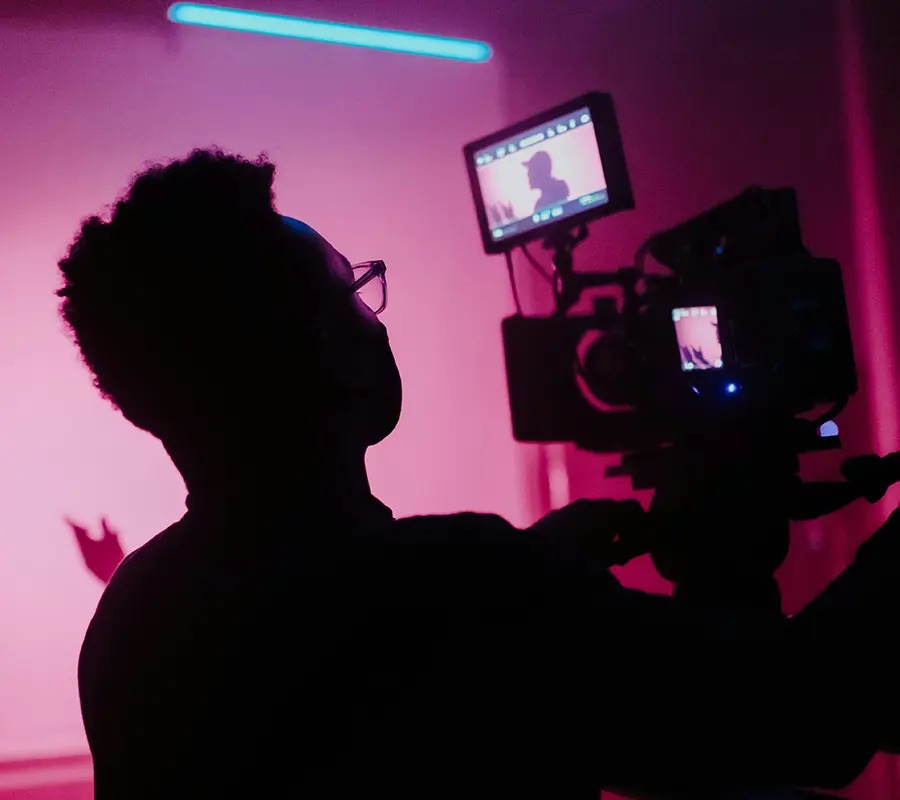
Joel Haikali, co-founder of the institute and filmmaker, provided a presentation on the new format that was added to the mapping campaign.
This new feature is a digital online directory and registration platform that allows creatives to register and list contact details from across the country.
Haikali explained that the origins of the Guide were a need that resulted in its creation rather than a planned strategy.
“It was borne out of a desperation to be seen, to be understood, and to be recognised. But it also came from a place of trying to find a common voice,” Haikali explained.
Haikali explained that the understanding of the label of the creative industry does not only represent music or just film.
“Back then in 2018, we were under pressure because our government did not know the diversity of the sector. When you approached any office, or knocked on a door, you were faced with the questions of who are you, what do you do, and how do I know you do what you do?” he added.
Haikalio noted that the first Guide allowed them to build a database of the entire Namibian creative industry.
COLLABORATION
The guides, according to Haikali, signal the level of value addition and inputs that the creative sectors can produce.
This includes designers in layout and other graphics, a digital company, the National Arts Council, the Directorate of Arts of MEIYSAC, the Namibia Film Commission, UNESCO, the Filmmakers Association, and even media companies.
The current guide is open for submissions until the end of September this year, while the rest of the production of the physical guide copies is expected later on in the new year.
In terms of the institute’s goals for the industry, it has a multidimensional role in terms of needs for creative projects.
“We would like to view ourselves at the institute as an intersectional organisation that operates between creative industries, cultural heritage and digital innovation. This is a space where creatives get to meet and keep up with knowledge from different parts of the country,” Haikali explained.
The institute also provides creative support functions like props and modelling abilities for creatives to use.
The Creative Industry Guide, since 2018, is a tool that has documented the Namibian creative ecosystem by listing and consolidating the existence of creative businesses, organisations and the professionals working in them.
“The guide generates valuable industry insights across disciplines ranging from architecture and film to music, to design, crafts, fashion, IT, and the visual arts,” the institute explained.
PLANS FOR THE INDUSTRY
Patrick Sam, who is currently working on finalising the Namibian Cultural and Creative Industry Council, which was appointed in 2025, explained that there are additional developments pertaining to where the industry is going in the coming months.
Sam revealed that the national strategy pertaining to the council is also under development.
“The strategy will scope what the country plans to do in the next five years. It is looking exciting, in terms of closing the gaps on infrastructure, skills development and fundamentally looking at the issue of financing,” Sam outlined.
Sam also outlined that there has been research commissioned by the UN Department on Economic and Social Affairs, which looks at social inclusion within the creative economy.
“This research focuses largely on under-represented groups like youth, elders, people with disabilities, and it looks at indigenous people – which asks if we are making sure that our interventions are inclusive when we prioritise the sector,” he explained.