


By: Nghilunanye Petrus
Commodity-exporting countries are beginning to experience the heat of waning global commodity demand.
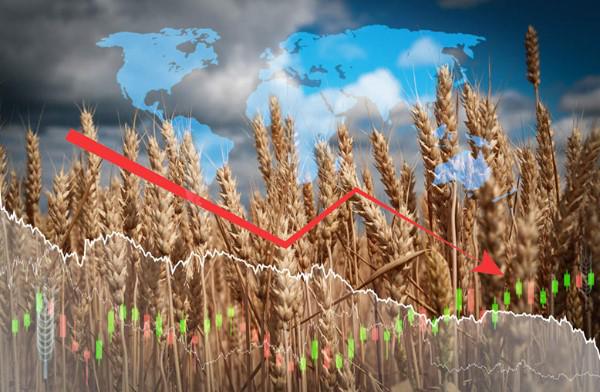
The latest International Monetary Fund (IMF) analysis shows that the current account surpluses for commodity-exporting countries are declining in response to falling prices of oil, metals, gas, and food.
While the world economy witnessed a net expansion of current account balances in 2024, this expansion masked the reality that most resource-based economies suffered income losses from weaker commodity markets.
According to the IMF’s July 2025 External Sector Report, prices fell by an average of 4.5% for oil, 16.2% for gas, 4.7% for metals, and 5.9% for food.
These declines, a reversal of the pandemic and war-induced peaks of previous years, resulted in commodity exporters recording lower current account surpluses than those in 2023.
Rather than rebalancing urgently through lower spending or borrowing, the majority of these economies opted to reduce public savings to balance the income deficits. This response acted to shelter domestic demand and avoid severe fiscal shocks in the short term, but raises questions about long-term sustainability.
The report observes that while China, the euro area, and Japan increased their respective current account surpluses significantly due to weak import demand and export expansion, oil exporters such as Nigeria and Angola reported drops.
Such countries, which traditionally rely on hydrocarbon revenues, are facing increasing fiscal pressures and will be forced to implement structural policy changes if prices continue to trail behind.
Price volatility of commodities remains a concern for emerging economies, as they largely rely on export receipts to finance budgets and prop up external balances.
With trade flows reversing and global demand weakening, countries with narrow bases of exports stand to be most threatened.
The IMF warns that failure to adjust would raise fiscal deficits or lead to additional external borrowing, which in turn would place added strain on public finances.
The report recommends that diversification of the export basket and raising domestic resilience through structural reform would be ideal steps forward.
For African economies, in which a majority are commodity-based, this is particularly of concern.
While the IMF did not differentiate by countries within African nations, the trend shows that there is a demand for long-term economic diversification and investment in non-extractive sectors.
Since the world is entering a phase of less volatile commodity prices, policymakers in resource-rich countries must consider how to reconcile short-term spending needs with long-term sustainability in an environment where external financing conditions are tightening.