


By: Dwight Links
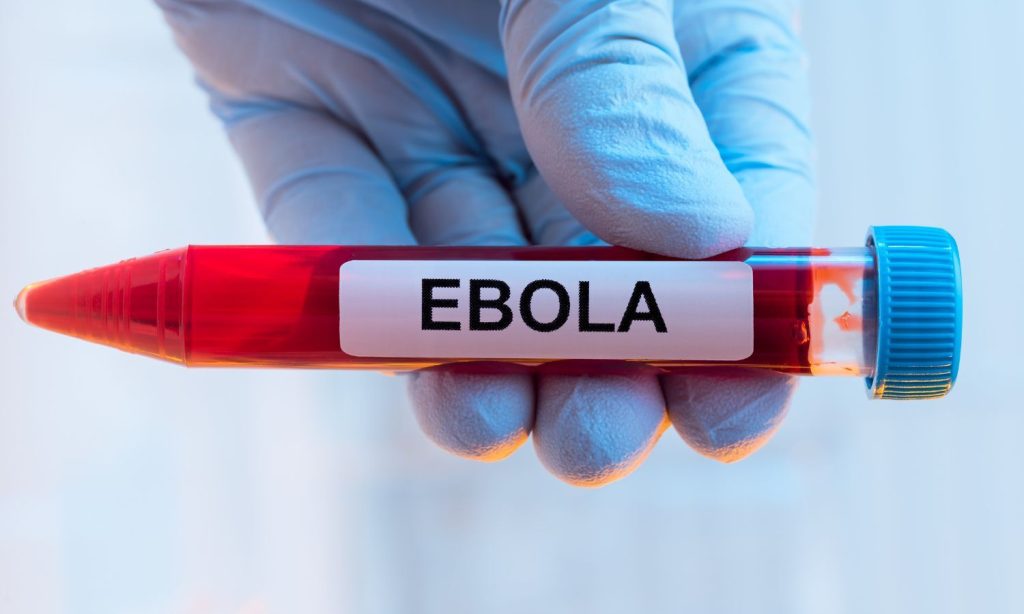
The Africa Center for Disease Control and Prevention (Africa CDC) says that the current status of the Ebola outbreak in Central Africa is at 4,000 confirmed cases, with 1,800 deaths.
Dr. Jean Kaseya, Director General for Africa CDC, said the spread is becoming a major concern.
“After 12 weeks, [the outbreak] is almost nine times more than the West African outbreak,” Kaseya said last Thursday.
The West Africa outbreak impacted Guinea-Conakry, Sierra Leone and Liberia in the period of 2014-2016, according to the World Health Organisation.
Italy, Mali, Nigeria, Senegal, Spain, the United Kingdom, and the United States of America were the next seven countries that infections had spread to in that period.
Secondary infections occurred in Italy, Mali, Nigeria, and the USA.
By June 2016, the outbreak was declared over by authorities. More than 28,600 people had been infected, and 11,325 people had died.
The current Ebola outbreak, known as the Bundibugyo variant, is mainly concentrated through its rate of infections in the Democratic Republic of Congo and Uganda. Both nations border each other.
The US CDC confirms Kaseya’s fears, as this outbreak is spreading faster than the 2018 outbreak that also happened in the DRC.
“This outbreak is spreading substantially faster than previous Ebola outbreaks and is now the second-largest Ebola outbreak on record.
This Ebola outbreak surpassed 1,000 confirmed cases within 40 days of response activation.
In comparison, the 2018 Ebola outbreak in DRC took approximately 235 days to reach more than 1,000 cases,” the US agency stated on its website portal that monitors this outbreak in Central Africa.
GROUND WORK
Kaseya described the current outbreak as severe, as he indicated that the Bundibugyo spread is also bigger in confirmed cases than the West Africa event.
“In terms of confirmed cases, it is six times more than the West Africa one in terms of deaths. We are providing this figure because it is a major indicator for us to say that it is severe,” Kaseya said.
Kaseya cited that, to advance a response to the outbreak in the region to another level that would include research, WHO assistance and constant communication has provided insight into further support for the Africa CDC.
“Speaking to Dr. Tedros Ghebreyesus, to do research to check if there is no issue or maybe if the virus is not mutating. Because the level of severity of this Bundibugyo outbreak is unprecedented,” Kaseya confirmed.
Kaseya further added that they are currently making preparations to start studies to see whether that eventuality is a reality or not.
DIMENSION OF OUTBREAK
Kaseya laid out the response parameters of what the Africa CDC is working with, which also follows the outbreak trail.
“We started with nine health zones; today we have 51 health zones. This outbreak is just expanding,” Kaseya explained.
According to him, there are other loose ends that the agency has considered, like travelling up and down the Congo River, where waterway vehicles ferry passengers with potential exposure to infected zones or communities.
“We are on good track with our contact-tracing, which is a good indicator,” he added.
Kaseya compared that the 2018-2020 Ebola outbreak was the worst, with a confirmed case count around 3000 in two years. The DG noted that the Bundibugyo outbreak is spreading more quickly in 12 weeks and has already seen 4,000 confirmed cases.
In comparison with the contact-tracing list between 2018 and now, there were 198 000 on the contact-tracing list in 2018.
Africa CDC says it was a ratio of 1 for every 57 people on the contact-tracing list in DRC. For Uganda, there was 1 for every 41 people.
And now, it is 1 for every 10 people on the list in DRC.