





By: David Shoombe
The president of the Africa Finance Corporation (AFC), Samaila Zubairu, states that in championing the continental developmental agenda, African infrastructure must be linked and coordinated to allow smooth trade and development.
“Infrastructure must be approached not as a series of discrete projects, but as integrated systems that link energy, transport, and industry to markets.”
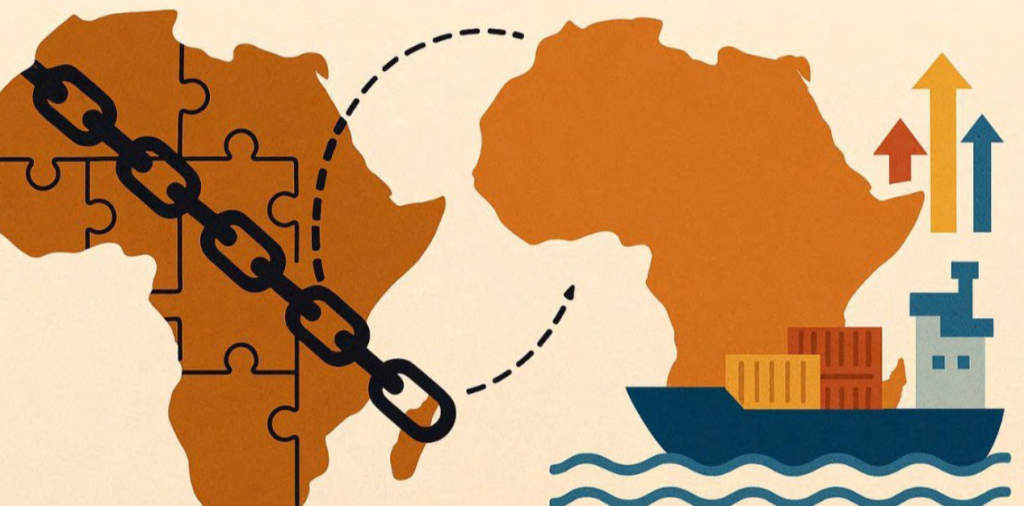
Zubairu adds that the constraint in African Development is not the absence of infrastructure assets, but the fragmentation between them.
Though ports, railways, and roads exist, inefficiencies in connectivity, border processes, and corridor governance prevent these assets from functioning as seamless supply chains.
According to the AFC’s 2026 State of Africa’s Infrastructure Report, external financing for infrastructure development in Africa is declining, prompting a greater reliance on domestically mobilised capital to drive development across the continent.
The report notes that external development assistance, which reached US$83.8 billion in 2020, has seen a reversal and is projected to decline by 16–28% in Sub-Saharan Africa from 2025 onwards.
Hence, the sharing of resources between the state and private sectors, along with intra-African cooperation, is likely to benefit human development.
The report noted that Namibia is one of Africa’s “intermediation-ready” markets with financial foundations needed to attract greater investment in infrastructure.
Regardless of Namibia having the potential to benefit from a sizeable pension and insurance asset base and relatively concentrated investment funds, the report notes that stronger risk-sharing mechanisms, credit enhancements, and guarantees are needed to channel domestic savings into bankable infrastructure projects.
Dobson Kwala, an economist, states that “Namibia must work to boost its economy, especially by prioritising investment in logistics infrastructure.”
Kwala explains that trade infrastructure, such as road infrastructure, should work in conjunction with telecommunications, and that this can only be effective if there is a link between trade infrastructure and the creation of opportunities.
He argues that Namibia should reassess its progress in infrastructure investment and address what has gone wrong.
While appreciating the upgrades of the ports, Kwala notes that an airline is central to trade and development.
He therefore argues that the revival of a national airline alone will not guarantee success, but that Namibia can benefit from increased visibility and by learning from best practices, such as those of Ethiopian Airlines.
Being strategically positioned in Southern Africa with its trade, Kwala recommends that Namibia can utilise its geographical position for commercial success.
This would be through cooperation with other industries from neighbouring countries, through port sharing, airline collaborations, and exchange of expertise in border and customs management.
One of the noted key enablers of the much-touted African Continental Free Trade Area is the development and upgrade of roads, railways, ports, airports, and logistics corridors to improve regional connectivity and lower transportation costs between African states.