



Photo: Contributed
By: Nghiinomenwa-vali Hangala
Namibia’s experience shows that biodiversity loss is not inevitable, noted the World Wildlife Fund (WWF) Namibian office.
In a press release, the fund commented on the Living Planet Report that detailed the global population of wildlife, highlighting Namibia.
The fund noted that, even though wildlife loss has been quite massive, Namibia’s conservation efforts are worth noting.
Explaining that conservation efforts are possible when communities benefit, landscapes remain connected, and partnerships endure, recovery is possible.
“At a time when the world is searching for conservation solutions, this is a lesson worth sharing,” the Fund wrote.
The WWF Namibian office has zoomed in on three stories that showcase different aspects of the country’s conservation journey.
First is on keeping the Wild Connected, which explores the role of wildlife corridors, conservancies, transboundary conservation at scale in the Kavango-Zambezi Transfrontier Conservation Area (KAZA), and community stewardship in maintaining connected landscapes.
The KAZA project is where community-led conservation and landscape connectivity have helped support stable or growing elephant populations across one of the world’s largest transboundary conservation landscapes.
Secondly, Living With Wild Dogs highlights coexistence, prey restoration, and community-led efforts to secure a future for one of Africa’s most endangered carnivores.
Even though coexistence between the cats has also seen some conflicts, the Ministry of Environment has neutralised some of what they termed problematic animals involving the big cats.
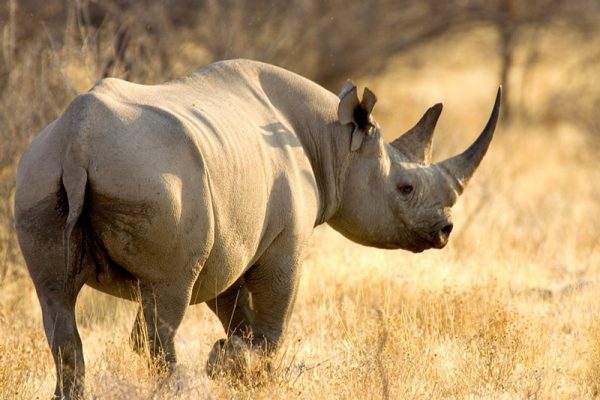
The story of A Future for Black Rhino, showcases how collective action is helping reduce poaching and strengthen protection for one of Namibia’s most iconic species.
Namibia recorded 43 rhinos poached in 2025, down from 91 in 2024, representing a decline of more than 50% and the country’s lowest rhino poaching level in over a decade.
Early figures from 2026 suggest that this positive trend may be continuing, the Fund noted.
“These gains reflect the combined efforts of communities, conservancies, private custodians, anti-poaching teams, government institutions and conservation partners working toward a shared goal,” the WWF country office stated.
Adding that Namibian conservation stories demonstrate a common theme: conservation outcomes improve when communities are empowered, receive tangible benefits, landscapes remain connected and partnerships endure.
WWF Namibia country director, Juliane Zeidler, stated that hope is action.
She said the conservation successes being experienced across Namibia are the result of people choosing every day to protect wildlife and the landscapes on which the planet depends.
“The Living Planet Report highlights the scale of the challenge, but it also shows that positive change is possible when people work together towards a shared vision. Namibia’s conservation journey is living proof of that,” said Zeidler.
The Hospitality Association of Namibia (HAN) has also praised the country’s hospitality industry contribution to the conservation efforts.
In its October 2026 sectoral updates, HAN noted the hospitality industry contributes not only to national tourism earnings, but also to conservation efforts.
This is by protecting wildlife, conservation, and community development, which the sectoral body thinks are often underestimated and overlooked.
HAN noted that the launch of the Living Planet Report by the World Wildlife Fund thus
holds particular importance for Namibia and Southern Africa, as it carries a valuable message of the important role tourism plays in financing conservation efforts and the interdependence of tourism and conservation.
The 2026 report reveals that although the losses in fauna and flora species and natural habitat still outweigh the gains overall.
“Conservation success stories from all over the world show that it is possible to reverse the trend, with some shining examples of positive recovery in southern Africa in particular,” HAN noted.
The association explained that every tourism-linked business takes part in that conservation economy.
“Conservation is not simply something tourism supports. It is what much of the country’s tourism proposition depends on, and conservation travel has become the key driver of growing tourism numbers to Namibia,” the Association wrote.
HAN indicated that the contribution of tourism to the financing of conservation efforts and management of protected areas as national assets of Namibia holds national importance.
Ongava Game Reserve general manager, Rob Moffett, also commended the conservation efforts, saying the country’s conservation efforts are the anchor of the tourism and hospitality industry.
“Namibia’s conservation story is carried by the whole industry, from campsites to lodges. When travellers choose to experience wildlife here, they keep rhinos on the land and people in work,” Moffet.
The Living Report defined biodiversity as the variety of life and the ecological relationships that connect it, making that system work.
It explained that the food society grows depends on pollinators and the soil microbes that keep cropland productive.
Drinking water depends on intact watersheds.
Most medicines in pharmacies originated in molecules first identified in plants, fungi, or microorganisms.
“The climate we depend on is regulated by forests, oceans, peatlands and grasslands,” read the Living Planet Report.
As for the economy’s dependence on nature, expressed as a number, it rests on these services: about half of global GDP, roughly US$58 trillion in 2023, comes from work that depends in some way on nature, the report revealed.
As a result, when biodiversity is degraded, the things built on it are degraded along with it.
That degradation is now happening at a pace without precedent in human history.
The Living Planet Index (LPI) measures the average change in the size of monitored populations of vertebrate species around the world: mammals, birds, fish, reptiles and amphibians.
erastus@thevillager.com.na