





By: Dwight Links
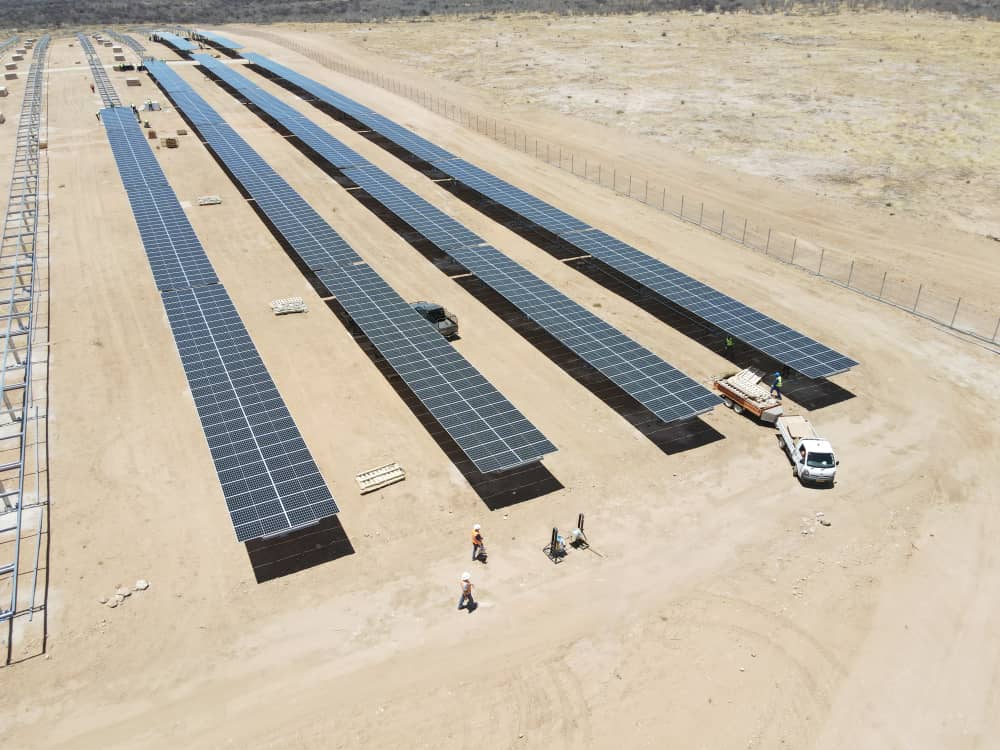
Namibia has imported 212 megawatts worth of photovoltaic (PV) panels from China from 2024 to June 2025, according to the renewable energy think tank, Ember.
According to the report on renewable energy equipment import data that is based on Chinese export data for solar panels to African countries, at least 25 nations on the continent have imported a minimum of 100 megawatts worth of panels in the period under review.
There are still large indicators of who imported the most and has driven the surge of rising demand for the panels.
Jean Basson, chairperson of the Renewable Energy Industry Association of Namibia (REIAoN), indicated that energy production commitments as stipulated nationally through solar energy are obtainable.
“Many people in the world are realising that the sun shines a lot and we have known of this for a long time,” Basson stated.
“In this sense, we are seeing a knock-on effect: we are getting renewable, cheaper power, and that is creating newer industries. This means that you see the purchasing of the new equipment and the installation of this equipment taking place. This translates to a massive uptick of PV in the local market,” he explains.
“South Africa remained the biggest solar importer in the 12 months to June 2025. Nigeria was second, overtaking Egypt in the last 12 months, and Algeria rose to third place,” the report states.
Clarity is still needed to understand whether this data reflects in major installations of power generation or if it is for distribution purposes.
“Initial analysis suggests the growth may be driven more by distributed solar than by utility-scale solar. The Chinese solar export data used in this report is an important source of data, but it is only a partial view. More detailed and localised research is needed to fully track solar’s rise in Africa,” Ember noted in their explanation of trends observed through the data.
There has been an increase of 10 nations since the last assessment a year ago, which provides a new impetus for renewable energy adoption.
“Perhaps the biggest surprise in the data is that 25 countries imported 100 MW or more – up from 15 countries 12 months before,” Ember describes.
WIDE ADOPTION
Across Africa, the demand for the renewable energy source has seen several nations try to increase their imports.
“The surge in solar is happening across the continent. Twenty countries set new records for solar panel imports in the 12 months to June 2025. All those had imports of at least 30 MW. A further seven countries also set a record, but for much smaller volumes,” the report stated.
In terms of affordability, Basson added that the local picture resembles one of various factors being in favour of solar energy adoption.
“Firstly, in the country, it is affordable as we [Namibia] do have or are considered to have a very large Solar Yield – meaning the amount of daylight hours that have direct sunlight. Secondly, we have a lot of open spaces, meaning a lot of land and residential spaces, and we do not live in high-rise flat buildings. We also have good access to our grid infrastructure and do not need to pay exorbitant fees to connect a solar power plant to the grid,” he noted.
Coupled with the above-mentioned factors of input, Basson reasons that Namibia also possesses a low cost of labour that helps the affordability component locally.
The industry chairperson noted that there is a mixture of access to acquiring the equipment in Namibia.
“You can have a direct purchase and ownership model, whereby an installing agent can assist you, and you directly own the production. Or, you can have the rent-to-own model, whereby a business goes through ownership and installation processes to lease it to you. And finally, there are the industrial-scale applications that sell to Nampower or a municipality,” Basson indicated.
The report outlines that if the imports of solar panels on the continent continue to increase, it could outpace the importation of oil products like diesel, which is a central fuel for energy generation in some parts of Africa.
“More solar panel imports will actually lower total imports. Solar panel imports are a fraction of oil imports. The value of refined petroleum imports is between 30 to 107 times as large as the import value of solar panels for all of the top ten solar panel importers, except for Algeria,” the report explains.