



By: Loise Shiimi
The University of Namibia (UNAM) will partner up with the Namibia Agronomic Board (NAB) to establish a certified seed sector to reduce seed imports.
UNAM vice chancellor, Kenneth Kamwi Matengu, made the announcement this week during the President’s visit to Ogongo Campus on Monday.
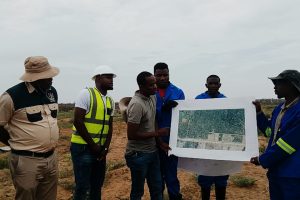
The President’s visit was to get the full overview of what is happening on the ground regarding the agricultural sector.
Matengu stated that it is the institution’s mandate to provide responsive research for the betterment of the sector.
“As UNAM, we have a mandate to provide education and conduct research that is relevant and responsive to the needs of our people. Our collaboration with the NAB focuses on creating a certified seed sector in Namibia,” he remarked.
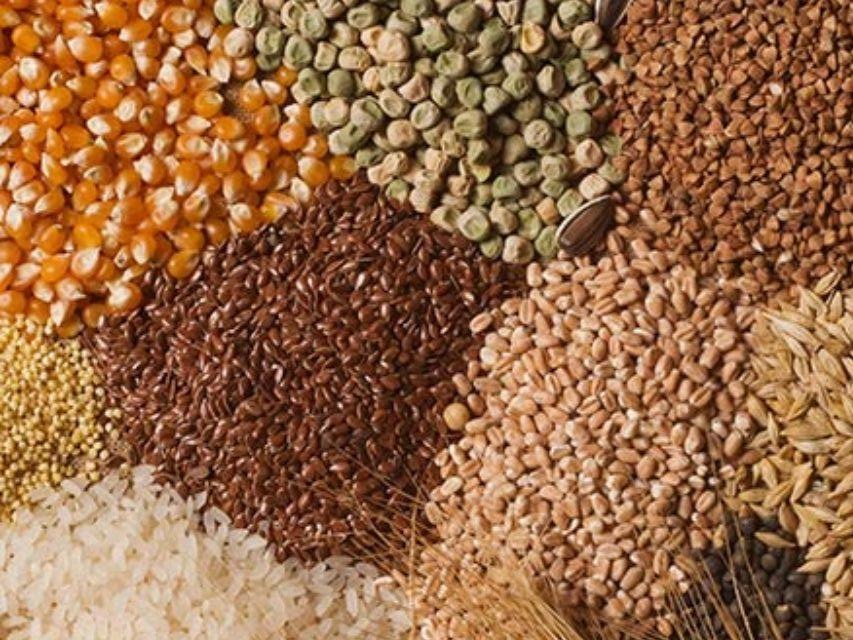
The project targets four crops: white maize, pearl millet, wheat, and potatoes, with research already completed to identify the best varieties for various climatic conditions.
Matengu further emphasised that the research has focused on developing high-yielding, drought-resistant seeds that require minimal water. The findings indicate which varieties are best suited for different climates for the four targeted crops.
With the research phase complete, Matengu highlighted that it is now time for seed multiplication.
“Farmers will plant these seeds solely for production, not for immediate consumption. The seeds produced will then be sold to those who will cultivate them for food. We are very pleased with the outcomes for all four crops,” he explained.
He reflected on scientists’ insights regarding the importance of quality seeds for food security, noting that poor or low-yielding seeds cannot result in substantial harvests.
In addition to collaborating with the NAB, UNAM has also partnered with Japanese and Indonesian entities in rice research, and with China regarding potatoes.
Matengu emphasised that UNAM’s focus extends beyond student education to include support for the broader community.
“Our time allocation at the university is divided as follows: 70% for teaching, 20% for research, and 10% for community service,” he said.
He stated that this 10% allocation enables the university to assist communities, aiding the government in achieving its goals effectively.
On her visit to the campus, President Nandi-Ndaitwah expressed her satisfaction with the allocation of the institution’s time. She suggested that community education also incorporates nutrition, helping individuals maximise productivity in their fields for self-sufficiency.
“I am impressed by the portable fruit processing plant on campus and believe that every region in Namibia should have a processing facility. This would contribute to food security, job creation, and the export of processed products,” stated the President.
She noted that though it may be challenging, as a collective there is a need to focus on positive solutions and avoid negative thinking. “Agriculture is key; it will lead to industrialisation, but it requires our serious commitment,” she said.
Meanwhile, Minister of Agriculture, Fisheries, Water, and Land Reform, Inge Zaamwani, encouraged UNAM to continue developing innovative technologies and sustainable farming practices to enhance productivity among farmers.
Regarding the short courses offered by the campus, she emphasised their value, particularly since they often do not have specific requirements, inviting interested individuals to participate.
Zaamwani announced plans for a memorandum of understanding to refine the ministry’s support for UNAM in research and new production methods and technologies.
“We have observed methods being used to measure moisture content in the fields, utilising solar systems. If we can apply this knowledge to our green schemes, it will significantly increase productivity,” she noted.
Additionally, she expressed a desire for collaboration in enhancing capacity for extension services, particularly through the engagement of UNAM students in monitoring production areas.
“Our aim is to see more UNAM students involved in our green schemes as part of their practical training, allowing them to observe current practices and provide insights on improving production and adopting new farming technologies that could streamline the time from planting to harvest,” she stated.